Live Oak
Live oaks differ from many other oak species primarily through their foliage retention and distinct growth habits. While the genus Quercus includes both…
How do live oak trees differ from other oak species in terms of leaf retention and growth patterns?
Live oaks differ from many other oak species primarily through their foliage retention and distinct growth habits. While the genus Quercus includes both deciduous and evergreen species, live oaks are defined by their evergreen nature, meaning they retain their foliage year-round. In contrast, many other common oak species are deciduous, losing their leaves seasonally.12
Regarding growth patterns, live oaks often exhibit unique structural characteristics. For example, the southern live oak typically features a trunk that divides near the ground into several massive limbs, which can extend horizontally to a width two to three times the tree’s height. While many oaks are capable of regenerating from stump sprouts, live oaks are specifically noted for this ability, often sending up numerous sprouts if the tree is injured or cut. Depending on the species and environment, live oaks can range from shrubby forms in harsh coastal soils to large, spreading trees in more favorable conditions.1
What are the defining characteristics of live oak trees?
Live oaks are a group of North American evergreen oak trees belonging to the genus Quercus. They derive their name from their ability to retain foliage year-round and their remarkable capacity to send up numerous sprouts when injured or cut.1
Key characteristics include:
- Growth Patterns: Many species, such as the southern live oak, feature trunks that divide near the ground into massive limbs, sometimes extending horizontally two to three times the tree’s height. While they can grow into large, spreading trees, they may also appear as shrubs in harsh coastal soils.1
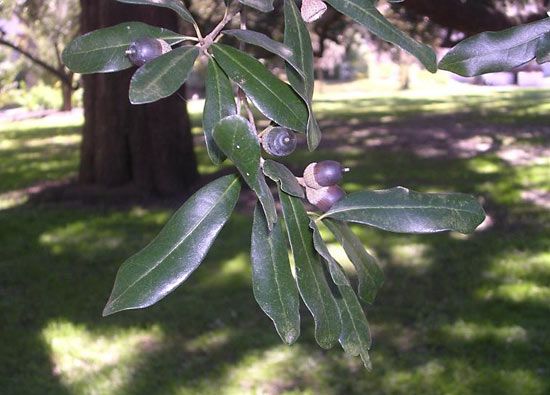
- Foliage: Leaves vary by species; southern live oaks have dark, glossy, unlobed elliptical leaves, while western species like the California live oak often possess hollylike leaves.1
- Wood: They are noted for having extremely hard, tough, and durable wood, which was historically valued for shipbuilding.14
- Longevity: While once thought to be extremely long-lived, the oldest known specimens of southern live oak typically range from 200 to 300 years.1
How long can live oak trees live, and how large can they grow?
Live oak trees exhibit significant variation in size and longevity depending on the specific species and their environmental conditions.
Size and Growth
- Southern Live Oak (Quercus virginiana): This species typically reaches heights of 15 meters (50 feet) or more. Its growth pattern is notable for a trunk that divides near the ground into massive limbs, which can spread horizontally to a width two to three times the tree’s total height. In nutrient-poor coastal soils, however, it may remain shrubby.1
- Western Species: The California live oak and interior live oak can reach heights of 15–25 meters (50–82 feet). While often shrubby, they are valued for their rounded shapes.1
- Canyon Live Oak (Q. chrysolepis): As a member of the white oak group, this timber tree can occasionally grow to heights exceeding 27 meters (89 feet).1
Longevity
Contrary to historical beliefs that they were exceptionally long-lived, the oldest known specimens of the southern live oak generally range from 200 to 300 years in age.1
Where are live oak trees primarily found, and in what types of environments do they thrive?
Live oak trees are native to North America and are primarily categorized by their geographic distribution in the eastern and western regions of the continent.
Geographic Distribution and Environments
- Southeastern North America: The southern live oak (Quercus virginiana) is native to the Atlantic and Gulf coastal plains as well as Cuba. These trees thrive on hummocks and ridges, where they grow rapidly in good soil. In more challenging, barren coastal environments, they often adapt by taking on a shrubby form.1
- Western North America: Western species are found along the Pacific coast and in inland mountain foothills.15
- Coast Live Oak (Q. agrifolia): This species is found throughout the coastal zone of western North America, ranging from Puget Sound down to Lower California.4
- Interior Live Oak (Q. wislizeni): As the name suggests, this species is typically found in the foothills of mountain ranges further inland from the coast, where it serves as a significant component of the chaparral ecosystem.5
Sources
- live oak — Encyclopædia Britannica
- oak — Encyclopædia Britannica
- list of oak species — Encyclopædia Britannica
- live oak — Merriam-Webster
- coast live oak — Merriam-Webster
- interior live oak — Merriam-Webster
Published on · 3 min read