Poinsettia
The scientific name of the poinsettia is Euphorbia pulcherrima. This plant is native to Mexico and Central America, where it naturally grows in moist, wooded…
What is the scientific name of the poinsettia plant and where does it originate from?
The scientific name of the poinsettia is Euphorbia pulcherrima. This plant is native to Mexico and Central America, where it naturally grows in moist, wooded ravines and on rocky hillsides.12
The plant was named in honor of Joel R. Poinsett, an American diplomat who served as the first U.S. minister to Mexico. Poinsett, an amateur botanist, introduced the plant to the United States and popularized it within floriculture during the late 1820s. While often associated with the holiday season, the poinsettia is a member of the Euphorbiaceae family and can grow as a tall shrub in warmer climates.23
How did the poinsettia become associated with Christmas celebrations?
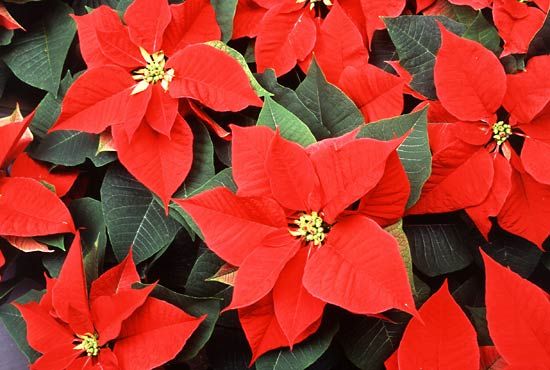
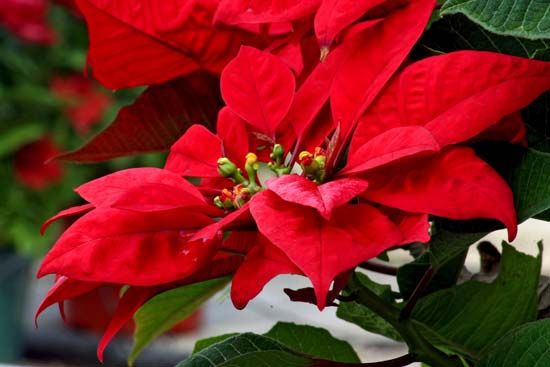
The association between the poinsettia (Euphorbia pulcherrima) and Christmas celebrations is primarily due to its vibrant, showy red bracts, which resemble large flowers and bloom during the winter season.23
The plant’s popularity as a holiday ornamental was largely established by Joel R. Poinsett, the first U.S. minister to Mexico. During his tenure in the late 1820s, Poinsett introduced the plant to the United States and helped integrate it into the field of floriculture. Because of its striking color and seasonal availability, it became a staple decoration in North America and Europe, with solid red varieties remaining in the highest demand throughout the six-week holiday period.253
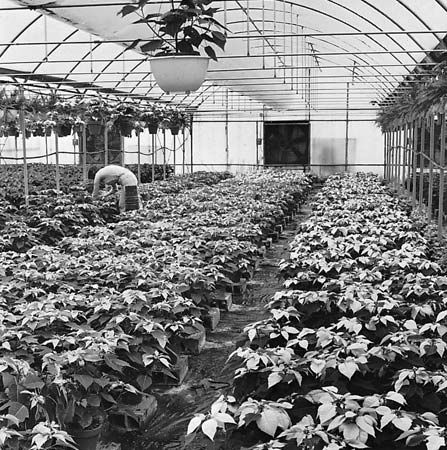
While the poinsettia is a beloved symbol of the season, its mass cultivation for short-term holiday use has faced criticism for being resource-intensive, as millions of these plants are typically discarded in landfills shortly after the festivities conclude.2
Are there any myths or misconceptions about poinsettias being poisonous, and what’s the truth?
A common misconception is that the poinsettia is deadly poisonous to humans and pets. This claim is greatly exaggerated; while the plant is not considered a food source, it does not pose a lethal threat.2
The truth is that the plant contains a milky latex within its stems and leaves. For individuals or animals with specific sensitivities, contact with this sap can cause irritation, such as skin rashes or discomfort if ingested. However, it is not the highly toxic substance that urban legends often suggest.2
As with any ornamental plant, it is wise to keep it out of reach of small children and pets to avoid any potential irritation, but there is no need for alarm regarding its toxicity.
How long can a poinsettia plant live, and can it rebloom after its initial flowering period?
A poinsettia is a perennial shrub that can live for many years, growing up to 3 metres (10 feet) tall in warm, outdoor climates. While they are often treated as disposable holiday decorations in northern regions, they can be kept as houseplants year-round.2
Yes, a poinsettia can rebloom after its initial flowering period. However, it is important to note that this process is not automatic. To encourage the plant to “bloom again” and trigger the bracts to change color for the following holiday season, the plant requires specific care and controlled conditions.2
Because many people discard these plants in January, they are often viewed as temporary, but with the right environment, they can continue to grow and thrive well beyond the Christmas season.2
Sources
- poinsettia — Merriam-Webster
- poinsettia — Encyclopædia Britannica
- Joel R. Poinsett — Encyclopædia Britannica
- Mexican fire plant — Merriam-Webster
- Christmas flower — Merriam-Webster
- spurge — Encyclopædia Britannica
- Merry and Bright: 8 Jolly Christmas Plants — Encyclopædia Britannica
Published on · 3 min read