Pitcher Plant
Pitcher plants are carnivorous plants that utilize modified, pitcher-shaped leaves as passive pitfall traps to obtain nutrients in nitrogen-poor soils. They…
What are the different genera of pitcher plants, and how do they differ from each other?
Pitcher plants are carnivorous plants that utilize modified, pitcher-shaped leaves as passive pitfall traps to obtain nutrients in nitrogen-poor soils. They are categorized into several distinct families and genera:12
New World Pitcher Plants (Family Sarraceniaceae)
Native to the Americas, this family includes three genera:12
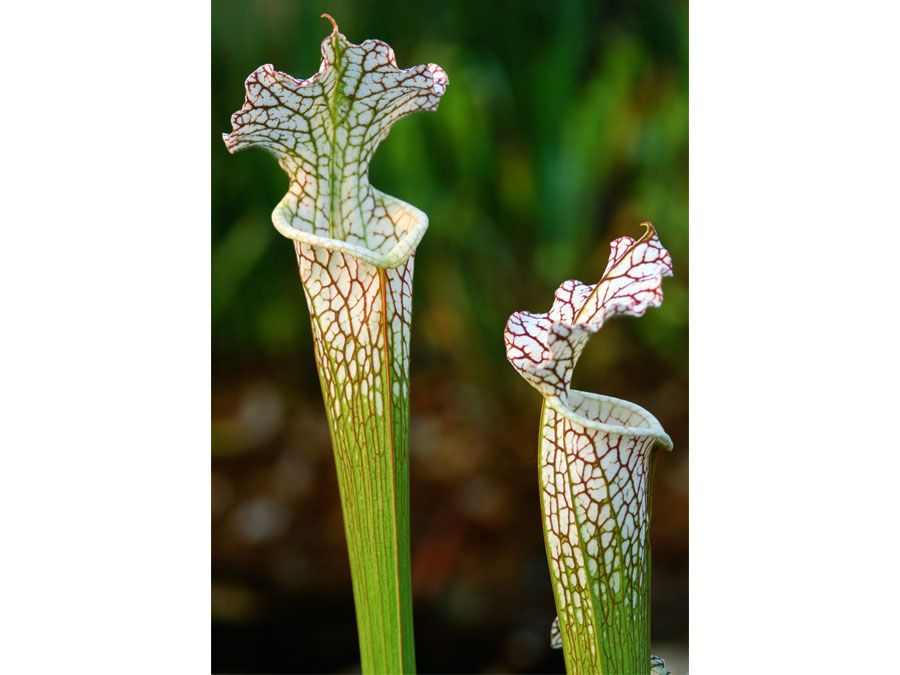
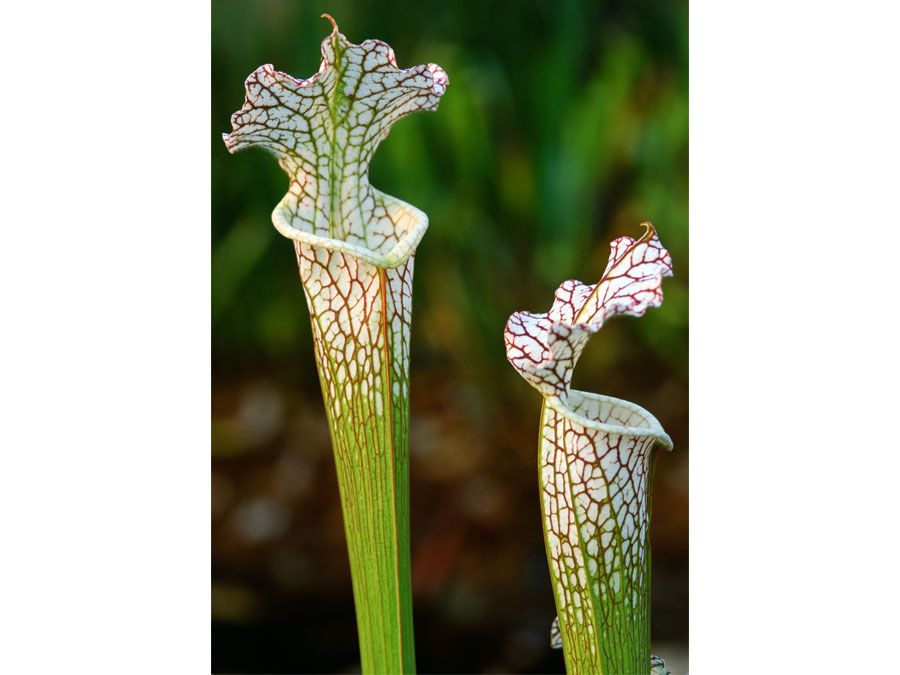
- Sarracenia: Known as trumpet pitchers, these are native to eastern North America. They feature tubular leaves and rely on digestive enzymes to break down prey.12
- Darlingtonia: Includes only the cobra plant (D. californica). It features a hooded, cobra-like leaf and relies on bacteria rather than its own enzymes to digest prey.12
- Heliamphora: Known as sun pitchers, these are native to the rainforest mountains of South America. They form cushion-like structures in swampy, high-altitude environments.12
Old World Pitcher Plants (Family Nepenthaceae)
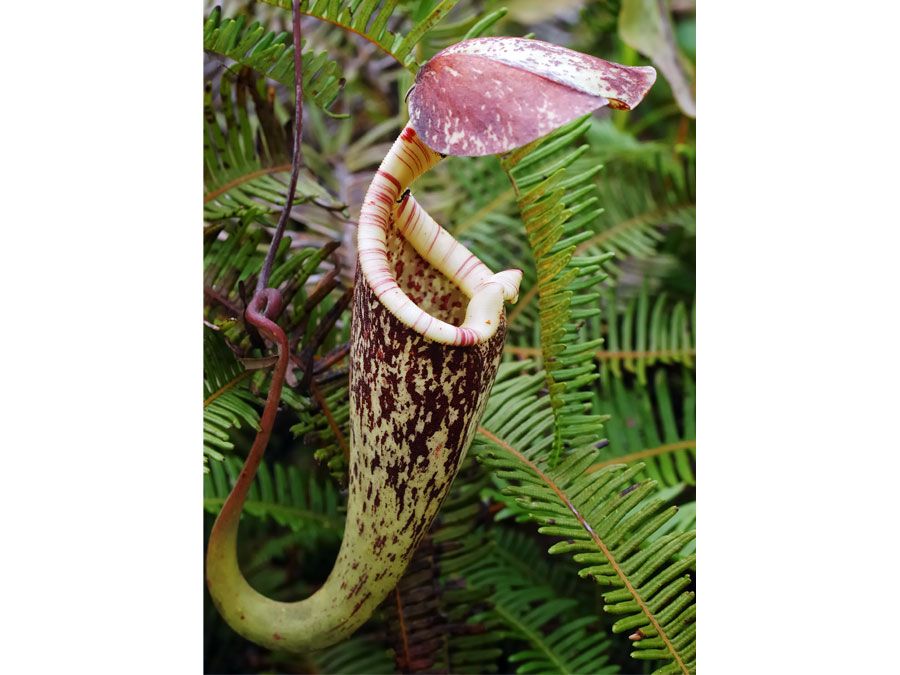
- Nepenthes: This genus contains about 140 species found in Madagascar, Southeast Asia, and Australia. Many are epiphytic and some have evolved to capture animal feces or guano from tree shrews and bats instead of relying solely on insects.23
Western Australian Pitcher Plant (Family Cephalotaceae)
- Cephalotus: This genus contains a single species, C. follicularis. Unlike other pitcher plants, it produces both traditional leaves and carnivorous traps.42
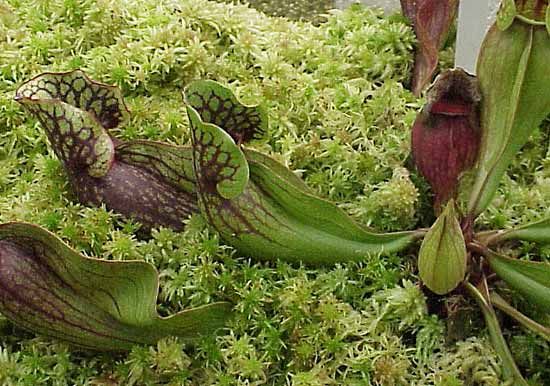
How do pitcher plants attract and trap their prey?
Pitcher plants attract and trap their prey through a passive mechanism that relies on deceptive lures and specialized leaf structures.52
Attraction
To lure insects and other small prey, these plants often employ visual and chemical signals:
- Deceptive Lures: Many pitcher plants feature flower-like markings near the opening of their jug-shaped leaves to mimic blossoms. Some species, such as the Western Australian pitcher plant (Cephalotus follicularis), utilize lids with patches of semitransparent tissue that confuse and exhaust flying insects.56
- Nectar Secretion: Plants like Nepenthes secrete nectar at the lip of the pitcher, providing a sweet reward that draws foraging insects to the trap’s edge.57
Trapping and Digestion
Once an insect lands on the slippery rim of the pitcher, it loses its footing and falls into the hollow leaf. The trap is designed to prevent escape through several features:5
- Slippery Surfaces: The rim and interior walls are often smooth or waxy, making it difficult for insects to climb out.56
- Structural Barriers: Downward-pointing hairs or specialized rings may be present to further hinder an insect’s ability to exit.6
- Digestion: The base of the pitcher contains a pool of liquid, which may include enzymes produced by the plant or bacteria that break down the prey. The resulting nutrients, such as nitrogenous compounds, are then absorbed by the plant to support its growth in nutrient-poor environments.562
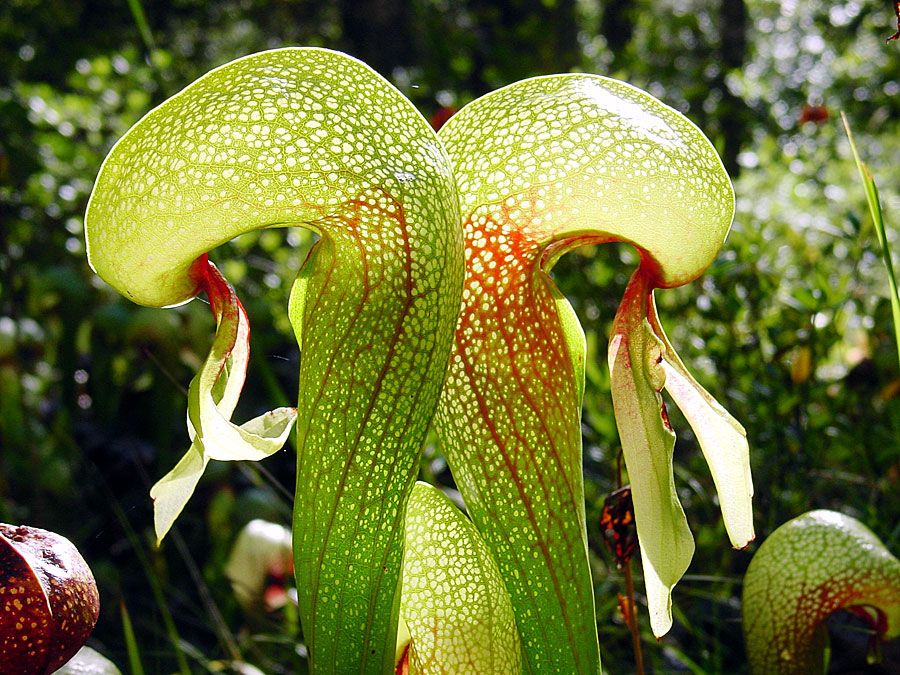
What are the key characteristics that define pitcher plants?
Pitcher plants are a diverse group of carnivorous plants defined by their specialized, pitcher-shaped leaves that function as passive pitfall traps. These plants are typically found in nutrient-poor, acidic environments—such as bogs, swamps, and sandy meadows—where they rely on carnivory to supplement their intake of essential nutrients like nitrogen and phosphorus.826
Key characteristics include:
- Passive Trapping Mechanism: The leaves form hollow, lidded structures that collect liquid. Insects and other small prey are attracted by nectar or visual lures, eventually slipping into the trap’s interior, where they are unable to escape due to slick surfaces or downward-pointing hairs.642
- Digestion: Once trapped, prey is broken down by enzymes secreted by the plant or by bacteria residing within the fluid.62
- Taxonomic Diversity: Pitcher plants are not a single family but are found across five genera within three distinct families: Sarraceniaceae (New World), Nepenthaceae (Old World), and Cephalotaceae (Western Australia).62
- Adaptability: While most are photosynthetic herbs, some species have evolved to utilize animal feces or guano as nutrient sources, and others, like the Western Australian pitcher plant, produce both traditional leaves and carnivorous traps.342
How do pitcher plants digest their prey, and what nutrients do they obtain from this process?
Pitcher plants digest their prey through a process of chemical breakdown that is analogous to digestion in animals. This process is facilitated by specialized glands within the pitcher that produce digestive [enzymes], or by [bacteria] residing within the fluid that fills the trap.82
Through this chemical breakdown, the plant extracts essential nutrients that are often scarce in their native, nutrient-poor environments, such as bogs and swamps. The primary nutrients obtained include:28
- Nitrogenous compounds: These are critical for the plant’s growth and survival in marginal soil conditions.28
- Salts: These minerals are absorbed alongside other nutrients to supplement the plant’s diet, which is otherwise derived from [photosynthesis].8
While most pitcher plants produce their own digestive enzymes, some species—such as certain members of the pineapple family that utilize similar pitfall traps—rely exclusively on bacteria to decompose their prey. This carnivorous habit allows these plants to thrive in hostile environments where traditional nutrient uptake from the soil is limited.8
Sources
- Sarraceniaceae — Encyclopædia Britannica
- Western Australian pitcher plant — Encyclopædia Britannica
- pitcher plant — Encyclopædia Britannica
- Nepenthes — Encyclopædia Britannica
- mimicry - Insect-luring plants — Encyclopædia Britannica
- Carnivorous plant — Encyclopædia Britannica
- Nectar — Encyclopædia Britannica
- pitcher plant — Merriam-Webster
Published on · 4 min read