Long Island
Long Island has played a pivotal role in the history of New York and the United States through its strategic military importance, economic development, and…

What is the historical significance of Long Island in the development of New York and the United States?
Long Island has played a pivotal role in the history of New York and the United States through its strategic military importance, economic development, and influence on American social patterns.
Military Significance
During the American Revolution, the island was a critical theater of war. The Battle of Long Island in 1776 served as the first major engagement following the Declaration of Independence. Although the British victory forced George Washington to withdraw, his successful evacuation of troops to Manhattan preserved the Continental Army, providing a morale boost that proved vital for the long-term war effort.12
Economic and Social Development
Long Island’s evolution reflects broader American trends:
- Early Settlement: Originally inhabited by Delaware and Montauk peoples, the island became a contested territory between Dutch and English settlers before falling under British control in 1664.2
- Suburbanization: In the 20th century, the island became the birthplace of the modern American suburb. Levittown, established in 1947, pioneered mass-produced housing, though it also highlighted the era’s discriminatory housing practices.3
- Infrastructure: The Long Island Rail Road transformed the region into a major market-gardening center in the 19th century and remains the busiest commuter railroad in the United States.2
How was Long Island formed geologically, and what are its main geographical features?
The provided search results do not contain information regarding the geological formation of Long Island.
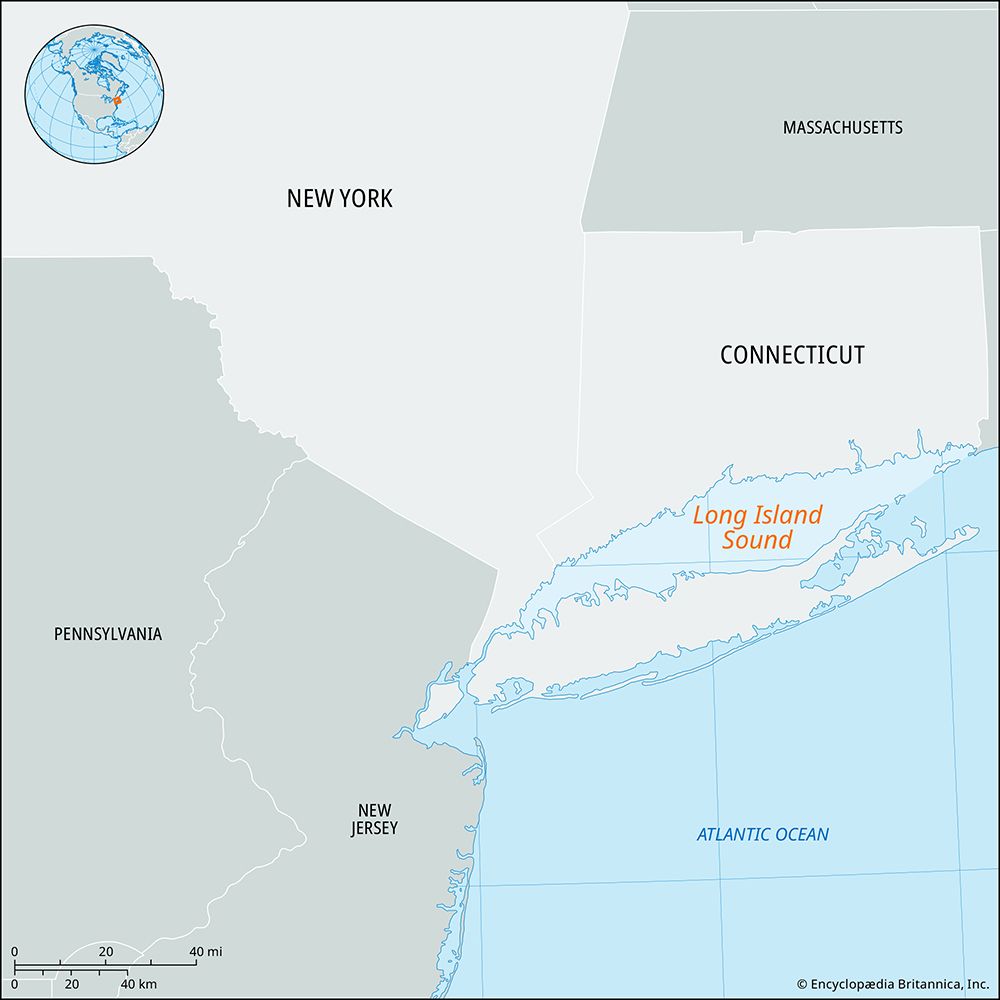
Regarding its geography, Long Island is an island in the Atlantic Ocean extending 118 miles (190 km) east-northeast from the mouth of the Hudson River. It is 12–20 miles (19–32 km) wide and is separated from Connecticut to the north by the Long Island Sound.
Key geographical features include:
- Eastern Peninsulas: The eastern end divides into two peninsulas, culminating in Orient Point to the north and Montauk Point to the south.
- Northern Shore: Characterized by several bays, including Huntington and Port Jefferson Harbor.
- Southern Shore: Fronts the Atlantic and is lined with a continuous series of sandbars and sandspits, such as Fire Island. These features form various embayments, including Jamaica Bay and Great South Bay.
- Terrain: The western half is largely urbanized, while the eastern half features flat, fertile farmlands and long, sandy beaches.
How is Long Island divided administratively, and what are its major cities and towns?
Long Island is administratively divided into four counties, arranged from west to east: Kings, Queens, Nassau, and Suffolk.2
Administrative Structure
- Kings County: Coextensive with the New York City borough of Brooklyn.2
- Queens County: Coextensive with the New York City borough of Queens.2
- Nassau County: Located in the central portion of the island, this county is heavily suburbanized.2
- Suffolk County: Occupying the central and eastern portions of the island, this county is divided into 10 towns (townships), including Huntington, Southampton, and Riverhead, which serves as the county seat.5
Major Cities and Towns
While the western half of the island is characterized by the urban and suburban sprawl of New York City, the eastern half contains various distinct communities. Notable towns and villages include:2
- Huntington: A major town in Suffolk County.5
- Southampton: A historic town known for its role in early English settlement.25
- Sag Harbor: A village in Suffolk County.5
- Stony Brook: A community in Suffolk County.5
- Hempstead: A significant town in Nassau County.2
What is the geographic location and size of Long Island?
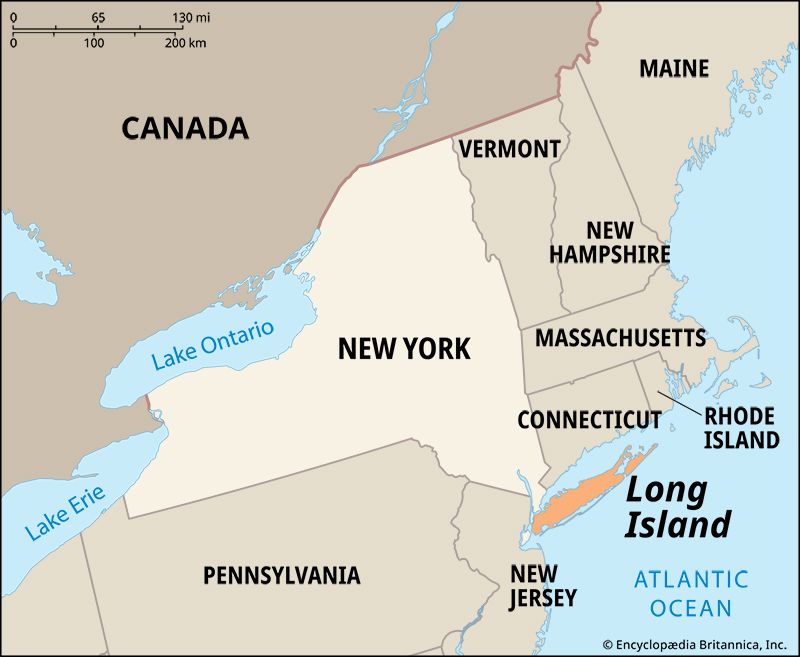
Long Island is located in the Atlantic Ocean and comprises the southeasternmost part of New York state. It lies roughly parallel to the southern shore of Connecticut, separated by the Long Island Sound, and its western end forms part of the harbor of New York City.2
Regarding its size and dimensions, the island extends 118 miles (190 km) east-northeast from the mouth of the Hudson River. It measures 12–20 miles (19–32 km) in width and encompasses a total area of 1,401 square miles (3,629 square km).2
Sources
- Battle of Long Island — Encyclopædia Britannica
- Long Island — Encyclopædia Britannica
- suburb: Top Questions — Encyclopædia Britannica
- Long Island — Merriam-Webster
- Suffolk — Encyclopædia Britannica
Published on · 3 min read