Hudson River
The Hudson River has served as a profound source of inspiration for American art and literature, most notably through the Hudson River school, the first…
How has the Hudson River influenced art and literature throughout American history?
The Hudson River has served as a profound source of inspiration for American art and literature, most notably through the Hudson River school, the first native school of painting in the United States.1
Influence on Art
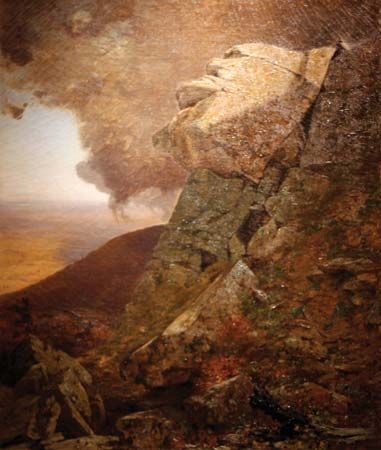
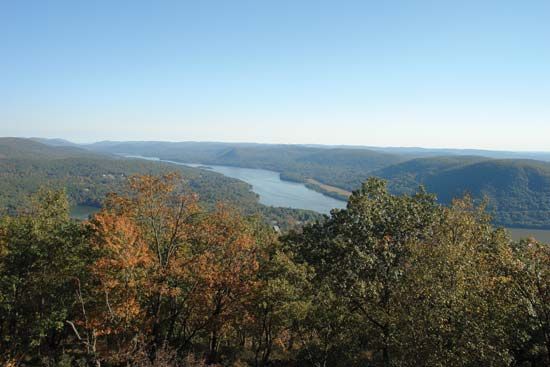
Active between approximately 1825 and 1870, this group of artists celebrated the natural beauty of the American landscape, specifically the untouched wilderness of the Hudson River valley and the Catskill region. Early leaders like Thomas Cole, Asher Durand, and Thomas Doughty captured the region’s mystery, loneliness, and splendor, establishing a nationalistic style that sought independence from European traditions. Their work often emphasized contemplative, lyrical scenes or the monumental aspects of nature, with Durand’s famous painting Kindred Spirits serving as a tribute to the connection between art and literature.12
Influence on Literature
The serene beauty of the Hudson Valley provided a vital backdrop for the stories of Washington Irving, whose literary works are deeply intertwined with the region’s character. Furthermore, the cultural significance of the river is highlighted by the friendship between Thomas Cole and the poet William Cullen Bryant, illustrating how the river fostered a shared creative spirit among 19th-century American intellectuals.32
What role did the Hudson River play during the American Revolutionary War?
During the American Revolutionary War, the Hudson River served as a vital strategic waterway that both the British and American forces sought to control. Its importance lay in its potential to sever the patriot-heavy New England colonies from the mid-Atlantic colonies, effectively isolating the rebellion.4
Strategic Significance
The British developed a complex offensive campaign in 1777 intended to gain control of the entire Hudson Valley. The plan involved a three-pronged attack:
- Gen. John Burgoyne was to advance south from Canada via Lake Champlain and Lake George toward Albany.
- Col. Barry St. Leger was to move from Oswego along the Mohawk Valley.
- Gen. Sir William Howe was expected to move north up the Hudson from New York City.4
Key Conflicts
The river was the site of numerous military engagements, including:
- The Battles of Saratoga: Often considered the turning point of the war, these 1777 battles resulted in a decisive American victory that halted the British advance and persuaded the French to provide military assistance.4
- Fortifications and Treason: The Americans maintained strongpoints such as Fort Washington and Fort Lee to guard the river. The area was also the site of Benedict Arnold’s infamous betrayal; after his discovery as a traitor, he escaped to a British ship anchored near the village of Garrison.2
- Headquarters: George Washington established his headquarters at Newburgh along the west bank in 1782, where he eventually disbanded the American armies.2
What are some of the most famous bridges that cross the Hudson River?
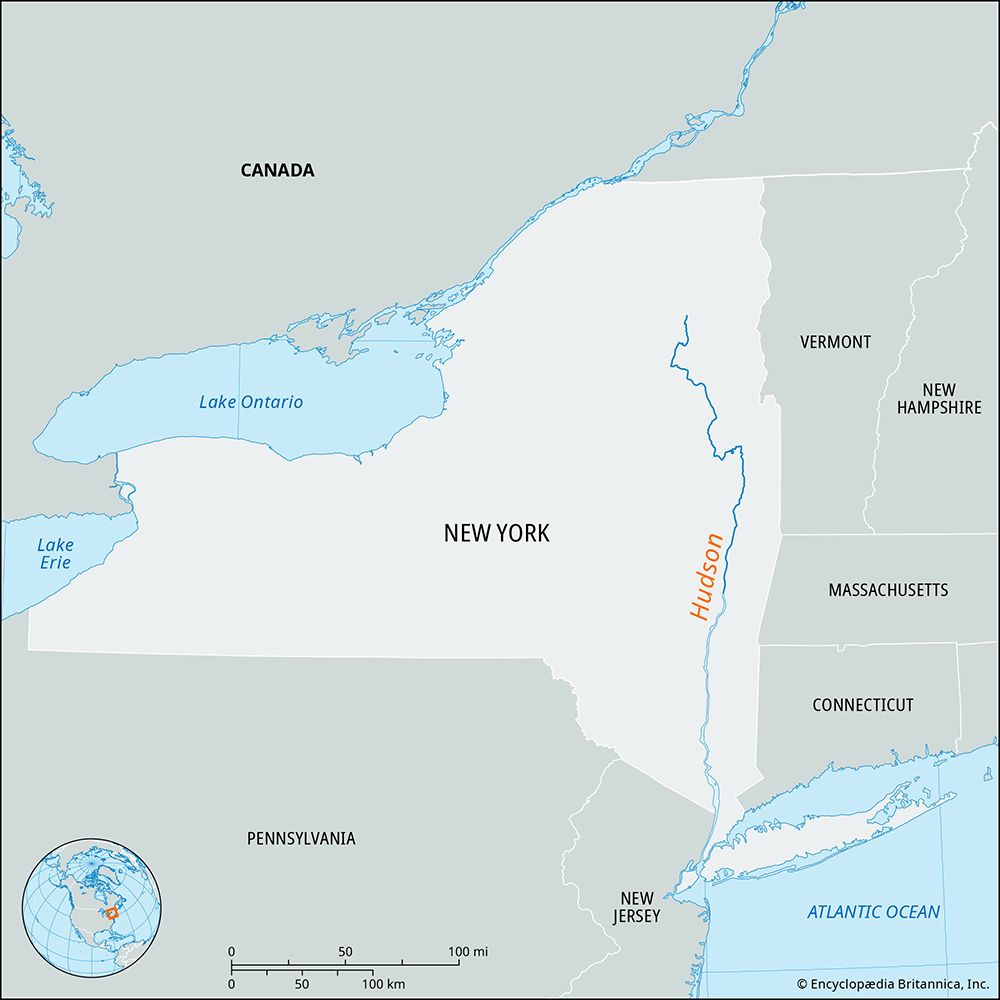
The Hudson River is spanned by several notable bridges that facilitate travel between New York and New Jersey. Among the most prominent is the George Washington Bridge, a massive suspension bridge completed in 1931. Designed by engineer Othmar H. Ammann, it connects Fort Lee, New Jersey, to Manhattan and was a record-breaking structure at the time of its construction, featuring a main span of 3,500 feet.8
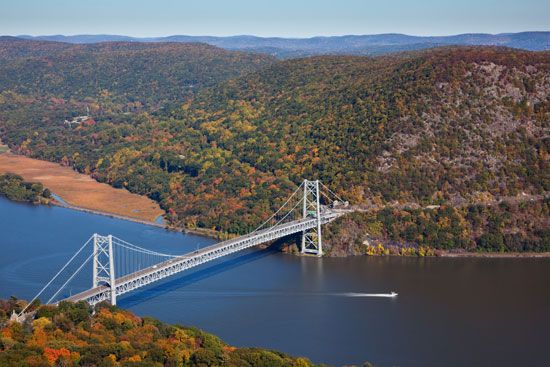
Other significant bridges crossing the river include, from north to south:
- Castleton-on-Hudson Bridge (1959)
- Rip Van Winkle Bridge (1935)
- Newburgh-Beacon Bridge (1963)
- Bear Mountain Bridge (1924)
- Tappan Zee Bridge (1956)2
These structures serve as vital links for regional transportation, replacing the passenger ferry traffic that once dominated the river’s commercial routes.2
What Native American tribes lived along the Hudson River before European settlement?
Before European settlement, several Algonquian-speaking tribes inhabited the Hudson River valley.
- Mohican: Also known as the Mahican, they occupied the upper Hudson River valley above the Catskill Mountains. They referred to themselves as “the people of the waters that are never still” and to the river as Muhheakunnuk.910
- Wappinger: This confederacy lived along the east bank of the Hudson, stretching from Manhattan Island north to the area of present-day Poughkeepsie.11
- Lenni Lenape: Also known as the Delaware, these people occupied the Atlantic seaboard, including areas near the mouth of the Hudson and western Long Island.122
While these groups were the primary inhabitants along the river, the Iroquois Confederacy—which included the Mohawk—lived farther inland, particularly within the fertile Mohawk River valley, which served as a major tributary to the Hudson.132
Sources
- Hudson River school — Encyclopædia Britannica
- Hudson River — Encyclopædia Britannica
- Western painting - United States — Encyclopædia Britannica
- American Revolution - Early engagements and privateers — Encyclopædia Britannica
- Battles of Saratoga — Encyclopædia Britannica
- Battles of Trenton and Princeton - The British campaign of 1776 — Encyclopædia Britannica
- American Revolution - The battle for New York — Encyclopædia Britannica
- George Washington Bridge — Encyclopædia Britannica
- Mohawk River — Encyclopædia Britannica
- Mohican — Encyclopædia Britannica
- Lenni Lenape — Encyclopædia Britannica
- New York - First peoples — Encyclopædia Britannica
- Wappinger — Encyclopædia Britannica
Published on · 3 min read