Loofah
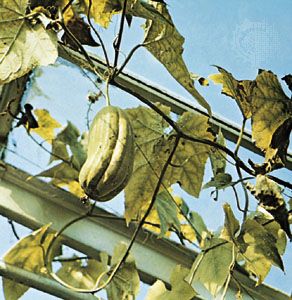
A loofah is a genus (Luffa) of seven species of annual climbing vines belonging to the gourd family (Cucurbitaceae). These plants are native to the Old World…
What is a loofah plant and where does it originate from?
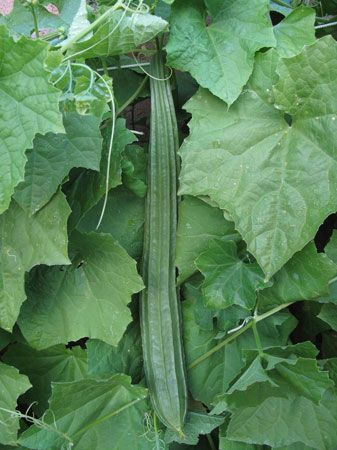
A loofah is a genus (Luffa) of seven species of annual climbing vines belonging to the gourd family (Cucurbitaceae). These plants are native to the Old World tropics.12
While the fruits of species such as Luffa acutangula and L. aegyptiaca are edible when young, they are perhaps best known for their fibrous, spongelike interior. When the fruit matures, its skin, pulp, and seeds are removed to reveal a complex network of vascular bundles that functions as a natural sponge, commonly used for bathing or washing dishes. Industrially, these fibrous interiors are also utilized as filters.12
These aggressive climbers are cold-sensitive and require a long growing season to reach maturity. Their name is derived from the Arabic word lūf.12
What are the main uses of loofah in personal care and household applications?
The fibrous, spongelike interior of the loofah fruit is highly valued for its versatility in both personal care and household maintenance.
Personal Care
In personal care, the mature, dried fruit—once stripped of its skin, pulp, and seeds—serves as a natural, exfoliating sponge. Its complex network of vascular bundles provides a textured surface that is commonly used for bathing to help cleanse and invigorate the skin.1
Household Applications
In the home, the loofah is widely utilized as a durable, natural tool for washing dishes. Its porous, fibrous structure is effective for scrubbing surfaces without the need for synthetic materials. Beyond these domestic uses, the spongy interior of the fruit is also employed in various industrial settings as a natural filter.1
Can loofah plants be grown in home gardens, and if so, what conditions do they need?
Yes, loofah plants can be grown in home gardens, provided you live in an area that can accommodate their specific environmental needs. Because they are aggressive, climbing vines, they require ample space and a sturdy support structure to accommodate their coiling tendrils.1
To successfully grow them, keep the following conditions in mind:
- Climate: Loofah plants are cold-sensitive and cannot tolerate frost. They thrive in warm environments.1
- Growing Season: They require a long growing season to allow the fruits to reach full maturity, which is necessary for the development of the fibrous interior.1
- Germination: To improve the chances of successful growth, it is recommended to soak or scarify the seeds—by lightly scratching them with a file or knife—before planting to encourage germination.1
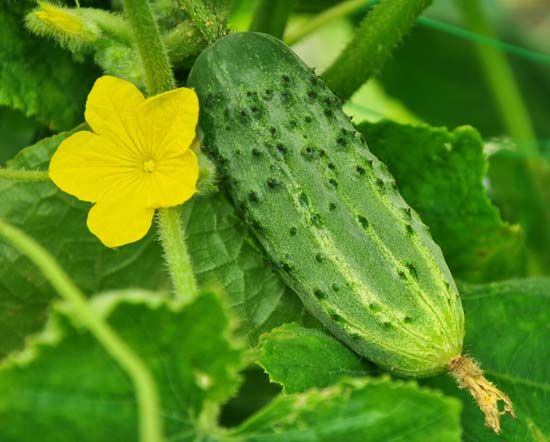
Once established, these plants will produce yellow flowers and oblong fruits that turn from green to a straw-colored, brittle-skinned state as they mature.1
How is the loofah plant cultivated and harvested?
The cultivation of the loofah (Luffa) requires a warm climate and a long growing season, as these plants are sensitive to cold and cannot survive frost. Because they are aggressive, climbing vines equipped with tendrils, they must be provided with adequate space and support structures to thrive.
To begin cultivation, it is standard practice to soak or scarify the seeds—by lightly scratching them with a file or knife—to improve germination rates. Once planted, the vines produce yellow flowers and oblong fruits that reach approximately 30 cm (1 foot) in length.
Harvesting for sponge production occurs only after the fruits have fully matured. At this stage, the green skin turns straw-colored and develops a brittle rind. To process the fruit into a usable sponge, the outer skin, internal pulp, and seeds are removed, revealing the complex network of netted vascular bundles that gives the loofah its characteristic texture.
Sources
- loofah — Encyclopædia Britannica
- loofah — Merriam-Webster
Published on · 3 min read