Colocynth
Colocynth (Citrullus colocynthis) is a hairy-stemmed perennial vine belonging to the gourd family (Cucurbitaceae). Native to the Mediterranean region and…
What is colocynth?
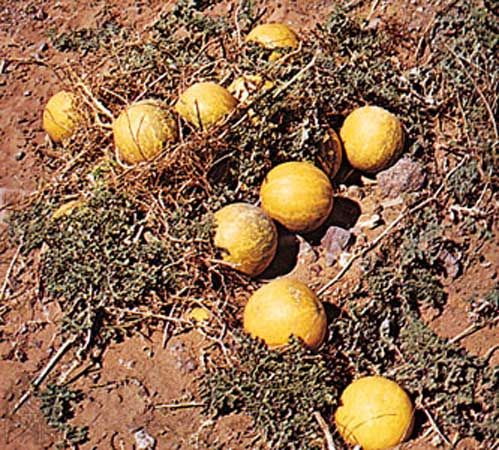
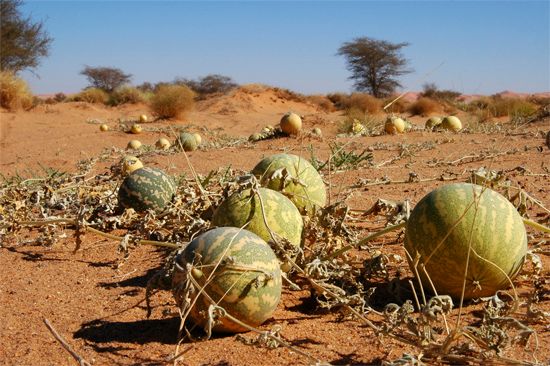
Colocynth (Citrullus colocynthis) is a hairy-stemmed perennial vine belonging to the gourd family (Cucurbitaceae). Native to the Mediterranean region and parts of Africa, it is closely related to the watermelon.12
The plant is adapted to sandy, coastal, or desert environments and features deeply cut leaves, forked tendrils, and small, pale greenish-yellow flowers. Its rounded fruits are yellow or green and possess a notably bitter taste.1
Historically, the spongy pulp of the fruit has been used in folk medicine to prepare a powerful cathartic or purgative. Due to its potency, it is important to note that such substances should be handled with caution and under professional guidance to ensure safety.12
How is colocynth related to the watermelon?
Colocynth (Citrullus colocynthis) and the watermelon (Citrullus lanatus) are closely related as members of the same genus, Citrullus, within the gourd family (Cucurbitaceae).13
As members of the Citrullus genus, both plants share several botanical characteristics typical of the family, including:
- Growth Habit: Both are herbaceous plants that often grow as trailing or climbing vines.31
- Structural Features: They possess characteristic tendrils used for support and produce fleshy, many-seeded fruits known as pepos.41
- Botanical Classification: They are both categorized under the order Cucurbitales and share similar floral structures, such as unisexual flowers with five petals.43
While they share this common ancestry and structural morphology, they are distinct species with different uses and characteristics; for instance, the colocynth is primarily known for its bitter, purgative fruit, whereas the watermelon is widely cultivated for its edible, succulent fruit.53
What are the dangers of using strong purgatives?
Using strong purgatives, such as those derived from colocynth, carries significant health risks and should be approached with extreme caution. While laxatives are intended to treat constipation, potent substances can cause severe physiological distress.
The primary dangers associated with the misuse or overuse of strong purgatives include:
- Diminished Effectiveness: With regular use of contact purgatives, the body often builds a tolerance. This necessitates larger and more frequent doses to achieve the same effect, eventually leading to a point where the substance ceases to be effective entirely.6
- Electrolyte and Fluid Imbalance: Strong purgatives can cause rapid loss of water and essential salts from the body. This disruption can lead to dehydration and dangerous imbalances in the body’s chemical levels.6
- Gastrointestinal Irritation: Because these agents often act by directly stimulating the muscles of the intestine, they can cause cramping, pain, and potential damage to the digestive lining if used improperly.6
It is ethically imperative to prioritize patient safety by avoiding self-administration of potent herbal purgatives. Always consult a medical professional before using such treatments.
What other plants belong to the gourd family?
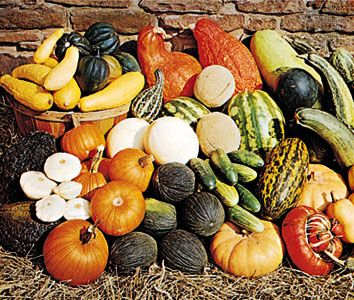
The Cucurbitaceae family, commonly known as the gourd family, comprises approximately 98 genera and 975 species of flowering plants. These plants are primarily herbaceous, often growing as fast-paced climbing or trailing vines that utilize tendrils for support.347
Below are some notable plants belonging to this family:
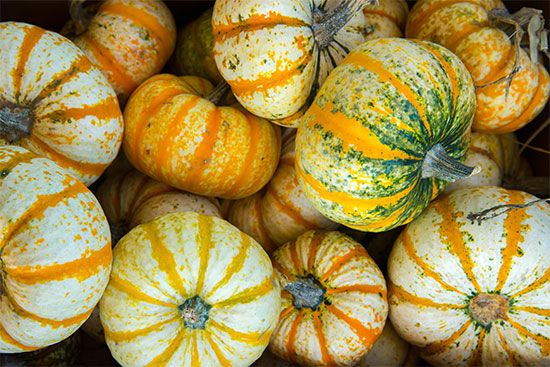
- Squashes and Pumpkins: Including zucchini, winter squash, and pumpkin (genus Cucurbita).34
- Melons and Cucumbers: Such as cucumber, gherkin, muskmelon, and watermelon.34
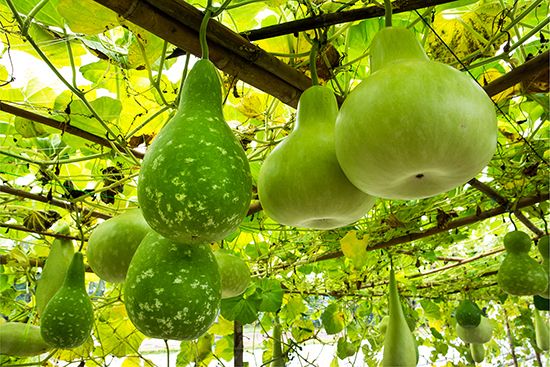
- Gourds: Including the bottle gourd, wax gourd, snake gourd, and yellow-flowered gourd.47
- Other Varieties: Such as chayote, loofah, bryony, and bur cucumber.47
These plants are typically sensitive to freezing temperatures and are characterized by their fleshy, many-seeded fruits known as pepos.37
Sources
- colocynth — Encyclopædia Britannica
- colocynth — Merriam-Webster
- Cucurbitaceae — Encyclopædia Britannica
- list of plants in the family Cucurbitaceae — Encyclopædia Britannica
- Citrullus — Merriam-Webster
- laxative — Encyclopædia Britannica
- gourd — Encyclopædia Britannica
Published on · 3 min read