Calabazilla
Calabazilla (Cucurbita foetidissima) is a perennial prostrate vine belonging to the gourd family (Cucurbitaceae). Native to southwestern North America, the…
What is calabazilla?
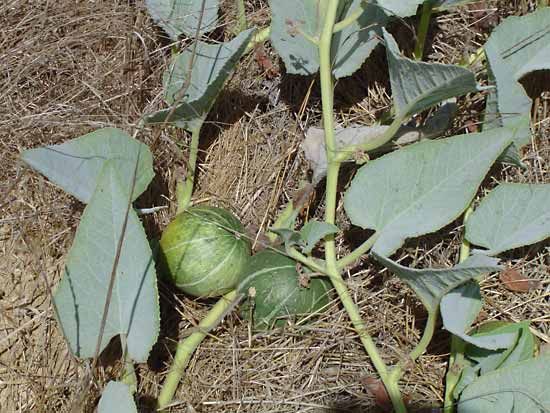
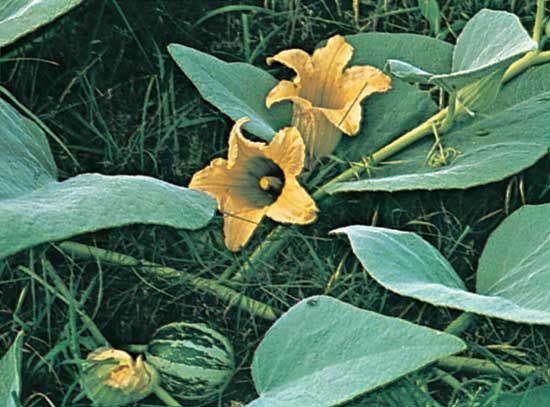
Calabazilla (Cucurbita foetidissima) is a perennial prostrate vine belonging to the gourd family (Cucurbitaceae). Native to southwestern North America, the plant is characterized by its fetid odor and tuberous roots.1
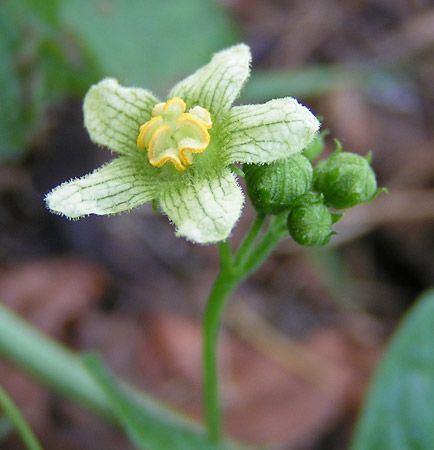
While the plant is considered somewhat unattractive, it is occasionally cultivated as an ornamental in arid and semiarid regions for its colorful, striped fruits. Although the fruits themselves are inedible, the plant produces seeds that are rich in protein and oil, making them a valuable food source. The vine features long-stalked, triangular leaves and yellow, unisexual flowers that typically measure 6 to 10 cm (2.5 to 4 inches) in width.1
What other plants belong to the gourd family?
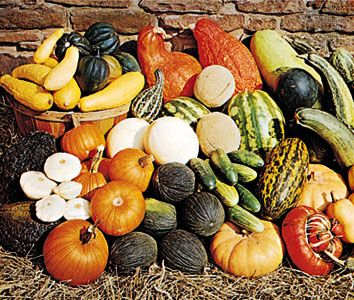
The Cucurbitaceae family, commonly known as the gourd family, comprises approximately 975 species across 98 genera of flowering plants. These plants are typically fast-growing, prostrate, or climbing vines that thrive in tropical and warm temperate regions.2345
Beyond the calabazilla, the family includes a wide variety of food and ornamental plants, such as:
- Squashes and Pumpkins: Including zucchini, winter squash, and various pumpkins/squash), and various pumpkins.23
- Melons and Cucumbers: Such as watermelon, muskmelon, cucumber, and gherkin.35
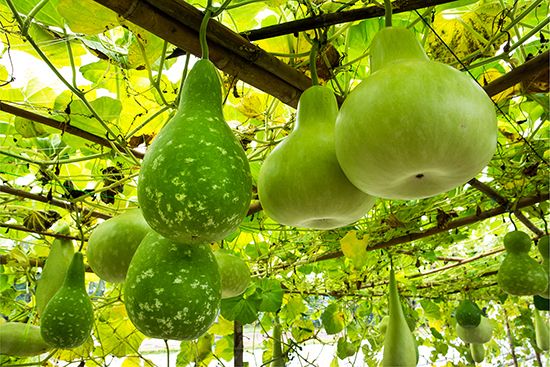
- Gourds: Including the bottle gourd, wax gourd, snake gourd, and loofah.34
- Other Notable Species: Including chayote, bryony, colocynth, and bur cucumber.3
Many of these species are characterized by their showy, unisexual flowers and large, fleshy fruits known as pepos. While many are cultivated for their nutritional value, others are grown for their utility—such as the dried shells of bottle gourds used for utensils—or for their ornamental appeal.2345
How do perennial plants survive in arid environments?
Perennial plants survive in arid environments by employing a variety of morphological and physiological strategies to minimize water loss and maximize water uptake during infrequent wet periods.6
Water Storage and Conservation
Many desert perennials, known as xerophytes, have evolved to store water in thick, fleshy tissues. These succulents may store water in their stems (as seen in cacti) or leaves (as seen in agaves). To further reduce water loss, many succulents utilize crassulacean acid metabolism, a process where stomata open only at night to take in carbon dioxide, minimizing transpiration during the hot day. Other plants reduce water loss through waxy leaf coatings, dense hairy coverings, or by shedding leaves during dry periods.786
Underground Survival and Dormancy
Many perennials survive drought by remaining physiologically inactive, relying on underground storage organs such as rhizomes, tubers, or corms. These structures store food and water, allowing the plant to remain dormant until rain triggers rapid growth. Some “resurrection plants” can even become completely desiccated and then resume activity once they absorb moisture from rain or dew.96
What are some common uses for gourds in human history?
Throughout human history, gourds—the hard-shelled fruits of plants in the Cucurbitaceae family—have been valued for their versatility in both culinary and practical applications.
Culinary Uses
Many gourds are cultivated as food crops. While the mature, hard-shelled varieties are often used for utility, the young fruits of species like the bottle gourd are commonly cooked and consumed as vegetables.412
Practical and Decorative Objects
Once dried, the tough rinds of mature gourds can be fashioned into a wide array of functional items, including:
- Containers and Utensils: They are frequently used to create bottles, cups, scoops, ladles, spoons, and pipes.412
- Household Items: Dried gourds serve as birdhouses, lamps, and even fishnet floats.412
- Ornamentation: Many varieties are grown specifically for their decorative appeal or as fancy ornaments.412
Musical Instruments
Gourds are integral to the construction of musical instruments across nearly every continent. Examples include:
- Percussion: Rattles such as the Latin American maracas and the West African shekere, as well as the guiro and the Indian kanjira.4
- Stringed Instruments: The sitar, tanpura, and the Gambian kora utilize gourd components for their resonance.4
- Wind Instruments: Various forms of gourd mouth organs are found throughout East and Southeast Asia.4
Sources
- calabazilla — Encyclopædia Britannica
- Cucurbitaceae — Encyclopædia Britannica
- list of plants in the family Cucurbitaceae — Encyclopædia Britannica
- gourd — Encyclopædia Britannica
- Cucurbitales - Cucurbitaceae — Encyclopædia Britannica
- Xerophyte — Encyclopædia Britannica
- Succulent — Encyclopædia Britannica
- Biosphere - Humidity — Encyclopædia Britannica
- Angiosperm - Shoot system modifications — Encyclopædia Britannica
- Sahara: Top Questions — Encyclopædia Britannica
- Desert - Population and community development and structure — Encyclopædia Britannica
- bottle gourd — Merriam-Webster
- Bottle gourd — Encyclopædia Britannica
- gourd — Merriam-Webster
Published on · 3 min read