Lough Ree
Lough Ree is a lake situated on the River Shannon in Ireland. It serves as a natural boundary, separating Counties Longford and Westmeath to the east from…
What is Lough Ree?
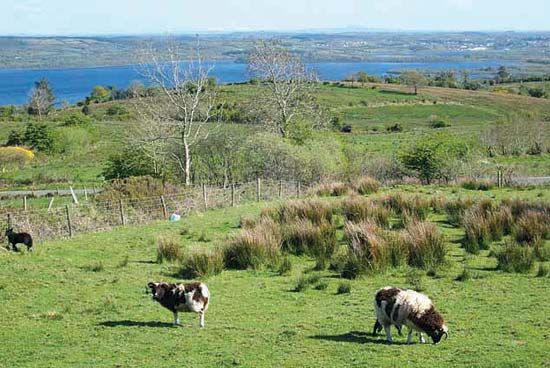
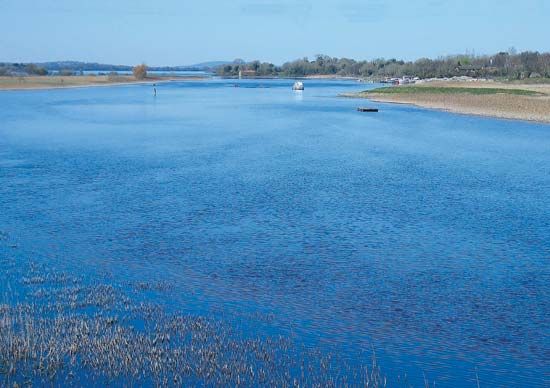
Lough Ree is a lake situated on the River Shannon in Ireland. It serves as a natural boundary, separating Counties Longford and Westmeath to the east from County Roscommon to the west.1
The lake is characterized by an irregular shoreline featuring a mix of deep bays and shallow inlets. It is also home to numerous islands, which can be reached by boat from the town of Athlone; several of these larger islands contain the ruins of ancient churches. Additionally, the lake is well-regarded for its fishing opportunities.1
Please note that Lough Ree should not be confused with Loughrea, which is a market town located in County Galway, Ireland, situated along the shore of a different lake, Lough Rea.2
What is the significance of the River Shannon in Ireland?
The River Shannon is the longest river in Ireland, serving as a vital geographical and historical artery for the country. Flowing approximately 161 miles, it drains the central lowland of Ireland and acts as a primary drainage system for the region.34
Its significance is multifaceted:
- Hydrology and Geography: The river connects several major lakes, including Lough Allen, Lough Ree, and Lough Derg. It is a key component of Ireland’s inland drainage, characterized by its slow, meandering course through marshes and bogs.34
- Energy and Industry: The river is utilized for power generation, notably at the Ardnacrusha hydroelectric station, which harnesses the water’s fall from lake to sea level.3
- Historical Transport: In the 19th century, the Shannon was a critical link in Ireland’s waterway network, connected to Dublin via the Grand Canal and the Royal Canal.3
- Modern Recreation: While commercial traffic has declined, the river is now a popular destination for pleasure craft and tourism.35
What are crannogs and how were they used in ancient Ireland?
A crannog is an artificially constructed island used as a site for houses or settlements in Ireland and Scotland. These structures were typically built in the shallows of a lake or within marshes, utilizing substructures of brushwood, logs, and sometimes stone to build up from the lake bottom.89
In ancient Ireland, crannogs served as secure dwelling places, offering a level of protection similar to that of land-based ring forts. They were often fortified with single or double stockaded defenses. While they originated as early as the Late Bronze Age, they reached their greatest development during early historic times and remained in use through the European Middle Ages.108
These sites provided inhabitants with the relative security of an island location, which was particularly advantageous in a society where rural living conditions were centered on agriculture and cattle rearing rather than urban centers.10
What kind of wildlife can be found in Irish lakes?
Irish lakes and wetlands serve as significant habitats for a variety of wildlife, particularly waterfowl. Ireland is a vital destination for numerous migratory bird species that breed in Iceland and Greenland during the summer and spend their winters in the milder Irish climate, while many others utilize the island as a stopover during their spring and fall migrations.11
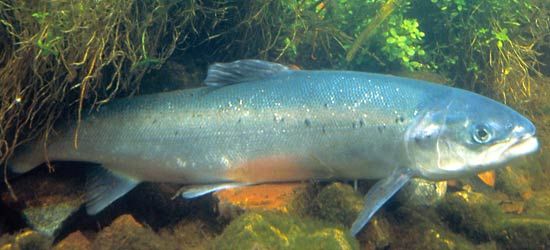
Regarding aquatic life, the river systems and associated lakes—such as those found along the River Shannon—support populations of salmon. These fish navigate through the river systems to reach their spawning grounds, a process facilitated by infrastructure like fish ladders at locations such as the outlet of Lough Derg.3
While Ireland’s overall biodiversity is influenced by its post-glacial history and separation from the European continent, its lakes remain essential ecological hubs for these migratory and native species.11
Sources
- Lough Ree — Encyclopædia Britannica
- Loughrea — Encyclopædia Britannica
- River Shannon — Encyclopædia Britannica
- Ireland - Waterborne traffic — Encyclopædia Britannica
- Shannon — Merriam-Webster
- Lough Allen — Encyclopædia Britannica
- Ireland - Drainage of Ireland — Encyclopædia Britannica
- Crannog — Encyclopædia Britannica
- crannog — Merriam-Webster
- Ireland - Rural economy and living conditions — Encyclopædia Britannica
- Ireland - Plant and animal life — Encyclopædia Britannica
Published on · 3 min read