Luapula River
The Luapula River plays a vital role in the regional economy of south-central Africa, primarily through its significant contributions to the fishing…
How does the Luapula River contribute to the local economy and livelihoods of people living along its banks?
The Luapula River plays a vital role in the regional economy of south-central Africa, primarily through its significant contributions to the fishing industry. The Luapula valley is a key source of fish, which serves as a crucial food supply for the Copperbelt region.1
To support this trade, most of the catch is smoked before being transported by truck to various markets. Beyond fishing, the river and its surrounding infrastructure facilitate regional connectivity; roads running parallel to the river link the regional capital of Mansa with other settlements like Mwenda and Kawambwa, while ferries operate across several of the river’s tributaries to assist with local transit. The river’s path through the Bangweulu Swamps—one of the world’s largest wetlands—further underscores the environmental importance of the area to the livelihoods of those living along its banks.12
Where is the Luapula River located, and what countries does it flow through?
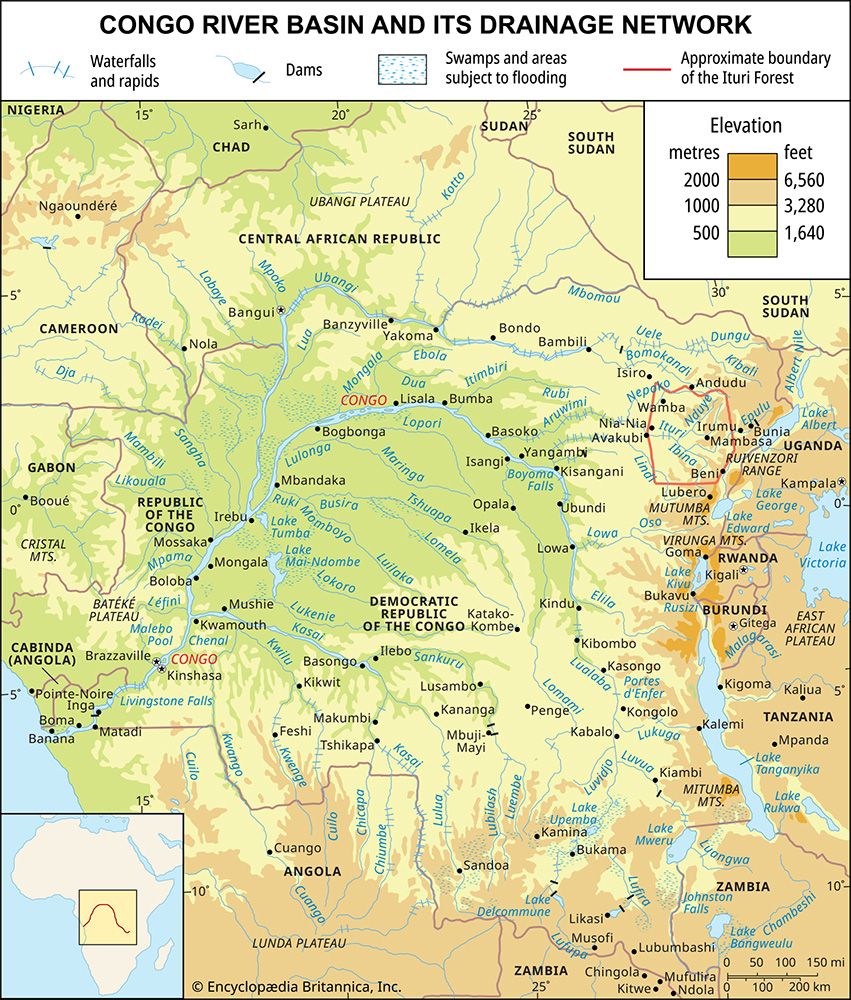
The Luapula River is located in south-central Africa. It originates in the Bangweulu Swamps in eastern Zambia.1
For the majority of its 350-mile (560-kilometre) course, the river serves as a natural boundary between Zambia and the Democratic Republic of the Congo (Congo-Kinshasa). It eventually flows northward into Lake Mweru, acting as a tributary to the Congo River drainage system.13
How has the Luapula River influenced the history and culture of the region?
The Luapula River has been a significant driver of historical and cultural development in south-central Africa, particularly through its role in supporting dense settlement and centralized governance.
By the early 19th century, the prosperous environment of the Luapula valley encouraged the growth of the Lunda kingdom, which became one of the four major areas in Zambia where centralized government and a strong sense of tribal identity emerged. This political development was rooted in the earlier expansion of the Luba-Lunda states, specifically the founding of the Kazembe state in the 18th century. Migrants from the Lunda region moved southeastward to establish their capital in the Luapula valley, south of Lake Mweru.145
The river also facilitated regional trade; the Kazembe Lunda utilized their location to exchange ivory and other goods, eventually connecting with trade networks reaching the Zambezi River and Portuguese stations. These historical processes of migration and state-building continue to shape the cultural landscape of the region today.514
What role does the Luapula River play in transportation and trade between Zambia and neighboring countries?
The Luapula River plays a specialized role in the regional economy and infrastructure of Zambia and the Democratic Republic of the Congo. While the river is not a primary artery for large-scale international shipping, it is navigable for approximately 100 miles (160 km) below Johnston Falls to its mouth in Lake Mweru.1
Regarding trade and transportation:
- Fisheries: The Luapula valley is a vital economic zone, serving as a major source of fish that is processed and transported to supply the Copperbelt, a key industrial region in Zambia.2
- Road Infrastructure: Rather than relying solely on the river for transit, regional connectivity is supported by roads that run nearly parallel to the Luapula. These routes link the regional capital of Mansa with other local centers like Mwenda and Kawambwa.1
- Local Transit: Ferries are utilized to navigate the river’s various tributaries, facilitating movement across the landscape.1
The river primarily functions as a natural boundary between Zambia and the Democratic Republic of the Congo, defining the border as it flows toward the Congo River drainage system.134
Sources
- Luapula River — Encyclopædia Britannica
- Zambia - Fishing — Encyclopædia Britannica
- Zambia - Drainage — Encyclopædia Britannica
- Zambia - Land — Encyclopædia Britannica
- Zambia - Archaeology and early history — Encyclopædia Britannica
- history of Zambia - Archaeology and early history of Zambia — Encyclopædia Britannica
- Luba-Lunda states — Encyclopædia Britannica
Published on · 3 min read