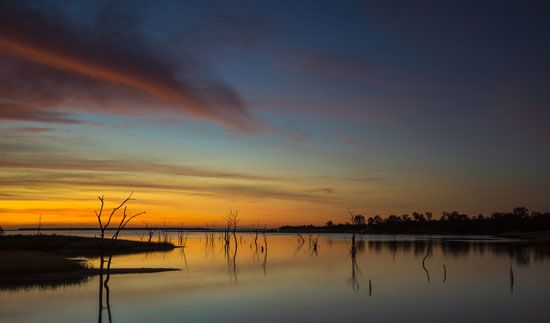
Lungwebungu River
The Lungwebungu River (also known as the Lungué-Bungo) is the largest headwater tributary of the Zambezi River in southwest central Africa.
What is Lungwebungu River?
The Lungwebungu River (also known as the Lungué-Bungo) is the largest headwater tributary of the Zambezi River in southwest central Africa.12
The river originates in the central plateau of Angola and flows in an easterly and southeasterly direction into Zambia. Spanning a total course of approximately 400 miles (645 km), it eventually joins the Zambezi River about 65 miles (105 km) north of the town of Mongu. Along the Zambezi’s upper course, the Lungwebungu serves as a significant western tributary that intersects the river within the region of broad, sand-covered floodplains.12
What are the main characteristics of the Zambezi River system?
The Zambezi River is the fourth-largest river basin in Africa, draining over 500,000 square miles across six countries: Angola, Zambia, Namibia, Botswana, Zimbabwe, and Mozambique. Flowing approximately 2,200 miles from the Central African Plateau to the Indian Ocean, the river system is defined by several key characteristics:3
- Course Divisions: The river is divided into three distinct sections. The upper course features expansive, sand-covered floodplains like the Barotse Plain. The middle course is marked by significant hydroelectric projects, including Lake Kariba and Lake Cahora Bassa. The lower course transitions from the plateau to the coastal plain, ending in a wide, marshy delta.23
- Geological Features: The river is famous for Victoria Falls, a natural wonder formed by the river cutting through basalt joints.24
- Tributaries: Major tributaries include the Lungwebungu River, Kabompo River, Kwando River, Kafue River, Luangwa River, and Shire River.2
How do seasonal floods affect the Barotse Plain?
The seasonal flooding of the Barotse Plain is a vital natural process that significantly shapes the region’s environment and human activity. During the summer months, the plain is inundated by the Zambezi River, a process that deposits fertile alluvial soils across the landscape.5
The Lozi (Barotse) people, who inhabit this region, have adapted their way of life to these cycles for centuries. They utilize the nutrient-rich environment created by the floods to support an agricultural economy, which is further supplemented by fishing, animal husbandry, and trade. By taking advantage of the seasonal influx of water and the resulting soil fertility, the local population has sustained a long-standing tradition of land use centered around the river’s natural rhythm.25
What are some other major rivers in Angola and Zambia?
Beyond the Zambezi, both Angola and Zambia feature significant river systems that are vital to their geography and ecology.
Major Rivers in Angola
- Cuanza River: The largest river located entirely within Angola, flowing approximately 620 miles before reaching the Atlantic Ocean south of Luanda.7
- Cunene River: Drains the southwestern part of the country, flowing south before turning west to form part of the border with Namibia.7
- Cuango River: Flows northward out of Angola to join the Congo River system.7
- Kwando River: Rises in central Angola and flows southeast, forming a portion of the border between Angola and Zambia.8
Major Rivers in Zambia
- Kafue River: A major Zambian river that drains the Lukanga Swamp and Kafue Flats before joining the Zambezi.910
- Luangwa River: Flows through a rift trough and serves as a primary tributary to the Zambezi within Zambia.10
- Luapula River: Drains the Bangweulu basin into Lake Mweru and is part of the Congo River drainage system.10
Sources
- Lungwebungu River — Encyclopædia Britannica
- Zambezi River - Physiography — Encyclopædia Britannica
- Zambezi River — Encyclopædia Britannica
- Africa - Zambezi basin — Encyclopædia Britannica
- Zambezi River - The people — Encyclopædia Britannica
- Zimbabwe - Drainage and soils — Encyclopædia Britannica
- Kafue River — Encyclopædia Britannica
- Angola - Drainage — Encyclopædia Britannica
- Zambia - Drainage — Encyclopædia Britannica
- Kwando River — Encyclopædia Britannica
Published on · 2 min read