Ludlow Series
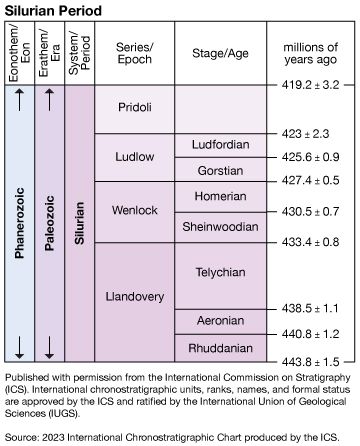
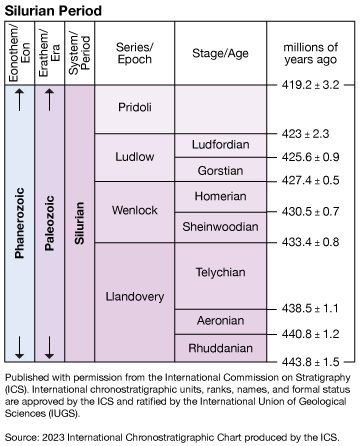
The Ludlow Series is the third of four major divisions of the Silurian Period, representing the epoch that occurred between 427.4 million and 423 million…
How does the Ludlow Series relate to other series within the Silurian period?
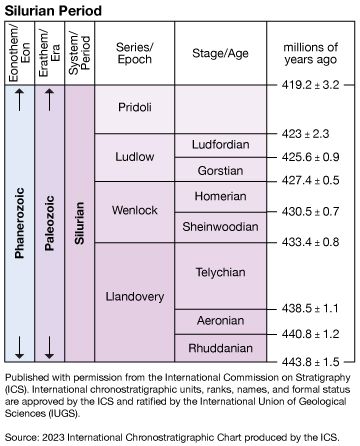
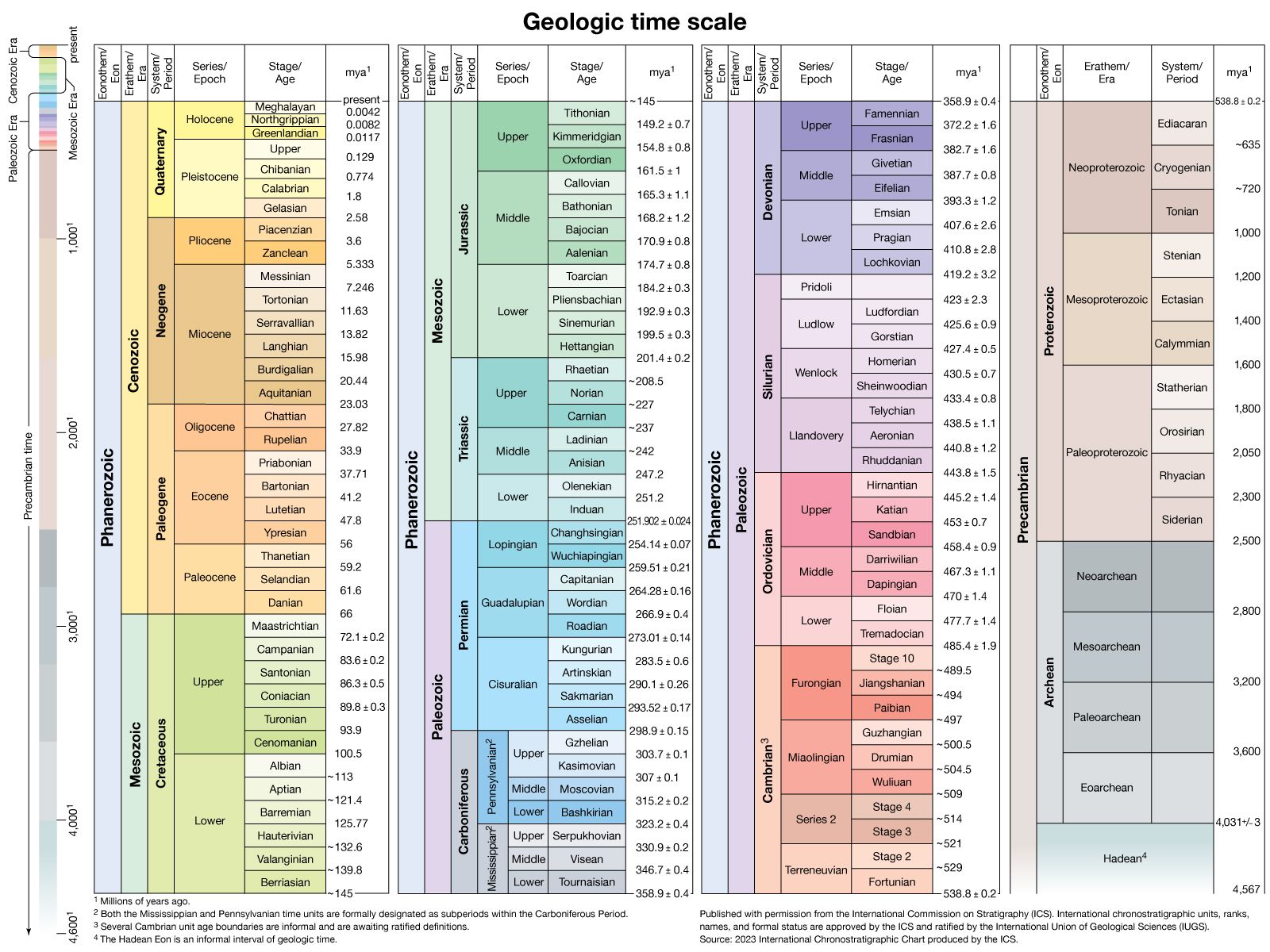
The Ludlow Series is the third of four major divisions of the Silurian Period, representing the epoch that occurred between 427.4 million and 423 million years ago.12
Its stratigraphic position is defined by the series that precede and follow it:
- Underlying Series: The Ludlow Series is preceded by the Wenlock Series. The boundary between these two is marked by the first appearance of specific index fossils, such as the graptolite Neodiversograptus nilssoni, which defines the base of the Ludlow.12
- Overlying Series: The top of the Ludlow Series is defined by the base of the Pridoli Series, which is the final and youngest series of the Silurian System.12
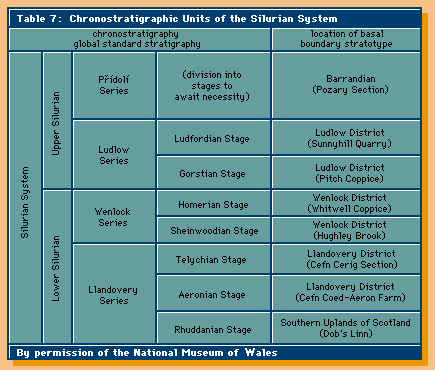
The Ludlow Series itself is further subdivided into two global stages: the Gorstian Stage and the Ludfordian Stage.12
How was the Ludlow Series first defined and where is its type locality?
The Ludlow Series is named after its type district located just west of the town of Ludlow in Shropshire, England, where approximately 350 meters of siltstone and limestone strata are found.1
The base of the series was formally defined in 1980 by the International Commission on Stratigraphy (ICS) using a Global Stratotype Section and Point (GSSP) located at the Pitch Coppice quarry, situated 4 km southwest of Ludlow. This boundary is established at the base of the Lower Elton Formation, which corresponds to the first appearance of the graptolite biozone Neodiversograptus nilssoni.1
What significance does the Ludlow Series have for understanding the evolution of life on Earth?
The Ludlow Series provides critical insights into the evolution of life during the Silurian Period through its record of biological turnover and environmental adaptation.
The series is characterized by a widespread shelly fauna, including various species of brachiopods such as the genus Kirkidium, which have been identified in regions as geographically distant as the Midwestern United States and the Altai Mountains of Russia.1
Furthermore, the Ludlow Epoch is significant for its impact on acritarchs—microfossils likely representing the spore cases of benthic algae. The early Gorstian Stage of the Ludlow represents one of the most extensive periods of species turnover for these organisms, a shift closely linked to global sea-level fluctuations. These environmental changes, including a notable mid-Ludlow lowstand, influenced ocean circulation and habitat availability, forcing benthic faunas to adapt by shifting their positions along continental platforms.45
How do geologists use the Ludlow Series in stratigraphic correlation?
Geologists use the Ludlow Series for stratigraphic correlation by employing index fossils to define specific time intervals within the Silurian Period. These series are rigorously defined by basal Global Stratotype Section and Point (GSSP) markers, which identify the first appearance of specific organisms in the fossil record.126
Correlation is primarily achieved through two types of fossil assemblages:
- Graptolites: These planktonic animals are highly effective for correlation because they evolved rapidly and were widely distributed in deep-water shales. The base of the Ludlow Series, for instance, is defined by the first appearance of the graptolite Neodiversograptus nilssoni.31
- Brachiopods: In shallow-water shelf deposits where graptolites are scarce, geologists rely on shelly facies containing diverse brachiopods. Genera such as Kirkidium serve as key indicators for characterizing Ludlow time.17
While graptolite biozones offer high precision, correlating these with shallow-water brachiopod zones is often approximate, occurring only where the two facies interbed.37
Sources
- Ludlow Series — Encyclopædia Britannica
- Silurian Period - Major subdivisions of the Silurian System — Encyclopædia Britannica
- Ludfordian Stage — Encyclopædia Britannica
- Silurian Period - Silurian sea level — Encyclopædia Britannica
- Silurian Period - Silurian extinctions — Encyclopædia Britannica
- Silurian Period - Graptolites — Encyclopædia Britannica
- Silurian Period - Brachiopods — Encyclopædia Britannica
Published on · 3 min read