Ludfordian Stage
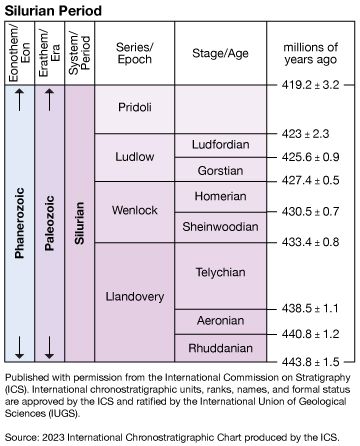
The Ludfordian Stage refers to a specific span of geological time during the Silurian Period, lasting from approximately 425.6 million to 423 million years…
How does the Ludfordian Stage relate to the formation of certain types of rocks or minerals?
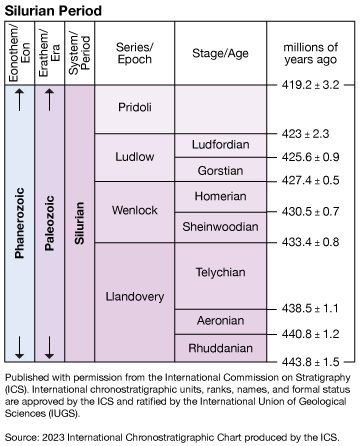
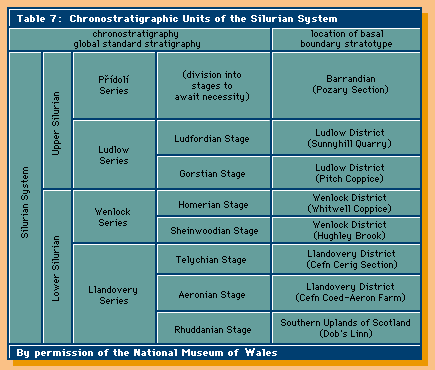
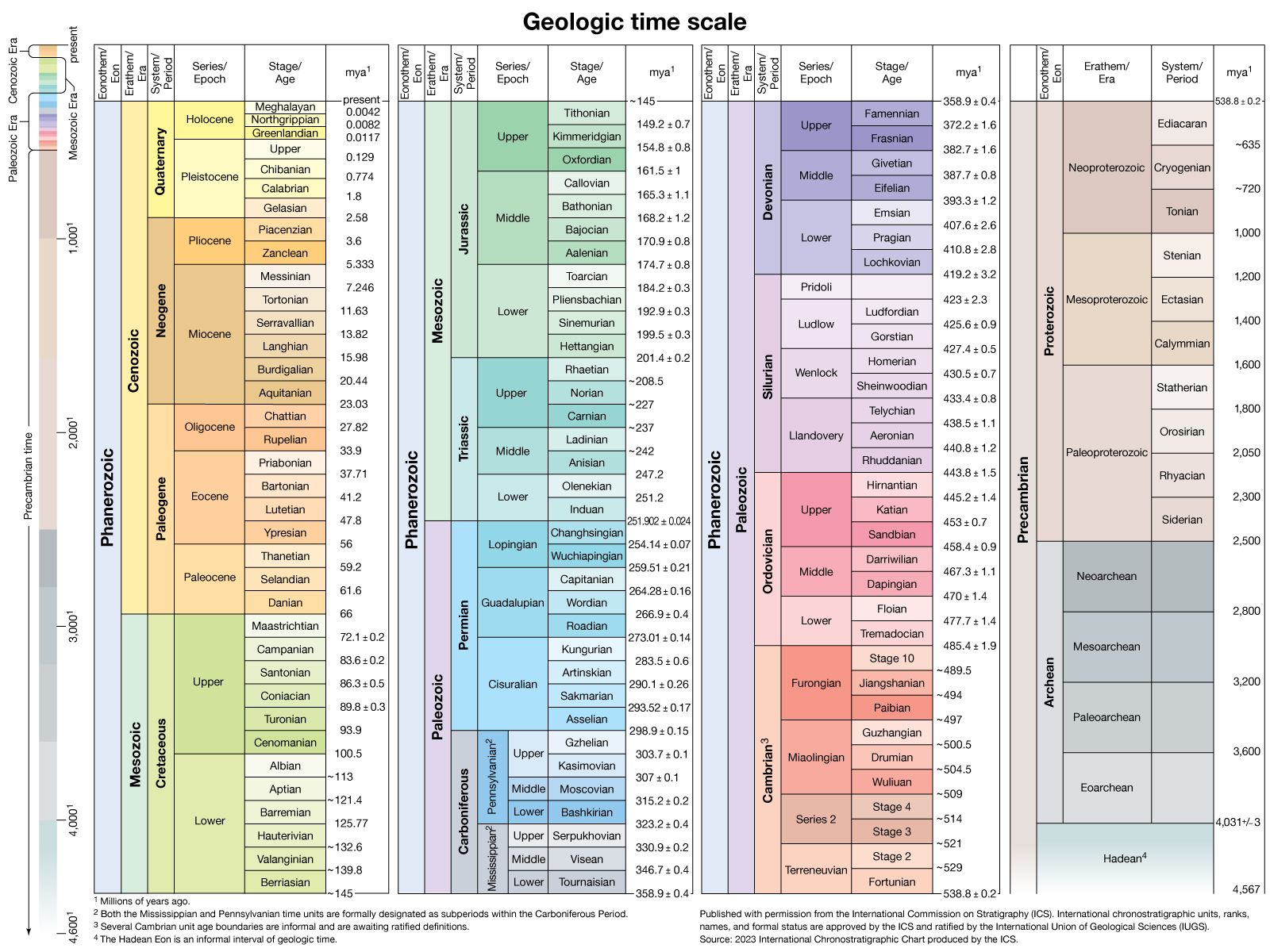
The Ludfordian Stage refers to a specific span of geological time during the Silurian Period, lasting from approximately 425.6 million to 423 million years ago. It is defined by the rocks that were deposited globally during this interval.1
The stage is formally anchored by a Global Stratotype Section and Point (GSSP) located in Sunnyhill Quarry, near Ludlow, England. At this site, the base of the Ludfordian Stage is identified within a thin shale seam situated within a sequence of silty limestone. This specific location marks the transition into the Lower Leintwardine Formation. Generally, the Ludlow Series, which encompasses the Ludfordian Stage, is characterized by significant deposits of siltstone and limestone strata.12
Can you describe any significant fossil discoveries associated with the Ludfordian Stage?
The Ludfordian Stage is a significant interval in the Silurian Period defined by its fossil record. A key marker for this stage is the graptolite species Saetograptus leintwardinensis leintwardinensis. While the base of the stage is located near the first appearance of this organism in the geological column, it is important to note that the boundary is not strictly coincident with its initial emergence.1
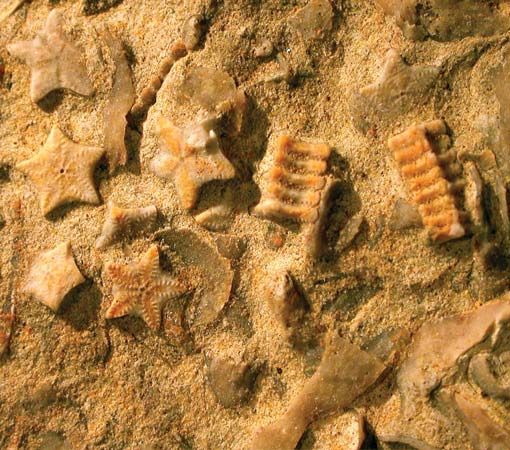
Beyond this specific index fossil, the broader Ludlow Series—which includes the Ludfordian—is characterized by a diverse array of “shelly fauna.” These fossils are found globally, from the Midwestern United States to the Altai Mountains of Russia. Among the most notable are various species of brachiopods, specifically those belonging to the genus Kirkidium.4
These fossil assemblages are essential for geologists, as they serve as the basis for defining the boundaries of geological time intervals through the use of Global Stratotype Section and Point (GSSP) markers.5
What are the key characteristics of rock formations from the Ludfordian Stage?
The Ludfordian Stage represents a specific geological interval within the Silurian Period, spanning from approximately 425.6 million to 423 million years ago. Its rock formations are characterized by the following key features:
- Stratigraphic Definition: The stage is defined by a Global Stratotype Section and Point (GSSP) located in Sunnyhill Quarry, near Ludlow, England. The base of the stage is marked by a thin shale seam situated within a sequence of silty limestone, which corresponds to the base of the Lower Leintwardine Formation.1
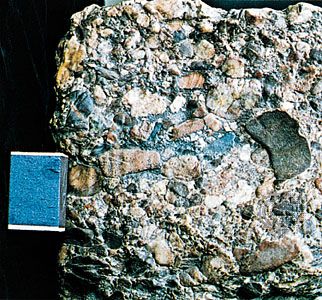
- Composition: The broader Ludlow Series, which encompasses the Ludfordian, is primarily composed of siltstone and limestone strata.3
- Regional Variations: In certain regions, such as southern Norway, rocks dating to the Ludlow Epoch are associated with the Old Red Sandstone, a sequence of clastic deposits derived from the erosion of the Caledonian highlands.6
How do geologists determine the boundaries of the Ludfordian Stage?
Geologists determine the boundaries of the Ludfordian Stage through the use of a Global Stratotype Section and Point (GSSP), often referred to as a “golden spike.” This standardized marker is established by the International Commission on Stratigraphy to provide a precise, internationally recognized reference point in the rock record.17
The base of the Ludfordian Stage is specifically defined at a GSSP located in Sunnyhill Quarry near Ludlow, England. Geologists identify this boundary within a thin shale seam embedded in silty limestone, which marks the beginning of the Lower Leintwardine Formation. While this marker is positioned near the first appearance of the graptolite species Saetograptus leintwardinensis leintwardinensis in the fossil record, the boundary is not strictly coincident with the species’ initial emergence.1
Modern geochronology integrates this biostratigraphic approach with other methodologies, such as radioisotopic dating and magnetostratigraphy, to create a high-resolution and internally consistent time scale.8
Sources
- Ludfordian Stage — Encyclopædia Britannica
- Gorstian Stage — Encyclopædia Britannica
- Ludlow Series — Encyclopædia Britannica
- Silurian Period - Major subdivisions of the Silurian System — Encyclopædia Britannica
- Silurian Period - Silurian extinctions — Encyclopædia Britannica
- Silurian Period - Clastic wedges — Encyclopædia Britannica
- Tertiary Period - Correlation of Tertiary strata — Encyclopædia Britannica
- Devonian Period - Establishing Devonian boundaries — Encyclopædia Britannica
- Silurian Period - Ordovician-Silurian boundary — Encyclopædia Britannica
- Silurian Period - Silurian boundaries — Encyclopædia Britannica
Published on · 3 min read