Maiasaura
The discovery of Maiasaura nesting sites in 1978 by John R. Horner and his team in Montana fundamentally shifted the scientific understanding of dinosaur…
How did the discovery of Maiasaura nests change our understanding of dinosaur behavior?
The discovery of Maiasaura nesting sites in 1978 by John R. Horner and his team in Montana fundamentally shifted the scientific understanding of dinosaur behavior1. Before this find, the prevailing view often overlooked the possibility of complex social structures or parental investment in these animals.1
Key insights gained from the Maiasaura fossils include:
- Parental Care: The presence of hatchlings too large to fit in their eggs, alongside unossified embryonic bones, provided strong evidence that these dinosaurs could not walk immediately upon hatching and required parental care to survive.2
- Sociality and Nesting: The discovery of multiple nests in close proximity demonstrated that Maiasaura were social animals that nested in groups.2
- Site Fidelity: The succession of similar nests layered over one another suggested that these dinosaurs practiced “site fidelity,” returning to the same nesting grounds year after year.1
- Migratory Behavior: The presence of hundreds of skeletons in specific ashbeds, combined with the nesting data, indicates that these herbivores were likely migratory.2
How does Maiasaura contribute to our knowledge of dinosaur evolution and social behavior?
The discovery of Maiasaura—a genus of duck-billed dinosaurs—has been pivotal in reshaping our understanding of dinosaur biology and social complexity. Found in the Cretaceous Period strata of Montana, these fossils provided the first compelling evidence that some dinosaurs exhibited advanced parental care.1
Key contributions to our knowledge include:
- Parental Investment: Because the hatchlings were too large to have fit in their eggs and possessed unossified bones, they were physically incapable of walking at birth. This confirms that adults provided food and protection to their young.1
- Social Structure: The discovery of clustered nesting sites indicates that Maiasaura were social creatures that nested in groups rather than in isolation.1
- Migratory Patterns: The presence of hundreds of skeletons in specific ashbeds, alongside evidence of repeated nesting at the same location, suggests these herbivores were migratory and practiced site fidelity, returning to the same grounds annually.1
- Growth Rates: Analysis of bone structure reveals that these animals required seven to eight years to reach their full adult size of eight meters.1
How does Maiasaura compare to other hadrosaur (duck-billed) dinosaurs?
Maiasaura is a member of the Hadrosauridae family, commonly known as duck-billed dinosaurs, which were among the most abundant herbivores in North America during the Late Cretaceous Period. While Maiasaura shares the characteristic broad, toothless, beak-like snout and specialized grinding teeth used by all hadrosaurs to process vegetation, it is distinct in its role as a primary model for understanding hadrosaur social behavior.156
Compared to other hadrosaurs, Maiasaura is notable for the following:
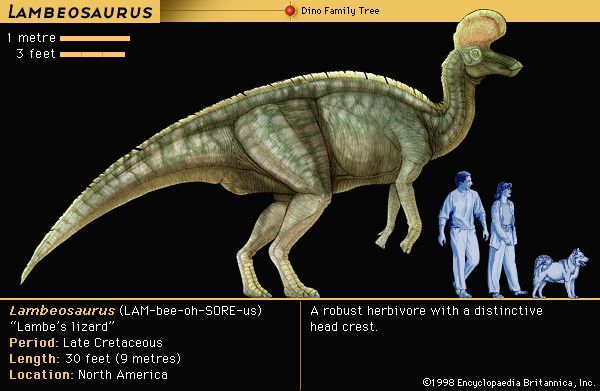
- Cranial Features: Unlike many other hadrosaurs, such as Lambeosaurus or Parasaurolophus, which are classified as lambeosaurines and possess elaborate hollow or solid bony crests on their skulls, Maiasaura belongs to the hadrosaurine group, which typically lacks such prominent cranial ornamentation.65
- Social and Reproductive Evidence: While it is known that hadrosaurs generally traveled in herds and provided parental care, Maiasaura provided the foundational evidence for these behaviors. Its nesting sites in Montana confirmed that these dinosaurs nested in groups, practiced site fidelity, and cared for hatchlings that were too immature to walk at birth—a trait shared by other hadrosaurs but first documented in detail through Maiasaura fossils.51
When and where did Maiasaura live during the prehistoric era?
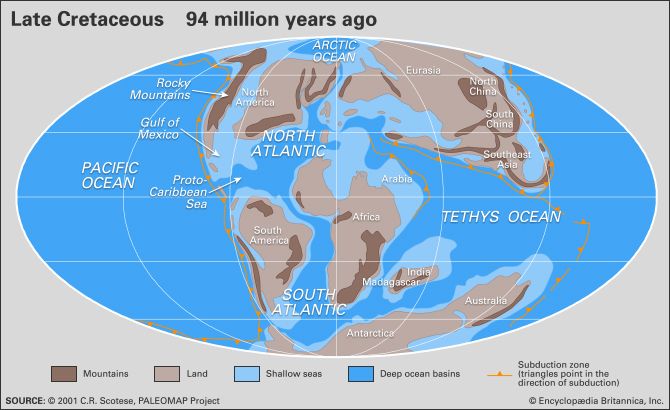
Maiasaura lived during the Late Cretaceous Period, which spanned approximately 100 million to 65.5 million years ago.1
Geographically, these duck-billed dinosaurs inhabited North America. A significant discovery of their nesting sites occurred in the Two Medicine Formation near Choteau, Montana, in the United States.1
Sources
- Maiasaura — Encyclopædia Britannica
- dinosaur - Reproduction — Encyclopædia Britannica
- dinosaur - Herding behaviour — Encyclopædia Britannica
- Animal social behavior - Social interactions involving the costs and benefits of parental care — Encyclopædia Britannica
- hadrosaur — Merriam-Webster
- ornithopod — Encyclopædia Britannica
Published on · 3 min read