Lambeosaurus
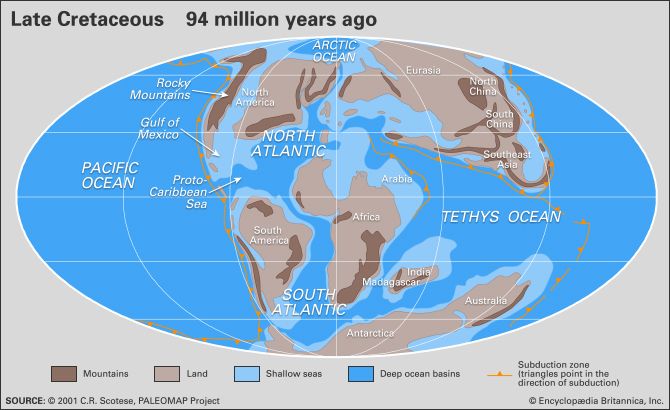
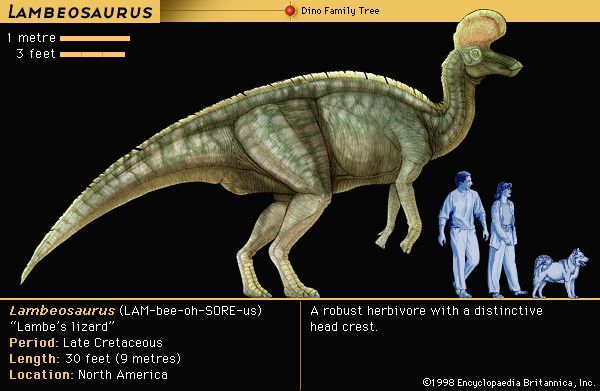
Lambeosaurus was a duck-billed dinosaur that lived during the Late Cretaceous Period, approximately 99.6 million to 65.5 million years ago.
When and where did Lambeosaurus live during the prehistoric era?
Lambeosaurus was a duck-billed dinosaur that lived during the Late Cretaceous Period, approximately 99.6 million to 65.5 million years ago.1
Geographically, this herbivore inhabited North America. Fossil evidence has been recovered from two primary regions:
- Alberta, Canada: The genus was first discovered here in 1914 within the Oldman Formation.1
- Baja California, Mexico: Larger specimens of the dinosaur have been identified in this region.1
These hadrosaurs are well-known for the distinctive, hatchet-shaped hollow crests on their skulls, which may have served as tools for species recognition or sound production.1
How did the crest on Lambeosaurus’ head function, and what theories exist about its purpose?
The hollow, hatchet-shaped crest on the skull of Lambeosaurus contained complex chambers that extended the breathing passage between the nostrils and the trachea. While the exact function of these structures remains a subject of scientific debate, several theories have been proposed:12
- Sound Production: The crests may have acted as resonating chambers, potentially allowing the dinosaurs to produce distinct calls or “honking” sounds.12
- Species Recognition: The unique shapes of these crests likely served as visual ornaments, helping members of different species identify one another.12
- Enhanced Olfaction: It has been suggested that the crests contained expanded olfactory membranes, which would have improved the animal’s sense of smell.12
Other historical theories—such as the idea that the crests functioned as snorkels for an amphibious lifestyle, air storage reservoirs, or weapons for combat—have been largely dismissed. Snorkeling is physically impossible because the crests lacked openings at the ends, and the volume of the chambers was too small (estimated at only 2 percent of lung capacity) to serve as a meaningful air reserve.12
How many species of Lambeosaurus have been identified, and what are their main differences?
Sorry, the Britannica knowledge base does not contain information regarding the specific number of identified Lambeosaurus species or their individual anatomical differences.
How did Lambeosaurus get its name, and who first discovered and described this dinosaur?
Lambeosaurus was named in honor of the Canadian paleontologist Lawrence Lambe, who made significant contributions to the study of hadrosaurs. The genus was first discovered in 1914 within the Oldman Formation in Alberta, Canada.1
Sources
- Lambeosaurus — Encyclopædia Britannica
- dinosaur - Ornithopoda — Encyclopædia Britannica
Published on · 2 min read