Makassar Strait
The Makassar Strait is a narrow, deep waterway located in the west-central Pacific Ocean within Indonesia. Stretching approximately 500 miles (800 km) in a…
What is Makassar Strait?
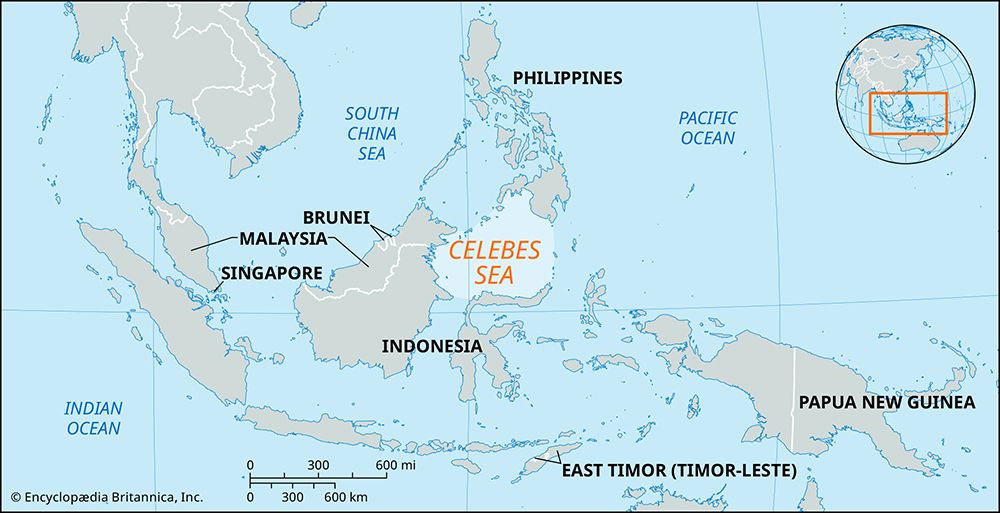
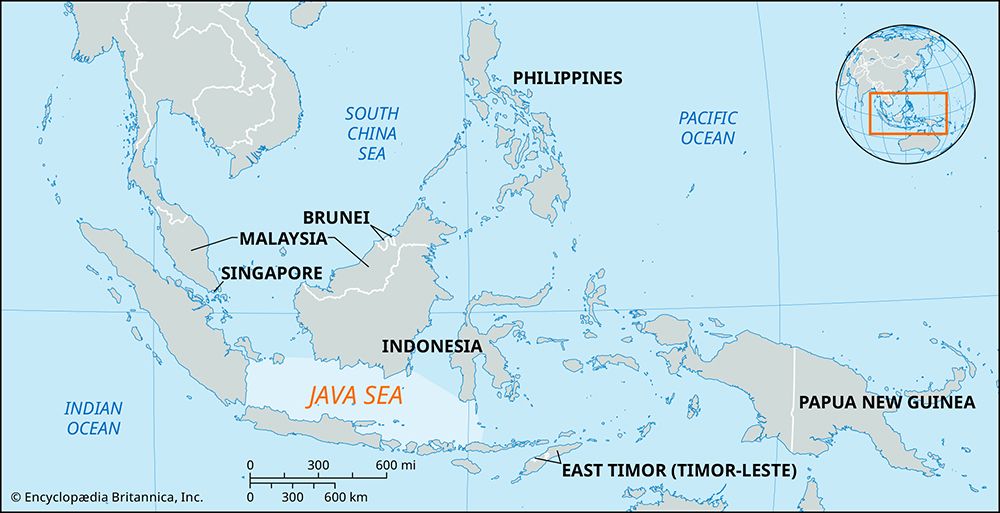
The Makassar Strait is a narrow, deep waterway located in the west-central Pacific Ocean within Indonesia. Stretching approximately 500 miles (800 km) in a northeast-southwest direction, it connects the Celebes Sea to the Java Sea.1
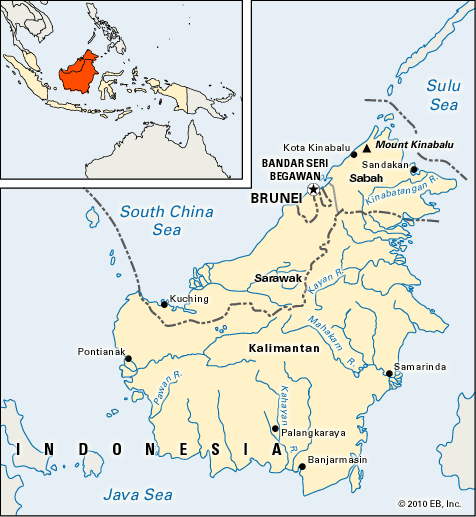
The strait serves as a maritime boundary between the islands of Borneo to the west and Celebes (Sulawesi) to the east, with a width ranging from 80 to 230 miles (130 to 370 km). It contains several islands, most notably Laut Island and Sebuku. Key settlements along the strait include Balikpapan on the Bornean coast and the city of Makassar on Celebes. Historically, the region was the site of a significant naval engagement during World War II in 1942, when Allied forces attempted to contest a Japanese landing.1
What is the historical significance of the Battle of Makassar Strait?
The Battle of Makassar Strait, which took place in January 1942 during World War II, holds historical significance as a pivotal attempt by Allied forces to halt the rapid Japanese expansion into the Dutch East Indies.1
During this five-day engagement, combined U.S. and Dutch military forces sought to intercept a Japanese naval expeditionary force moving toward the coast of Borneo. Despite their efforts, the Allied forces were unable to prevent the Japanese from successfully landing at Balikpapan.1 This victory allowed the Japanese to secure a critical foothold on the island, marking the first major step in their occupation of Dutch Borneo and facilitating their broader campaign to seize control of the region’s oil-rich territories.13
The failure to repel this landing underscored the immense pressure faced by the American–British–Dutch–Australian Command (ABDACOM) as they struggled to defend the approaches to Australia against a highly coordinated and aggressive Japanese offensive.3
How does the geography of the Indonesian archipelago influence global shipping routes?
The geography of the Indonesian archipelago significantly influences global shipping by serving as a vital maritime bridge between the Pacific Ocean and the Indian Ocean. This strategic position necessitates the use of narrow, high-traffic waterways that are essential for international trade.45
Key Maritime Passages
- Strait of Malacca: As the shortest sea route between India and China, this waterway is one of the most heavily traveled shipping channels in the world. It facilitates the movement of massive oil tankers traveling between the Middle East and major economies in East Asia.6
- Singapore Strait: Located at the southern end of the Strait of Malacca, this channel serves as a critical deepwater approach to the port of Singapore, functioning as one of the world’s busiest commercial routes.47
Geographic and Economic Impact
The archipelago’s structure, characterized by numerous islands and shallow seas, dictates the flow of global commerce. Because these areas often feature navigational hazards or depth limitations, they rely on formally defined shipping lanes to ensure safe passage. Furthermore, the surrounding seas act as both channels of communication and vital sources of natural resources, including petroleum and natural gas, which are integral to the regional and global economy.58
What are the unique cultural traditions of the Bugis and Makassarese people?
The Bugis and Makassarese people, both native to southern Celebes (Sulawesi), share a closely related cultural heritage defined by their identity as maritime peoples.
Maritime Traditions and Economy
While both groups practice rice cultivation, they are historically renowned for their seafaring skills, boat making, and long-standing tradition of interisland trade. Their maritime expertise historically allowed them to establish a significant presence in coastal towns throughout the Malay Archipelago.1213
Historical and Social Development
- Social Structure: Historically, the Bugis developed a hierarchical society, ranging from the raja (ruler) and princes to district officers and village heads. They adopted an Indian-influenced form of writing, which was used to record a rich literary tradition.12
- Religious Evolution: Early in their history, the Bugis were influenced by Buddhism and incorporated various Indian customs. However, by the early 17th century, both the Bugis and the Makassarese converted to Islam, which remains a central aspect of their modern identity.1213
- Adventurism: The Bugis are particularly noted for their historical adventurism, which led them to migrate and establish influential settlements across the Malay Peninsula and Sumatra following the fall of Makassar to the Dutch East India Company in 1667.12
Sources
- Makassar Strait — Encyclopædia Britannica
- Makassar — Encyclopædia Britannica
- World War II - Pearl Harbor and the Japanese expansion, to July 1942 — Encyclopædia Britannica
- Strait of Malacca — Encyclopædia Britannica
- Indonesia - Trade — Encyclopædia Britannica
- Singapore Strait — Encyclopædia Britannica
- Indonesia - Transportation and telecommunications — Encyclopædia Britannica
- Indonesia - Water and air transport — Encyclopædia Britannica
- Malay Archipelago — Encyclopædia Britannica
- Indonesia - Drainage — Encyclopædia Britannica
- shipping route — Encyclopædia Britannica
- Bugis — Encyclopædia Britannica
- Indonesia - Western islands — Encyclopædia Britannica
Published on · 3 min read