Malakula
Malakula is culturally significant as one of the most vital centers for Vanuatu art and tradition. Because the island's interior remained largely unvisited…
What is the cultural significance of Malakula island to the people of Vanuatu?
Malakula is culturally significant as one of the most vital centers for Vanuatu art and tradition. Because the island’s interior remained largely unvisited by Europeans until the 20th century, many indigenous customs have been better preserved there than elsewhere in the archipelago.1
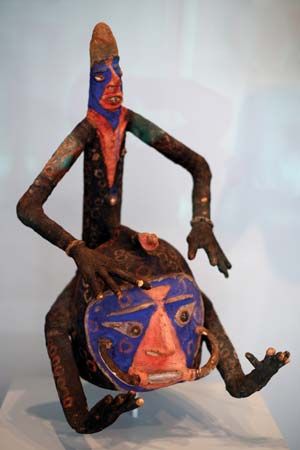
The island is central to the practice of the graded society, a hierarchical system where individuals gain prestige through ceremonies involving pig sacrifices, feasting, and the creation of memorial sculpture. These cultural expressions vary by region:2
- Northeastern Coast: Communities constructed large dance grounds featuring stone monoliths and dolmens. Ceremonial structures often included wood posts carved into human forms and ridgepoles shaped like hawks.2
- Southern Region: Peoples here utilized a unique technique of modeling heads and figures over frames using a vegetable compound. This included the practice of covering the skulls of important men with the compound and mounting them on bodies adorned with pig tusks.2
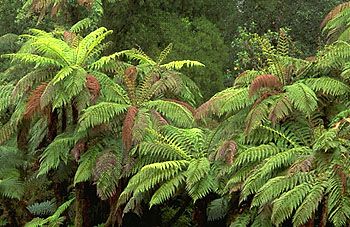
- Northern Mountains: Sculpture here is characterized by a powerful, geometric, and abstract style, often featuring large fern-wood heads.2
What traditional customs and practices are still observed by the people of Malakula?
The people of Malakula maintain a rich heritage of traditional customs, largely preserved due to the island’s relative isolation from European influence until the 20th century. A central institution in Malakula, as in other parts of Vanuatu, is the graded society. This hierarchical system allows individuals to attain greater social prestige through a series of elaborate ceremonies.21
Key practices associated with these traditions include:
- Ceremonial Feasting and Sacrifice: Grade ceremonies involve the ritual sacrifice of pigs or boars and the hosting of feasts.1
- Memorial Sculpture: Participants produce physical memorials to mark their progress through the grades. These are crafted from wood or tree fern, a material chosen for its ease of carving.1
- Ritual Artistry:
- Northeastern Coast: Communities construct large dance grounds featuring stone monoliths and dolmens, often accompanied by carved wooden posts and ridgepoles shaped like hawks.1
- Southern Region: People utilize a unique vegetable compound to model heads and figures over frames. This technique is also used to cover the skulls of important men, which are then mounted on bodies adorned with pig tusks.1
- Northern Mountains: Sculpture here is defined by a powerful, geometric style, often featuring large fern-wood heads.1
What is the history of European contact and colonization on Malakula island?
The history of European contact on Malakula is characterized by a notable lack of early interaction. Unlike many other regions, the interior of the island remained largely unvisited by Europeans until well into the 20th century. This isolation allowed the indigenous people of Malakula to preserve their traditional customs and practices to a greater extent than elsewhere in Vanuatu.
While the island eventually saw the establishment of administrative centers—such as Bushman Bay, which served as a British headquarters, and Port Sandwich at Lamap, which functioned as a French headquarters—the depth of European influence remained limited for a significant period. The persistence of traditional practices is highlighted by the fact that the last known incident of ritual cannibalism in the islands was recorded on Malakula as late as 1969.
Please note that the information provided in your search results regarding the history of Malawi is unrelated to the island of Malakula in Vanuatu.
How diverse is the flora and fauna on Malakula island?
Sorry, the Britannica knowledge base does not contain information regarding the diversity of flora and fauna on Malakula island.
Sources
- Malakula — Encyclopædia Britannica
- Oceanic art and architecture - Vanuatu — Encyclopædia Britannica
- History of Malawi - Early history of Malawi — Encyclopædia Britannica
- Malawi - Early history — Encyclopædia Britannica
- list of islands - Vanuatu — Encyclopædia Britannica
Published on · 3 min read