Tree Fern
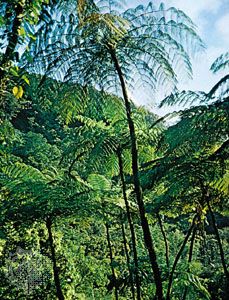
Tree ferns are primarily found in humid tropical forests across the globe. They are most abundant in these warm, damp environments, where they often serve as…
In which regions of the world are tree ferns commonly found?
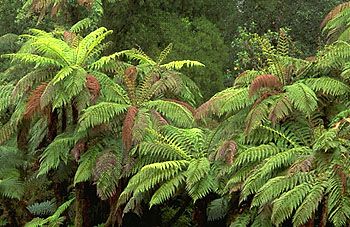
Tree ferns are primarily found in humid tropical forests across the globe. They are most abundant in these warm, damp environments, where they often serve as a conspicuous element of the vegetation.12
While many species are widespread in tropical regions, a significant number of tree ferns are restricted to very small, isolated ranges. These include:
- Tropical mountaintops: Many species inhabit mature forests at higher elevations on isolated tropical peaks.1
- Islands: Numerous species are endemic to specific islands, where they occupy limited geographic areas.1
As members of the order Cyatheales—primarily the families Cyatheaceae and Dicksoniaceae—these plants thrive in conditions that provide consistent moisture. Because they are sensitive to dry and cold climates, their presence diminishes significantly as one moves toward higher latitudes.132
What are the main uses of tree ferns by humans?
Humans have historically utilized tree ferns for various commercial and ornamental purposes, though these practices have often led to overcollection and conservation concerns. Key uses include:
- Horticulture: The dense, fibrous mantle of adventitious roots covering the trunks is harvested as “orchid bark.” This non-rotting material serves as an excellent substrate for cultivating epiphytic plants, such as orchids and bromeliads. Additionally, many species are collected from the wild or grown in nurseries for use as ornamental plants in greenhouses and gardens.156
- Crafts and Decor: The trunks are frequently carved into items like tiki statues or cut into cross sections to showcase the beautiful patterns of their vascular tissue, which are then crafted into decorative objects such as plates.1
Due to the significant environmental impact of harvesting these plants, many species are now protected under the Convention on International Trade in Endangered Species of Wild Fauna and Flora (CITES), which restricts or prohibits their international trade.15
How do tree ferns adapt to different climates and environments?
Tree ferns have adapted to diverse environments primarily by specializing in humid, stable climates, though they exhibit specific strategies for survival across different ecological niches.
Environmental Adaptations
- Moisture Dependency: Tree ferns are most abundant in humid tropical forests, where they thrive in consistent moisture. Their trunks, which are modified rhizomes growing vertically, are embedded in a dense mantle of adventitious roots that help maintain hydration.1
- Niche Specialization: While many species are widespread colonizers of disturbed or successional habitats at lower elevations, others have adapted to highly specific, isolated environments. A large number of species are restricted to small ranges on islands or at higher elevations, such as mature forests on isolated tropical mountaintops, where they occupy stable, specialized niches.1
- Morphological Protection: The families Cyatheaceae and Dicksoniaceae utilize different protective structures on their leaves and petioles—such as scales, spines, or hairs—which may serve as defenses against environmental stressors or herbivores.1
Because tree ferns are sensitive to dry and cold conditions, their diversity and abundance decrease significantly as one moves toward higher latitudes or into arid regions.12
What are the defining characteristics of tree ferns?
Tree ferns are a group of relatively primitive ferns in the order Cyatheales, primarily recognized for their arborescent (treelike) habit and ascending, trunklike stems. Unlike seed-bearing trees, tree ferns do not possess true bark or wood.1
Defining Characteristics
- Trunk Structure: Their trunks are composed of rhizomes that have been modified to grow vertically. These stems are embedded in a dense mantle of adventitious roots and can reach heights of 25 meters (80 feet) or more in some species.15
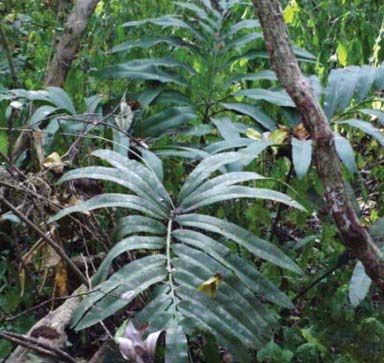
- Leaves: The growing tip produces a cluster of large, highly divided leaves (fronds) that can extend several meters in length.1
- Classification: Most tree ferns belong to the families Cyatheaceae and Dicksoniaceae. A key morphological distinction between these two families is found on their leaves and petioles: Dicksoniaceae are typically covered in hairs, whereas Cyatheaceae are characterized by scales and sometimes sharp spines.1
- Reproduction: Like other ferns, they reproduce via spores, which are produced in specialized organs called sporangia located on the fronds.110
Sources
- tree fern — Encyclopædia Britannica
- Fern - Distribution and abundance — Encyclopædia Britannica
- Plant - Class Polypodiopsida — Encyclopædia Britannica
- Fern - Size range and habitat — Encyclopædia Britannica
- tree fern — Merriam-Webster
- Fern - Importance to humans — Encyclopædia Britannica
- Australian tree fern — Merriam-Webster
- Fern - Root — Encyclopædia Britannica
- Fern - Ecology — Encyclopædia Britannica
- Fern - Fossil record — Encyclopædia Britannica
- list of ferns — Encyclopædia Britannica
- Fern - Life cycle — Encyclopædia Britannica
- Fern - Stem — Encyclopædia Britannica
Published on · 3 min read