Vanuatu
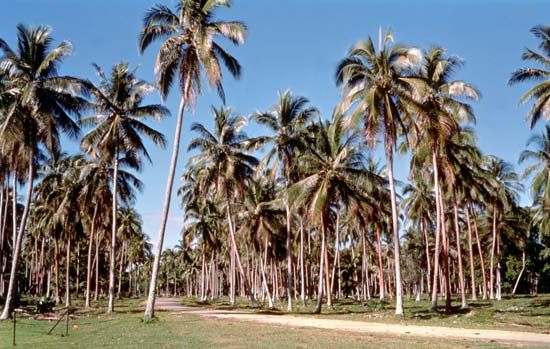
Vanuatu’s economy is traditionally rooted in subsistence agriculture and an elaborate system of exchange between islands. While agriculture remains a…
How does Vanuatu’s economy function and what are its primary industries?
Vanuatu’s economy is traditionally rooted in subsistence agriculture and an elaborate system of exchange between islands. While agriculture remains a foundational element, the nation is actively working to diversify its economy by strengthening its service, manufacturing, and extractive sectors to mitigate risks associated with weather and commodity market fluctuations.1
Primary Industries
- Services: Since independence, tourism and offshore financial services have become the largest earners of foreign income.1
- Agriculture: Key exports include kava, beef, copra, and cocoa. While large-scale plantation agriculture exists, many ni-Vanuatu producers maintain subsistence farming as a buffer against economic downturns.1
- Forestry and Fishing: Forestry has regained importance, with a focus on processed wood products following government restrictions on roundwood exports. Additionally, the sale of commercial fishing rights serves as a significant source of revenue.1
- Resources: Although mining has historically been limited, there is potential for the development of gold, copper, and petroleum reserves.1
How has tourism impacted Vanuatu’s economy and culture?
Since independence, tourism has become one of the primary earners of foreign income for Vanuatu, playing a critical role in the nation’s efforts to diversify its economy beyond traditional agriculture.1
Economic Impact
The growth of the tourism sector has spurred significant interest from foreign companies looking to develop resorts and attractions. To facilitate this, the government has permitted the leasing of land to foreign entities for up to 75 years. However, these arrangements have raised economic concerns; many lease agreements include provisions requiring customary owners to pay the full cost of any developments if they wish to regain their land at the end of the lease term. This has led to fears regarding the potential permanent alienation of land that is constitutionally held under ni-Vanuatu customary collective ownership.1
Cultural and Structural Context
While tourism provides essential revenue, it exists within a framework where the majority of the population maintains a connection to subsistence agriculture. This traditional base serves as a vital buffer against the volatility of global markets and the fluctuations inherent in the tourism industry.1
What are the main languages and cultural aspects of Vanuatu?
Vanuatu is a culturally diverse nation primarily inhabited by the indigenous ni-Vanuatu people, who are overwhelmingly Melanesian, with smaller Polynesian populations on outlying islands.4
Languages
Vanuatu is linguistically rich, with more than 100 local Melanesian languages and dialects spoken across the archipelago. The country recognizes three official languages: English, French, and Bislama. Bislama, an English-based Melanesian pidgin, serves as the national language and a vital tool for communication between diverse groups.45
Cultural Aspects
- Land and Identity: Land is central to ni-Vanuatu culture, representing a metaphysical link to the past. The concept of man ples—identifying with a specific tract of land—is fundamental. The constitution protects this by ensuring land remains with its indigenous custom owners.6
- Kastom and Religion: Daily life is guided by a blend of Christianity and kastom (custom). While most of the population is Protestant, traditional beliefs and cargo cults also persist.64
- Social Traditions: In many villages, men gather at the nakamal (men’s house) to drink kava and connect with ancestral spirits.6
What is the history of Vanuatu, including its colonial past and path to independence?
The history of Vanuatu is defined by its ancient indigenous roots, a unique period of colonial dual-administration, and a transition to sovereignty in the late 20th century.
Early History and European Contact
The islands were settled by the Lapita culture around 1300 BCE, followed by waves of migration that included Polynesian groups. By 1200 CE, a highly stratified society emerged under leaders like the chief Roy Mata. European contact began in 1606 with Pedro Fernández de Quirós, followed by Louis-Antoine de Bougainville in 1768 and James Cook in 1774, who named the group the New Hebrides.78
Colonial Era
From the 1860s, thousands of ni-Vanuatu were indentured to plantations in Australia, Fiji, and New Caledonia. Upon their return, many challenged European influence. To manage competing interests between British missionaries and French planters, the two powers established a Joint Naval Commission in 1887, which evolved into an Anglo-French condominium in 1906. During World War II, the islands served as a major Allied base, sparking anti-European political movements like the John Frum cargo cult.78
Path to Independence
Post-war political initiatives focused on land ownership, as foreigners held over one-third of the territory. Following a 1977 conference in Paris, a constitution was drafted, and the Republic of Vanuatu achieved independence on July 30, 1980, despite a brief secessionist attempt on Espiritu Santo.78
Sources
- Vanuatu - Economy — Encyclopædia Britannica
- Maldives - Agriculture, forestry, and fishing — Encyclopædia Britannica
- Cabo Verde - Services — Encyclopædia Britannica
- Vanuatu - People — Encyclopædia Britannica
- Vanuatu - Cultural life — Encyclopædia Britannica
- Vanuatu: Country Facts — Encyclopædia Britannica
- Vanuatu — Encyclopædia Britannica
- Vanuatu - History of Vanuatu — Encyclopædia Britannica
- history of Vanuatu — Encyclopædia Britannica
- Pacific Islands - World War II and its aftermath — Encyclopædia Britannica
- Pacific Islands - Foreign intervention and control — Encyclopædia Britannica
- Dominica - The French and British colonial period — Encyclopædia Britannica
Published on · 4 min read