Maldives
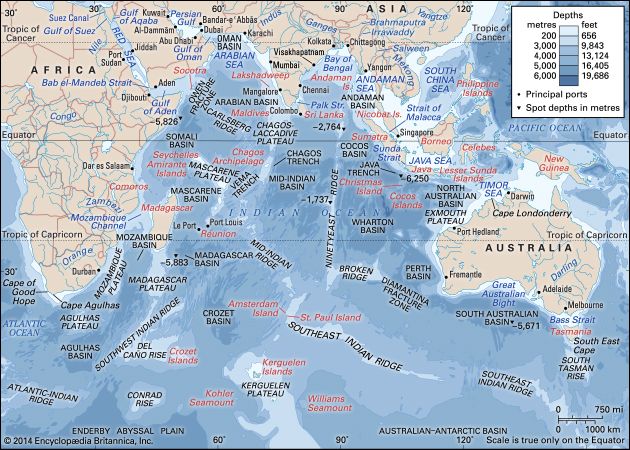
The Maldives is an independent island nation situated in the north-central Indian Ocean. It is located approximately 370 miles (600 km) south-southwest of…
Where are the Maldives located, and how many islands make up this nation?
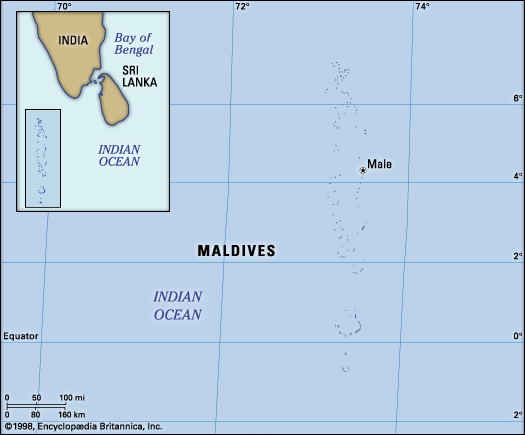
The Maldives is an independent island nation situated in the north-central Indian Ocean1. It is located approximately 370 miles (600 km) south-southwest of the Indian mainland and about 400 miles (645 km) southwest of Sri Lanka.1
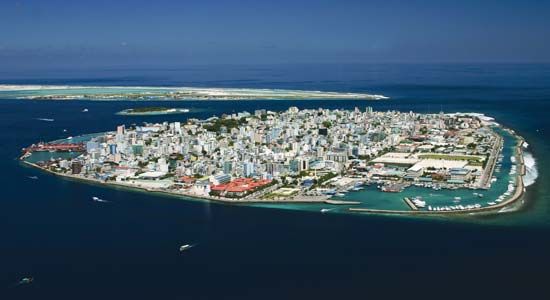
The country is composed of a chain of about 1,200 small coral islands and sandbanks, which are grouped into clusters known as atolls. Of these numerous islands, only about 200 are inhabited.12
What is the history of the Maldives, including its early settlement and colonial period?
The history of the Maldives is defined by its strategic location in the Indian Ocean and a long tradition of maritime influence.
Early Settlement and History
The archipelago was inhabited as early as the 5th century BCE by Buddhist peoples, who are believed to have migrated from Sri Lanka and southern India. According to tradition, the islands adopted Islam in 1153 CE. Over the centuries, the islands served as a crossroads for traders from various regions, including the Arab world, Indonesia, China, and Madagascar, which contributed to the diverse heritage of the Maldivian people.
Colonial Period
European interest in the islands began in the 16th century, when the Portuguese forcibly established a presence in Male from 1558 until their expulsion in 1573. By the 17th century, the Maldives functioned as a sultanate under the protection of the Dutch rulers of Ceylon. Following the British acquisition of Ceylon in 1796, the Maldives eventually became a British protectorate, a status that was formally established in 1887. The islands remained under this protection until they attained full political independence in 1965.
What are the main economic activities in the Maldives, and how important is tourism to the country?
The economy of the Maldives has experienced rapid development since the 1970s, transitioning from a reliance on traditional industries to a service-oriented model. The primary economic activities include tourism, fishing, boatbuilding, and boat repairing.7
The Role of Tourism
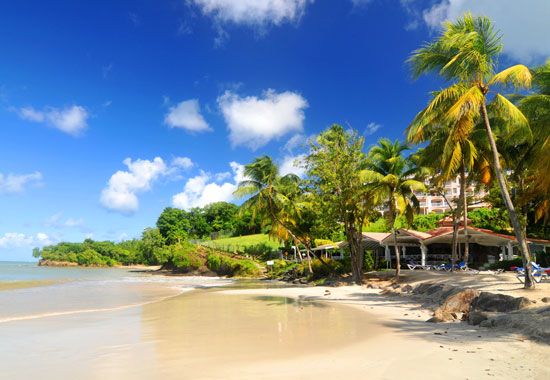
Tourism is the most significant driver of the Maldivian economy. Although the industry did not exist before 1972, it now underpins the service sector, which accounts for four-fifths of the country’s gross domestic product (GDP). More than 1.5 million tourists visit annually to experience the nation’s unique marine geography, which features over 130 resort islands, high-end accommodations, and extensive water sports opportunities.78
Fishing and Other Activities
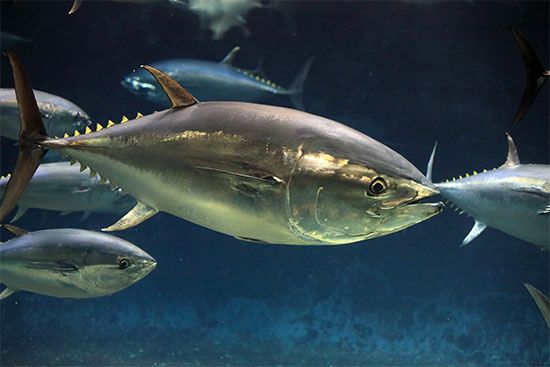
While fishing was historically the base of the economy, it has been surpassed by tourism in terms of GDP contribution. Nevertheless, it remains vital as the primary source of the country’s exports, consisting mostly of skipjack tuna. Beyond these sectors, much of the population continues to engage in subsistence activities, such as coconut collecting and small-scale farming of vegetables, roots, and tropical fruits.910
What is the political system of the Maldives, and how has it evolved in recent years?
The Maldives is a republic with a constitutional framework adopted in 2008. The president serves as both head of state and head of government, elected by universal suffrage for a maximum of two five-year terms. Legislative power is vested in the People’s Majlis, a unicameral body whose members are elected from Male and various atoll groups. The constitution establishes Islam as the state religion and prohibits laws that contravene its tenets.12
Evolution of the Political System
The nation’s political landscape has undergone significant transformation since the early 21st century:
- Democratization: Beginning in 2003, the government initiated reforms to improve human rights and establish a multiparty system. The 2008 constitution introduced greater checks and balances and strengthened the judiciary13.13
- Political Transitions: The country has experienced intense political volatility, including the 2012 resignation of President Mohamed Nasheed, the subsequent administration of Abdulla Yameen, and the 2018 landslide victory of Ibrahim Mohamed Solih, which marked a significant shift in governance and foreign policy, particularly regarding ties with India.513
- Ongoing Challenges: Despite these democratic strides, the government continues to navigate systemic issues, including corruption, political violence, and the influence of religious extremism.513
Sources
- Maldives — Encyclopædia Britannica
- Did you know? — Merriam-Webster
- Maldives: Top Questions — Encyclopædia Britannica
- Maldives - People — Encyclopædia Britannica
- history of the Maldives — Encyclopædia Britannica
- Maldives — Merriam-Webster
- Maldives - Economy — Encyclopædia Britannica
- Maldives - Services — Encyclopædia Britannica
- Maldives - Trade — Encyclopædia Britannica
- Maldives - Agriculture, forestry, and fishing — Encyclopædia Britannica
- Maldives - Labour and taxation — Encyclopædia Britannica
- Maldives - Constitutional framework — Encyclopædia Britannica
- Maldives - History of Maldives — Encyclopædia Britannica
Published on · 3 min read