Maletsunyane Falls
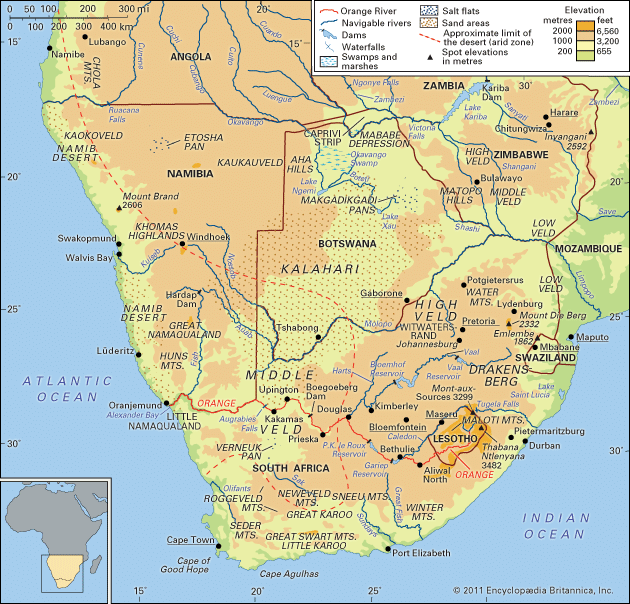
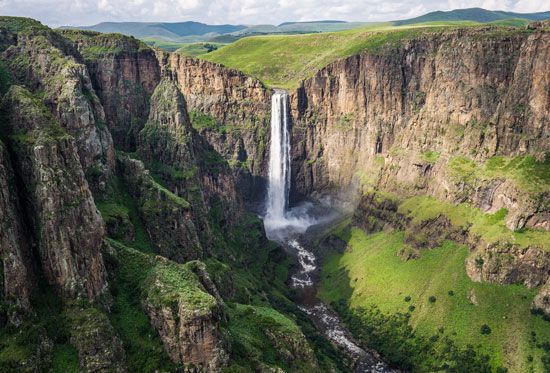
Maletsunyane Falls is a single-drop waterfall located in Lesotho, situated approximately 75 miles (121 km) southeast of the capital, Maseru.
What is Maletsunyane Falls?
Maletsunyane Falls is a single-drop waterfall located in Lesotho, situated approximately 75 miles (121 km) southeast of the capital, Maseru.1
The falls occur on a tributary of the Orange River and feature a dramatic drop of 630 feet (192 meters). Due to this significant height, it is recognized as one of the highest waterfalls in the world and serves as a vital tourist attraction for the country.1
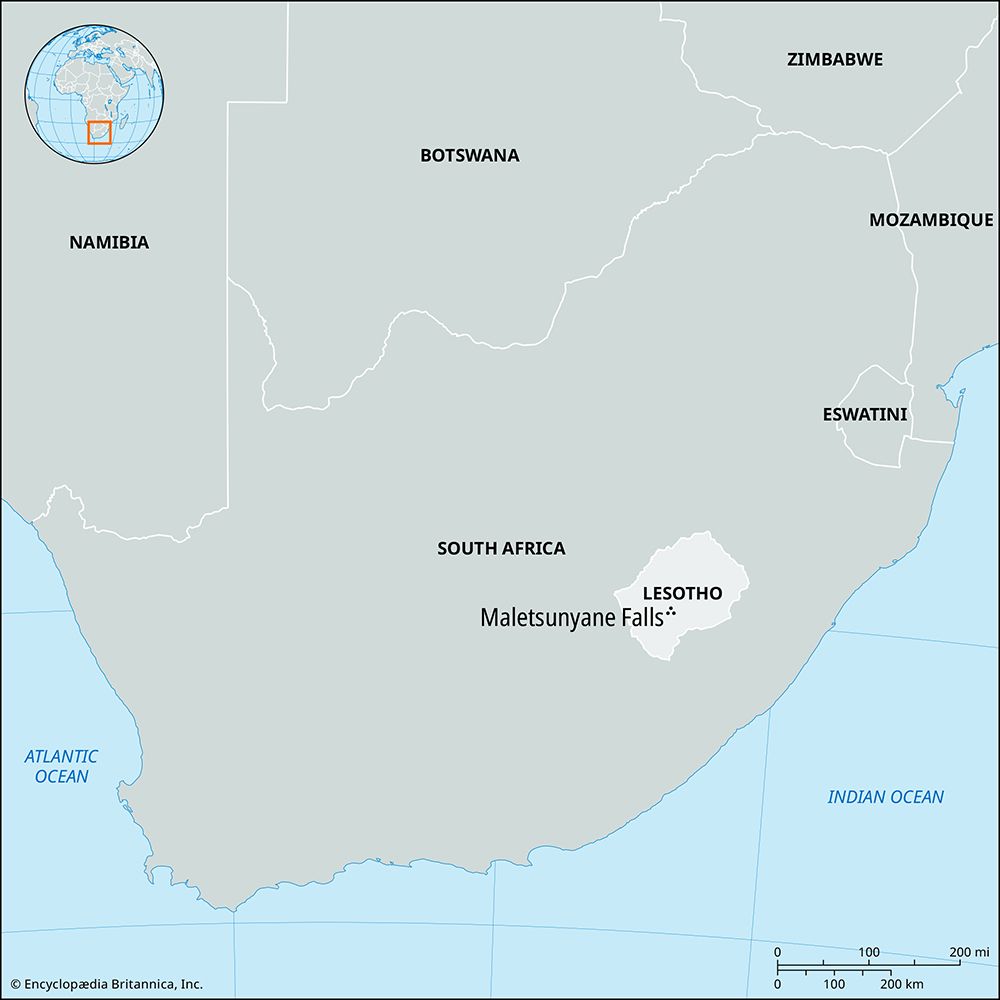
What is the geography of Lesotho like?
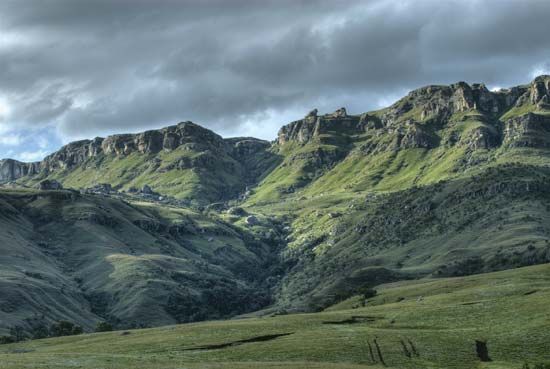
Lesotho is a landlocked country defined by its rugged, high-altitude terrain. Approximately two-thirds of the nation is mountainous, characterized by the Maloti Mountains and the Drakensberg range, which forms the eastern border. The country contains the highest peaks in southern Africa, including Mount Ntlenyana, which reaches 11,424 feet (3,482 meters) above sea level.23
The landscape transitions from these high-altitude plateaus—ranging from 9,000 to 10,500 feet—down to foothills and western lowlands that sit between 5,000 and 6,000 feet in elevation. Geologically, the region is composed of sandstone and shale overlain by basalt.32
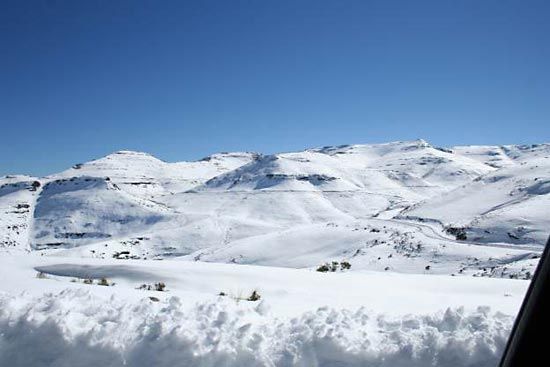
As a major watershed for southern Africa, Lesotho is the source of the Orange River and the Caledon River. The climate is equally varied; while the lowlands experience summer temperatures up to 90 °F (32 °C), the highlands are much colder, with winter temperatures frequently dropping below 0 °F (−18 °C) and consistent snowfall in the mountains.234
How does the Orange River impact the region?
The Orange River is of vital economic importance to southern Africa, serving as a primary water source for irrigation, urbanization, and industrial development in a region where much of the land is otherwise too dry for cultivation.6
Economic and Agricultural Impact
- Irrigation: The river supports the cultivation of crops such as corn, cotton, alfalfa, grapes, and dates, particularly in irrigated sections downstream.7
- Water Supply: Large-scale infrastructure projects, including the Orange River Project and the Lesotho Highlands Water Project, divert water to support urban centers like Bloemfontein, Kimberley, and Gqeberha.67
- Energy: Major dams, such as the Gariep Dam, are equipped with hydroelectric power stations that contribute to the region’s energy needs.8
Hydrological Challenges
The river’s utility is complicated by high rates of evaporation and significant silt accumulation, which can reduce reservoir storage capacity. Engineers have implemented specialized designs, such as deep dead-storage areas and sluice gates, to manage these environmental factors and ensure a consistent water supply.89
What other natural landmarks are found in Lesotho?
Beyond its prominent mountain ranges, Lesotho features several notable natural landmarks:
- Maletsunyane Falls: Located 75 miles southeast of Maseru, this single-drop cataract falls 630 feet (192 meters). It is recognized as one of the highest waterfalls in the world and serves as a significant tourist attraction.2
- Sehlabathebe National Park: Situated in the southeastern highlands near Qacha’s Nek, this park protects diverse wildlife, including raptors, mountain reedbuck, and leopards. It is also a critical stronghold for the lammergeier, or bearded vulture.1
- Mountain Peaks: The country is home to the highest peaks in southern Africa, most notably Mount Ntlenyana, which reaches an elevation of 11,424 feet (3,482 meters).5
- Rugged Gorges and Valleys: The landscape is defined by deep gorges and narrow valleys, particularly where the Drakensberg range descends into weathered basalt formations.1011
These landmarks are part of a broader environment characterized by high-altitude plateaus and a complex network of rivers that serve as a vital watershed for the region.125
Sources
- Maletsunyane Falls — Encyclopædia Britannica
- Maloti Mountains — Encyclopædia Britannica
- South Africa - Drainage — Encyclopædia Britannica
- Lesotho - Climate — Encyclopædia Britannica
- Lesotho - Relief, drainage, and soils — Encyclopædia Britannica
- Orange River — Encyclopædia Britannica
- Orange River - Irrigation — Encyclopædia Britannica
- Orange River - Climate and hydrology — Encyclopædia Britannica
- Orange River - People and economy — Encyclopædia Britannica
- Lesotho - Plant and animal life — Encyclopædia Britannica
- Lesotho — Encyclopædia Britannica
- Drakensberg — Encyclopædia Britannica
Published on · 3 min read