Maltese
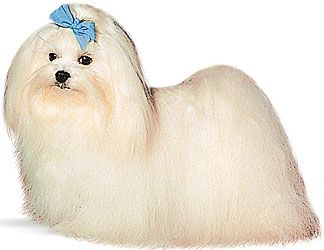
The Maltese is an ancient breed of toy dog that has likely been in existence for more than 2,500 years.

How long has the Maltese breed been around, and what is its historical origin?
The Maltese is an ancient breed of toy dog that has likely been in existence for more than 2,500 years.1
While the breed is named for the island of Malta, its historical origins are rooted in the broader Mediterranean region. Throughout history, these dogs were highly valued as companions by the wealthy and aristocratic classes. Due to their long association with high-status owners, they have historically been referred to by names such as the “Ancient Dogge of Malta” and “Roman Ladies’ Dog”.1

Are Maltese dogs prone to any specific health issues?
The Maltese is generally a vigorous and healthy breed, but like many very small dogs, it is prone to patellar luxation. This condition occurs when the kneecap shifts out of its proper alignment, which often manifests as a “skipping” gait in the hind legs. If you notice your dog intermittently hopping or holding a rear leg up and forward, it is important to have them evaluated by a veterinarian.
Additionally, while not a health condition in the medical sense, owners frequently deal with the issue of saliva and tears staining the dog’s white coat red, which requires regular grooming and maintenance to manage. Because of their very small size, owners must also be vigilant about protecting them from household hazards and larger animals.
What are some common misconceptions about Maltese dogs?
A common misconception about the Maltese is that its delicate appearance equates to a fragile or sedentary nature. In reality, while they are small, they are typically vigorous, lively, and energetic dogs that enjoy participating in dog sports like agility and obedience.
Another frequent misunderstanding involves their role as protectors. While they are alert and enthusiastic watchdogs that may bark frequently, their small stature makes them ineffective as protection dogs. Additionally, owners should be aware that despite their bold and sometimes irrationally brash behavior toward larger animals, their size makes them vulnerable, requiring owners to be vigilant about protecting them from larger dogs and household hazards.
Finally, while they are often viewed as “purse dogs” due to their size, they should not be kept in close confinement for extended periods. They require regular exercise and mental stimulation, which can be achieved through play or leashed walks, even if they live in smaller spaces like apartments.
How do Maltese dogs typically interact with children and other pets?
The Maltese is an affectionate and playful companion that generally interacts well with people of all ages. Because of their gentle nature, they are considered an ideal companion for older, gentle children and seniors. However, due to the breed’s very small size, owners should be mindful that these dogs can be a tripping hazard, and interactions with young children should be supervised to ensure the dog is not accidentally injured.
Regarding other pets, the Maltese is known to be bold and sometimes even irrationally brash toward larger dogs. Because of this tendency, owners must be vigilant to protect their Maltese from larger dogs and other potential hazards. While they are generally affectionate, they tend to be aloof toward strangers. As with any breed, these are widely accepted generalizations, and individual temperaments can vary.
Sources
- Maltese — Encyclopædia Britannica
- Maltese — Merriam-Webster
- Belgian Malinois — Encyclopædia Britannica
Published on · 3 min read