Mammoth Cave National Park
Mammoth Cave National Park serves as a vital site for scientific research, particularly in the fields of geology and evolutionary biology. As the world’s…
How does Mammoth Cave National Park contribute to scientific research and education?
Mammoth Cave National Park serves as a vital site for scientific research, particularly in the fields of geology and evolutionary biology. As the world’s longest cave system, it provides a unique laboratory for studying the dissolution of limestone by water, a process that continues to shape its passages.1
Scientific contributions include:
- Paleo-environmental Analysis: Researchers use solutional sculpturings like scallops to determine the direction and velocity of ancient water flows, acting as paleo-flow meters for passages that have been dry for hundreds of thousands of years.2
- Geochronology: By analyzing iron-bearing magnetic particles within cave sediments, scientists have successfully dated the age of deposits in Mammoth Cave to more than 2,000,000 years, correlating them with the geomagnetic polarity time scale.2
- Biological Study: The park offers significant opportunities to study evolutionary adaptation in species that have specialized to survive in dark, subterranean environments, such as eyeless fish and crayfish.1
How does the climate inside Mammoth Cave differ from the surface environment?
The climate inside Mammoth Cave is significantly more stable than the environment found on the surface. While the surface area of the park is characterized by a hilly landscape covered in hardwood forests that experience seasonal weather fluctuations, the interior of the cave maintains a constant natural temperature of 54 °F (12 °C).1
Additionally, the cave environment is defined by high moisture levels, maintaining a relative humidity of 87 percent. This consistent, dark, and humid subterranean climate stands in stark contrast to the variable conditions of the surface, where the park’s ecosystem supports a diverse range of wildlife, including white-tailed deer, birds, and reptiles, alongside the Green and Nolin rivers.1
What is the geological history of Mammoth Cave and how was it formed?
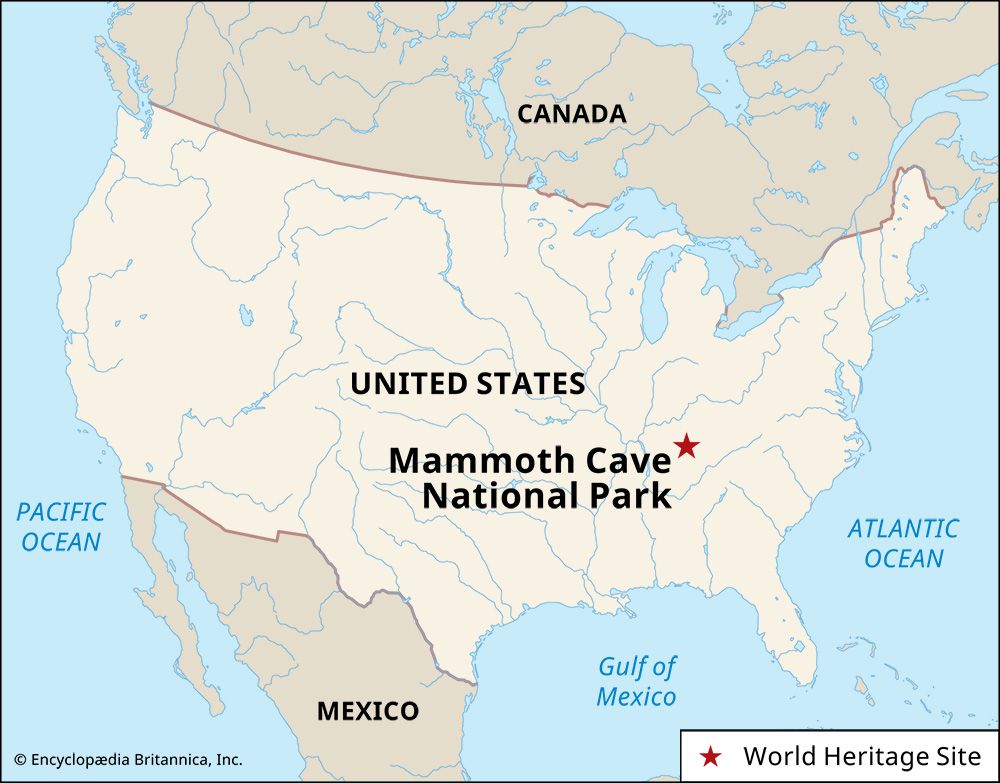
Mammoth Cave, located in Kentucky, is the world’s longest cave system, with over 400 miles (650 km) of mapped passages. Its formation is a result of the dissolution of limestone by groundwater, a process characteristic of karst terrain5.4
Geological Formation
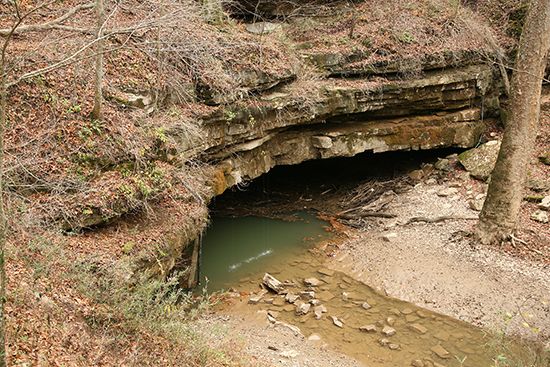
The cave was created as water, enriched with carbonic acid from decaying organic matter and rainfall, seeped through fractures in the bedrock. This chemical action gradually dissolved the calcium carbonate in the limestone, carving out extensive underground conduits. Over time, as surface streams downcut into the landscape, these passages were abandoned by water, leaving behind the dry, multilevel system explored today.561
Age and Evolution
The history of the cave is complex, with different levels representing various stages of development. Paleomagnetic measurements of sediments indicate that the highest, oldest passages are at least 2,000,000 years old. The system continues to evolve as water moves through the subsurface, creating new passages while surface erosion eventually leads to the decay and collapse of older segments.14
What are some of the most popular tours and activities available for visitors to Mammoth Cave National Park?
Visitors to Mammoth Cave National Park can enjoy a variety of experiences both underground and on the surface.
Cave Tours
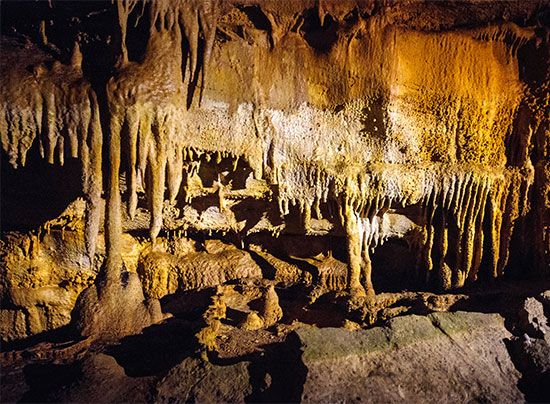
The park offers a number of scenic tours through the caverns, which feature unique geologic formations such as stalactites and stalagmites. A notable highlight of these tours is the moment when the lights are turned off, allowing visitors to experience total darkness and silence within the cave system.18
Surface Activities
Beyond the subterranean passages, the park’s 83-square-mile surface area provides numerous recreational opportunities, including:
- Hiking: Exploring the trails that wind through the park’s hardwood forests.1
- Water Sports: Canoeing and fishing along the Green and Nolin rivers.1
- Camping: Staying within the park to enjoy the natural landscape.1
Whether you are interested in the geological wonders hidden beneath the surface or the diverse wildlife and forests above, the park offers a wide range of ways to engage with its unique environment.
Sources
- Mammoth Cave National Park — Encyclopædia Britannica
- cave - Solutional sculpturings — Encyclopædia Britannica
- Mammoth Cave — Merriam-Webster
- cave - Stagnation and decay phases — Encyclopædia Britannica
- cave — Encyclopædia Britannica
- cave - Solution caves — Encyclopædia Britannica
- Green River — Encyclopædia Britannica
- 7 Wonders of America — Encyclopædia Britannica
Published on · 3 min read