Manx
The term "Manx" refers to two distinct subjects associated with the Isle of Man:
What is Manx?
The term “Manx” refers to two distinct subjects associated with the Isle of Man:
- Manx Language: A member of the Goidelic group of Celtic languages, Manx is closely related to Irish and Scottish Gaelic. It served as the primary language of the island’s inhabitants until the 19th century, when it was largely displaced by English. While native speakers became rare, a revival movement emerged in the late 20th and early 21st centuries. Its literary history is primarily defined by religious translations, such as the Book of Common Prayer, and a rich tradition of folk ballads and carols known as carvels.123
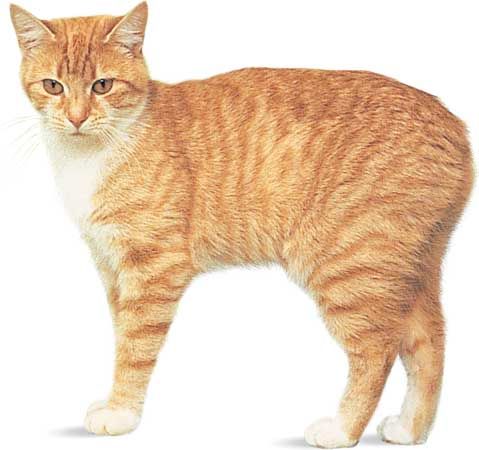
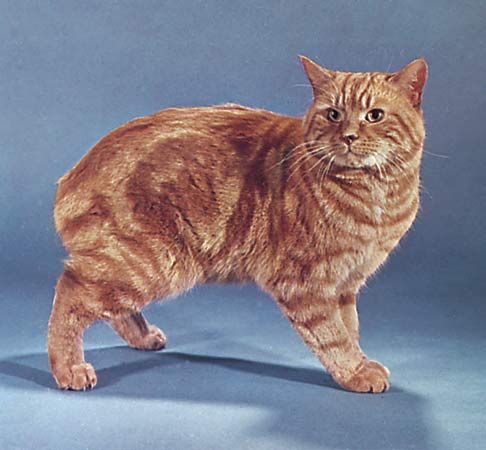
- Manx Cat: A breed of domestic cat traditionally believed to have originated on the Isle of Man. It is characterized by its taillessness—often featuring a hollow at the base of the spine—and a distinctive hopping gait. These cats are known for being affectionate and courageous, with a compact build and hind legs that are longer than their forelegs.42
How does the Manx language compare to other Celtic languages like Irish or Scottish Gaelic?
Manx, Irish, and Scottish Gaelic are all members of the Goidelic group of Celtic languages, often referred to as “Q-Celtic” due to their retention of the q sound (which evolved into c) from their Indo-European ancestor.15
While Manx is an offshoot of Irish, its development was shaped by unique historical circumstances that distinguish it from its relatives:
- Orthography: Unlike Irish and Scottish Gaelic, Manx was not written until 1610, when a Welsh bishop translated the Book of Common Prayer using an English-based orthography. This makes written Manx difficult for speakers of other Goidelic languages to read, as the spelling became fixed while the spoken language underwent significant phonetic changes.67
- Linguistic Features: Phonologically, Manx shares more similarities with eastern Irish dialects. However, its morphology and syntax are closer to Scottish Gaelic, likely due to a shared British substratum. Manx also features a more extensive use of periphrastic verb forms (using the auxiliary “to do”) than either Irish or Scottish Gaelic.67
What are the genetic or evolutionary reasons for the Manx cat’s lack of a tail?
The taillessness of the Manx cat is the result of a genetic mutation that affects the development of the spine. While the breed is prized for this unique feature, it is important to recognize that the same gene responsible for the lack of a tail is also linked to serious health risks, a condition collectively known as Manx Syndrome.29
Because the tail is an extension of the spine, the mutation can lead to severe congenital defects, including spina bifida, neurological conditions, infections, and incontinence. Furthermore, the gene can be lethal; if a kitten inherits two copies of the mutation, it may result in stillbirth. To mitigate these risks and maintain the health of the breed, organizations like the Cat Fanciers’ Association encourage breeders to maintain a diverse gene pool by including tailed cats in their breeding programs.910
Ethically, the intentional propagation of genetic mutations that cause physical suffering is a significant concern, leading some animal welfare groups to recommend against breeding for these specific traits.9
What is the significance of the Tynwald Court in the history of the Isle of Man?
The Tynwald Court is the parliament of the Isle of Man and serves as the cornerstone of the island’s unique governance. Its significance lies in its continuity; the island has operated under a Scandinavian-influenced system of government since the Viking era, which began around 800 CE and remains practically unchanged in its fundamental structure today.3
The court is formed by the union of two legislative bodies: the Legislative Council (the upper house) and the House of Keys, which is recognized as one of the most ancient legislative assemblies in the world. While these houses function as separate entities, they convene as the Tynwald Court to transact legislative business. The authority of this body is further symbolized by the sword of state, which is carried during its official ceremonies and features the Manx triskelion, one of the oldest continually used government symbols.312
Sources
- Manx language — Encyclopædia Britannica
- Manx — Encyclopædia Britannica
- Isle of Man — Encyclopædia Britannica
- Celtic literature - Manx — Encyclopædia Britannica
- Celtic literature - Irish — Encyclopædia Britannica
- Goidelic languages — Encyclopædia Britannica
- Celtic languages - Manx — Encyclopædia Britannica
- Goidelic — Merriam-Webster
- Dwarfism in Cats: It’s Only Cute ‘til Someone Gets Hurt — Encyclopædia Britannica
- Shorthair Cat Breeds — Encyclopædia Britannica
- cat - Tail — Encyclopædia Britannica
- flag of the Isle of Man — Encyclopædia Britannica
Published on · 3 min read