Marten
Martens are weasel-like carnivores belonging to the genus Martes. While size and coloration vary by species, they generally share several distinct physical…
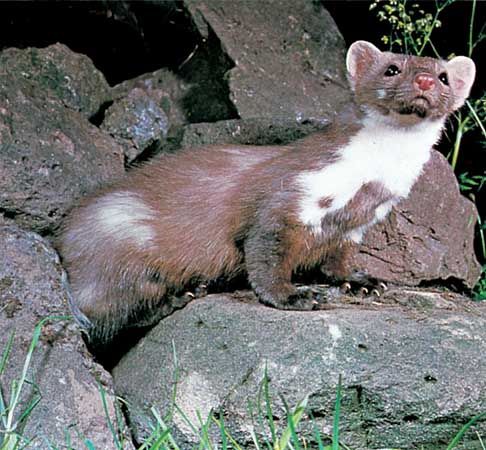
What are the main physical characteristics of martens?
Martens are weasel-like carnivores belonging to the genus Martes. While size and coloration vary by species, they generally share several distinct physical characteristics:1
- Body Shape: They possess lithe, slender bodies and short legs, which facilitate their ability to climb easily.1
- Features: They are characterized by rounded ears and bushy tails.1
- Coat: Martens are known for their soft, thick coats, which have historically been highly valued in the fur trade.1
- Size and Weight: Depending on the species, adult head-and-body lengths typically range from 35 to 65 cm (approximately 14 to 26 inches), with weights generally falling between 1 and 2.5 kg (about 2 to 5.5 pounds).1
- Coloration: Most species exhibit shades of brown or grayish brown, often featuring a distinct throat patch that can range in color from white to yellow or orange.1
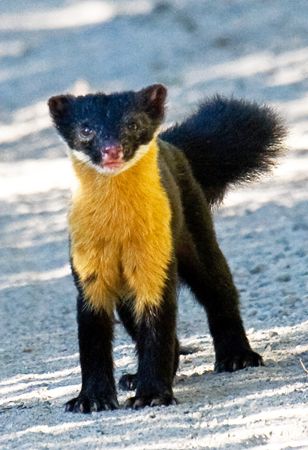
In which habitats are martens typically found?
Martens are primarily forest-dwelling animals found across a wide range of geographic regions in the Northern Hemisphere. Their habitats vary by species but generally include:1
- North America: The American marten inhabits northern wooded regions, ranging from Alaska to Newfoundland and Labrador.1
- Eurasia: Species such as the pine marten are found in the forests of Europe and Central Asia, while the stone marten occupies wooded country extending from Spain to northern China.1
- Southern Asia: The yellow-throated marten is found in southern Asia, and the Nilgiri marten is endemic to the Western Ghats in India.1
Because they are adept climbers, these animals rely on wooded environments to support their lifestyle. Unfortunately, some populations, such as the vulnerable Nilgiri marten, have faced significant threats from deforestation, highlighting the critical importance of preserving these forest ecosystems.1
How many species of martens exist and what are their differences?
There are eight recognized species within the genus Martes. While they share a similar weasel-like body plan, they differ in size, coloration, and geographic distribution.1
Key differences among the best-known species include:
Species
Notable Features
Typical Habitat
American marten
Yellowish brown coat; pale throat patch; 35–43 cm long.
North American wooded regions.
Pine marten
Dark brown coat; undivided yellowish throat patch; 42–52 cm long.
European and Central Asian forests.
Stone marten
Grayish brown fur; divided white throat bib; 42–48 cm long.
Eurasian wooded country.
Yellow-throated marten
Brown coat darkening toward the tail; orange throat and chin; 56–61 cm long.
Southern Asia.
Nilgiri marten
Similar to the yellow-throated marten but slightly longer (55–65 cm); yellow to orange throat patch.
Endemic to India’s Western
Ghats
.
While most martens are considered species of least concern, the Nilgiri marten is classified as vulnerable due to historical deforestation and hunting, necessitating ongoing conservation efforts to protect its population.1
What is the cultural significance of martens in different parts of the world?
The provided search results do not contain information regarding the cultural significance of martens in different parts of the world. While the records note that their soft, thick coats have historically been valuable in the fur trade, there is no mention of their role in folklore, mythology, or cultural traditions.
Sources
- marten — Encyclopædia Britannica
- stone marten — Merriam-Webster
- Martes — Merriam-Webster
- marten — Merriam-Webster
Published on · 2 min read