Matopo Hills
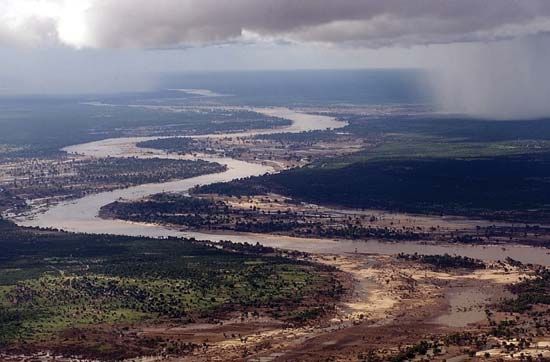
The Matopo Hills, located southeast of Bulawayo in Zimbabwe, are a massive granite formation created by the prolonged erosion of an exposed granite batholith.
What notable rock formations or natural features can be found in the Matopo Hills?
The Matopo Hills, located southeast of Bulawayo in Zimbabwe, are a massive granite formation created by the prolonged erosion of an exposed granite batholith.12
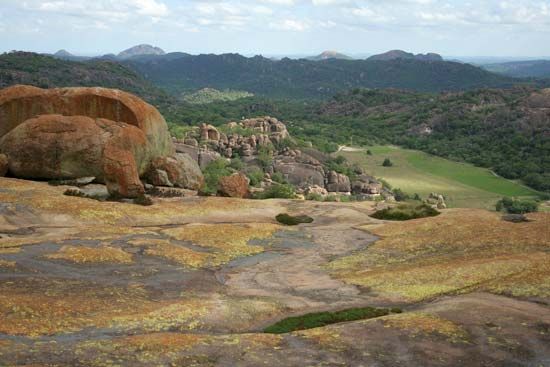
Notable natural features within the hills include:
- Balancing Rocks: These formations were shaped by wind and water erosion along regular fault lines, leaving large granite blocks resting precariously upon one another.2
- Kopjes: The landscape is dotted with innumerable small, rounded granite hillocks known locally as kopjes.2
- Gigantic Caves: The hills contain significant caves, most notably Bambata, Nswatugi, and Silozwane, which are famous for their ancient Khoekhoe rock paintings.1
- View of the World Hill: Also known as Malindidzimu, this scenic hill reaches an altitude of 4,700 feet (1,400 meters) and serves as the burial site for Cecil Rhodes and others.1
The area is characterized by deep valleys and a diverse environment ranging from desertlike hilltops to lush valley swamps. In 2003, the Matopo Hills were designated a World Heritage site.1
What is the geographical location and description of the Matopo Hills in Zimbabwe?
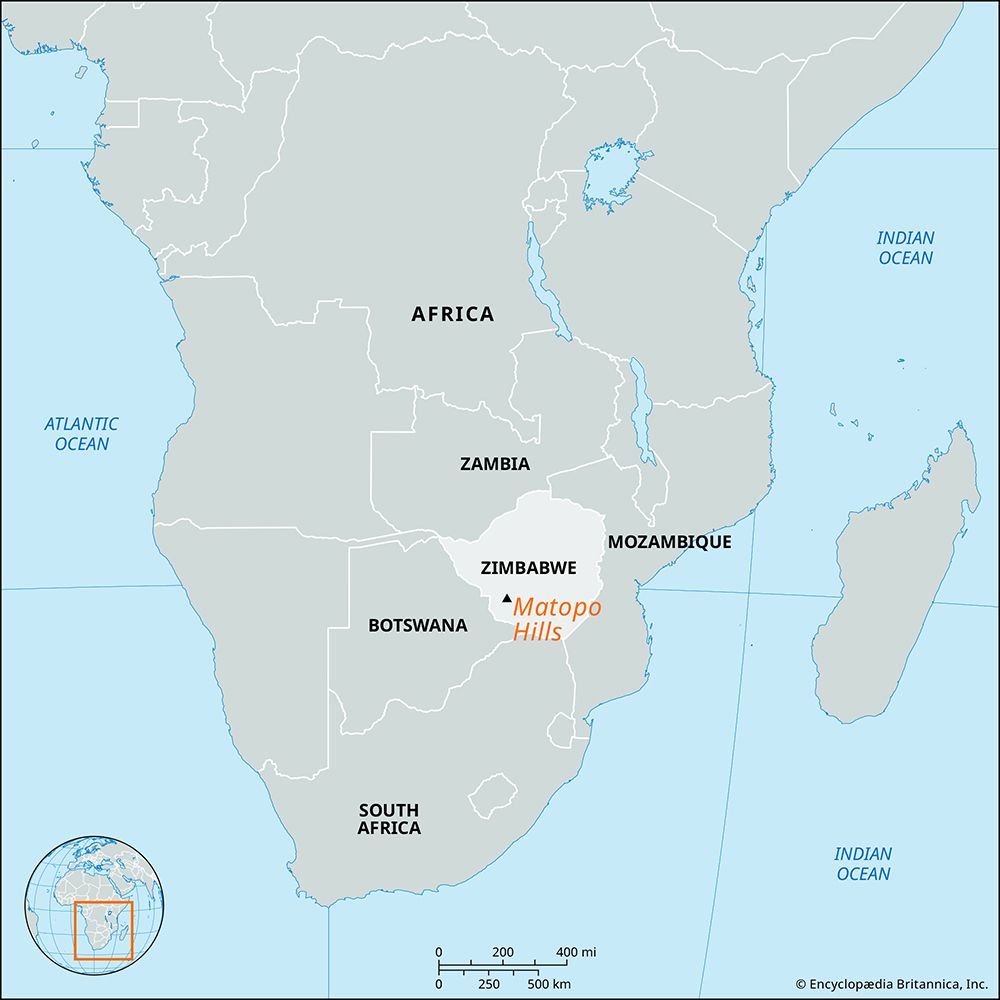
The Matopo Hills are a massive range of granite hills located southeast of Bulawayo in Zimbabwe. Formed by the prolonged erosion of an exposed granite batholith, the hills cover approximately 1,200 square miles (3,100 square km) and extend 50 miles (80 km) from east to west.12
The landscape is characterized by deep valleys and a diverse topography, with an average elevation of 5,000 feet (1,500 meters). The terrain features numerous small, rounded granite hillocks known as kopjes and unique “balancing rocks” shaped by wind and water erosion. The area is well-watered by tributaries of the Limpopo River, supporting vegetation that ranges from desertlike lichens on hilltops to lush swamp growth in the valleys.12
Designated a World Heritage site in 2003, the region is rich in cultural and archaeological history, containing ancient Khoekhoe rock paintings and Stone and Iron Age sites.1
How old are the rock formations in the Matopo Hills, and what geological processes formed them?
The rock formations of the Matopo Hills are part of a vast Precambrian basement complex that underlies much of Zimbabwe. These ancient rocks date back between approximately 570 million and 4 billion years.3
The hills themselves were formed through the following geological processes:
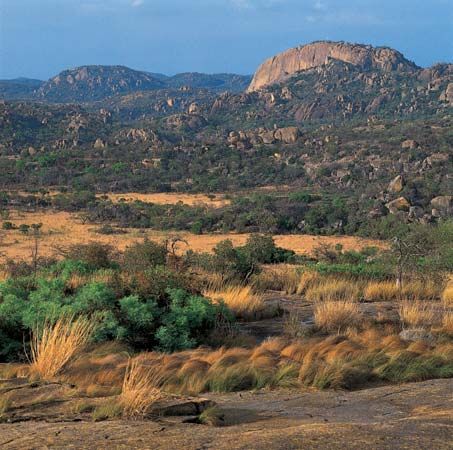
- Batholith Exposure: The primary structure of the Matopo Hills is an exposed granite batholith—a large body of intrusive igneous rock that cooled beneath the Earth’s surface and was later revealed by the erosion of overlying material.13
- Prolonged Erosion: Over vast periods, the exposed granite has been subjected to continuous weathering by wind and water.13
- Formation of Features: This erosion process sculpted the landscape into its current form, creating deep valleys and characteristic features such as kopjes (small, rounded granite hillocks) and “balancing rocks,” which occur where erosion along regular fault lines has left large granite blocks resting precariously upon one another.13
How have the Matopo Hills been used for religious or spiritual purposes throughout history?
The Matopo Hills have long held deep spiritual and cultural significance. Traditionally, the hills are venerated as the dwelling places for the spirits of departed Ndebele chiefs, serving as a site of folklore and ancestral tradition.1
Beyond their role in Ndebele belief, the region is home to numerous caves—such as Bambata, Nswatugi, and Silozwane—that contain ancient Khoekhoe rock paintings. These sites, along with various Stone Age and Iron Age archaeological remains, suggest that the area has been a focal point for human activity and ritual expression for millennia.1
Additionally, the hill known as Malindidzimu, or “View of the World,” carries its own historical and spiritual weight; it is the burial site of Cecil Rhodes and several other notable figures, marking a convergence of colonial history and the landscape’s enduring sacred character.1
Sources
- Matopo Hills — Encyclopædia Britannica
- Zimbabwe - Relief — Encyclopædia Britannica
- Precambrian - Sedimentary basins, basic dikes, and layered complexes — Encyclopædia Britannica
Published on · 3 min read