Limpopo River
There are no major hydroelectric projects on the Limpopo River, though the river is utilized for irrigation and agricultural development.
Are there any major dams or hydroelectric projects on the Limpopo River?
There are no major hydroelectric projects on the Limpopo River, though the river is utilized for irrigation and agricultural development.
The river’s headwaters, known as the Krokodil (Crocodile) River, feature the Hartbeespoort Dam, which is used for irrigation. Additionally, the Limpopo is dammed approximately 62 miles (100 km) from its mouth near Guijá in Mozambique, where it supports an agricultural settlement.
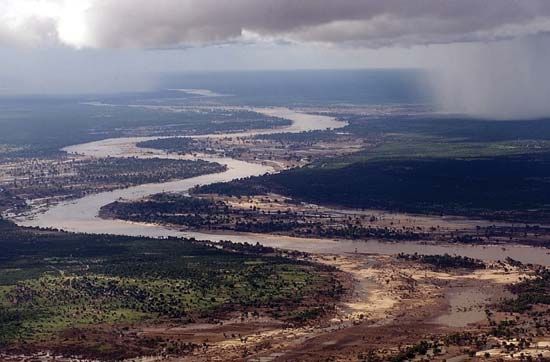
The river’s flow is highly seasonal, often drying into a series of pools during winter months and reaching flood proportions in the summer, which limits its potential for large-scale, consistent hydroelectric power generation. Furthermore, the river is largely unnavigable for most of its course, with significant rapids occurring as it drops over the fall line in Mozambique.
What is the total length of the Limpopo River and how does it compare to other major African rivers?
The Limpopo River has a total length of approximately 1,100 miles (1,800 km).1
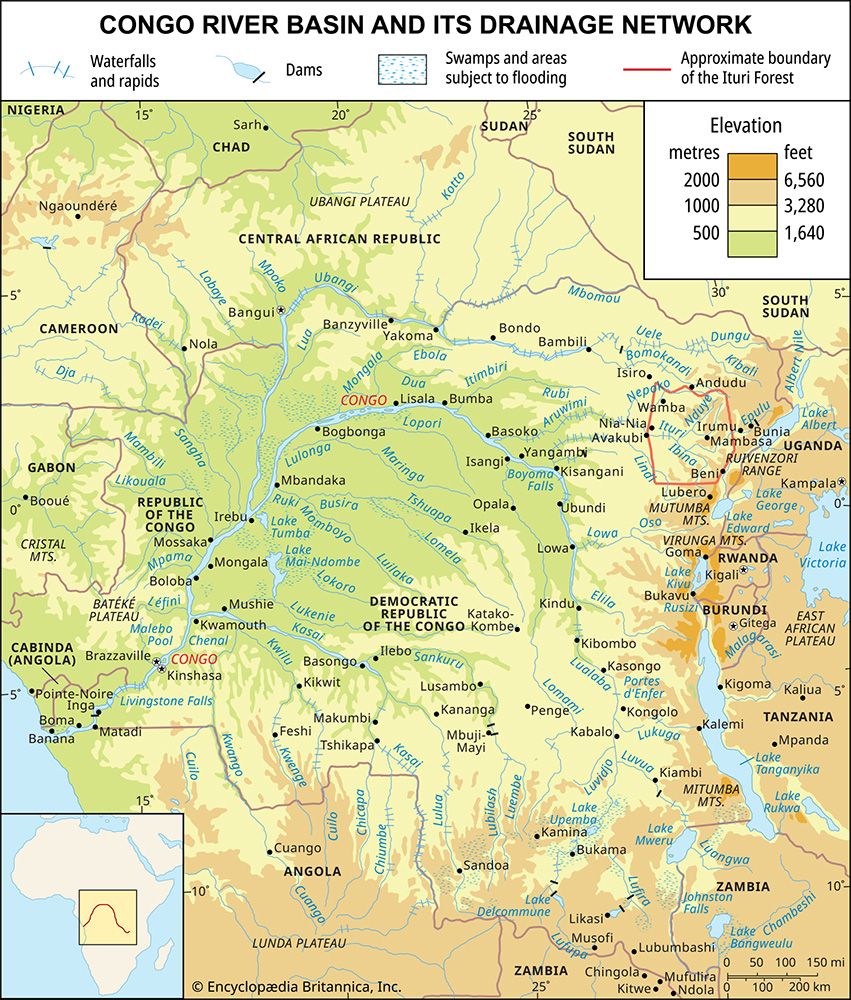
When compared to other major African rivers, the Limpopo is significantly shorter. For context, the Nile River is the longest river in Africa, stretching about 4,132 miles (6,650 km). The Congo River, which is the continent’s second-longest, measures approximately 2,900 miles (4,700 km).3
Unlike these major systems, which serve as vital, large-scale navigable waterways, the Limpopo is characterized by its highly seasonal flow and is largely unnavigable for most of its course. While the Nile and Congo support extensive networks and consistent volumes, the Limpopo often dries into a series of pools during winter months and is restricted by rapids and sandbars, limiting its utility for transport compared to the continent’s primary river systems.14
Are there any notable historical or cultural references to the Limpopo River?
The Limpopo River holds significant historical and cultural importance in Southern Africa, particularly as a cradle for early complex societies.
Historical Significance
The Limpopo River valley served as a vital trade route that facilitated the development of South Africa’s first urban centers during the 11th century, most notably Mapungubwe. Archaeological sites such as Pont Drift and Schroda indicate that the valley’s inhabitants engaged in long-distance trade, accumulating wealth in livestock and exotic goods like trade beads. At Mapungubwe, social stratification became clearly defined, with an elite class residing on a central sandstone hill, leaving behind evidence of specialized craftsmanship, including a famous gold rhinoceros.1
Exploration and Naming
- Etymology: The name “Limpopo” may be derived from the Sotho language, meaning “river of the waterfall”.5
- European Contact: The river was first sighted by Vasco da Gama in 1498, who named it the Espiritu Santo River. Later, in the 19th century, explorers such as St. Vincent Whitshed Erskine and Captain J.F. Elton mapped its lower and middle courses.5
Where is the Limpopo River located in Africa, and which countries does it flow through?
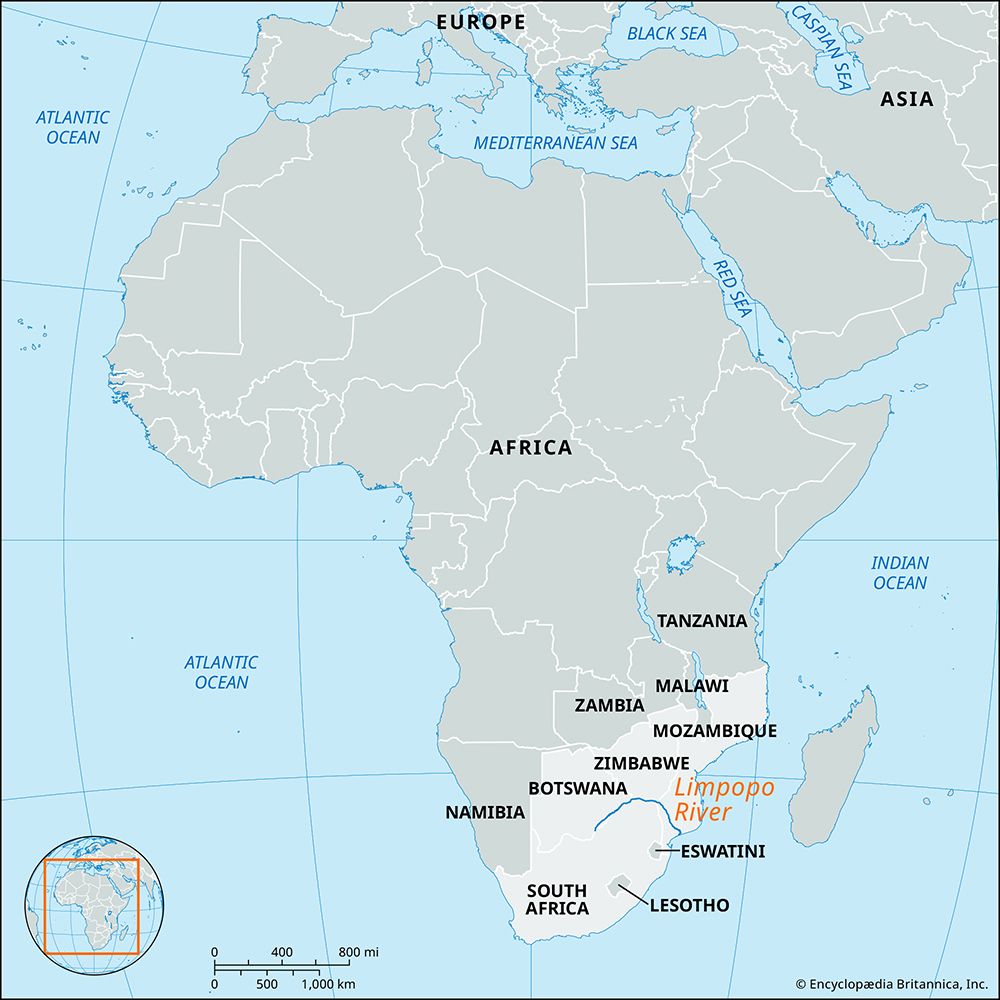
The Limpopo River is located in southeast Africa. It rises in the Witwatersrand region of South Africa as the Krokodil (Crocodile) River before flowing in a semicircular course toward the Indian Ocean.
Throughout its journey, the river flows through or along the borders of four countries:
- South Africa: The river originates here and forms the northern and western borders of the Limpopo province.
- Botswana: The river forms a portion of the border between South Africa and Botswana.
- Zimbabwe: The river forms a border between South Africa and Zimbabwe.
- Mozambique: The river flows into Mozambique, where it eventually reaches the Indian Ocean.1
Sources
- Limpopo River — Encyclopædia Britannica
- Limpopo — Encyclopædia Britannica
- 8 Amazing Physical Features of Africa — Encyclopædia Britannica
- South Africa - Drainage — Encyclopædia Britannica
- South Africa - First urban centers — Encyclopædia Britannica
- Limpopo — Merriam-Webster
Published on · 3 min read