McPherson Range
The McPherson Range is a mountain range located in eastern Australia, serving as an eastern spur of the Great Dividing Range.
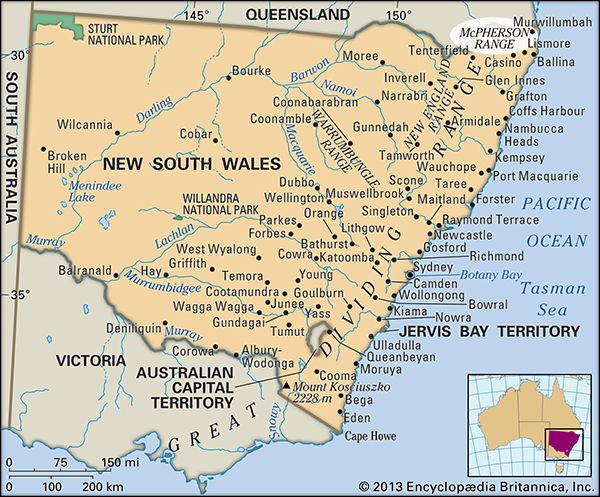
Where is the McPherson Range located in Australia?
The McPherson Range is a mountain range located in eastern Australia, serving as an eastern spur of the Great Dividing Range.1
The range spans 140 miles (225 km), and its crest forms the border between the states of Queensland and New South Wales, stretching from Point Danger to Wallangara. It is a well-dissected, rainforest-covered region that reaches its highest elevation at West Barney Peak, which stands at 4,459 feet (1,359 meters). Parts of this area, including the Lamington Plateau, have been designated as a national park to preserve the landscape.1
What are the notable peaks and features of the McPherson Range?
The McPherson Range, an eastern spur of the Great Dividing Range, is characterized by its rugged, rainforest-covered terrain and significant natural landmarks.
Notable Peaks
- West Barney Peak: The highest point of the range, reaching an elevation of 4,459 feet (1,359 meters).1
- Mount Warning: Sighted by Captain James Cook in 1770, this peak is a prominent feature of the region.1
- Mount Wanugara: Located within the Lamington Plateau, this scenic wooded peak stands at 3,925 feet (1,196 meters).6
Key Features
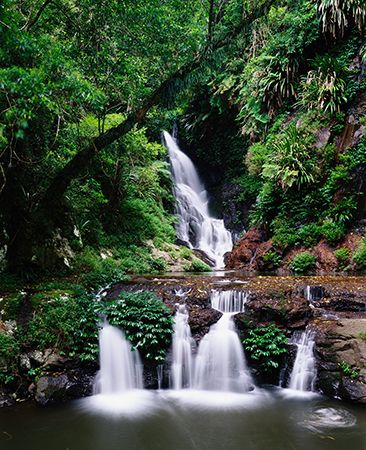
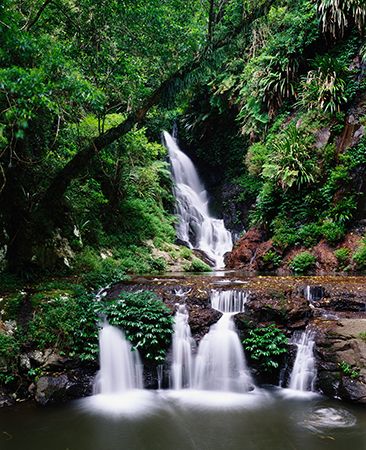
- Lamington Plateau: A significant section of the range covering approximately 75 square miles (195 square km). It is home to Lamington National Park, which features over 500 waterfalls, ancient Antarctic beech forests, and diverse wildlife.16
- Hydrology: The plateau serves as the headwaters for the Nerang, Coomera, Albert, and Logan rivers.6
- Infrastructure: The range is traversed by a rail line that passes through a tunnel under Richmond Gap, connecting Sydney and Brisbane.1
Are there any national parks or protected areas within the McPherson Range?
Yes, there are protected areas within the McPherson Range. The most notable is Lamington National Park, which is situated on the Lamington Plateau.61
This protected region is renowned for its diverse natural features, including:
- Scenic Peaks: The park contains several wooded peaks, such as Mount Wanugara, which reaches an elevation of 3,925 feet.6
- Waterfalls: The area is home to more than 500 waterfalls.6
- Ancient Flora: It preserves significant stands of ancient Antarctic beech trees and various rare plant species.6
- Wildlife: The park provides a habitat for a variety of rare birds and other wildlife.6
The Lamington Plateau itself covers approximately 75 square miles (195 square km) and serves as the headwaters for several major rivers, including the Nerang, Coomera, Albert, and Logan.6
Are there any significant hiking trails or tourist attractions in the McPherson Range?
The McPherson Range offers significant opportunities for outdoor exploration, primarily centered around the Lamington Plateau.
The most prominent tourist attraction in the area is Lamington National Park, which serves as a major destination for nature enthusiasts. Visitors to the park can experience:
- Scenic Hiking: The landscape features numerous trails through rugged, rainforest-covered terrain, including paths that lead to scenic wooded peaks like Mount Wanugara (3,925 feet).6
- Natural Landmarks: The area is famous for its extensive network of more than 500 waterfalls and ancient stands of Antarctic beech trees.6
- Wildlife Observation: The park is a sanctuary for diverse wildlife, including various rare birds and unique plant species.6
The region is accessible from Brisbane via the Mount Lindesay Highway, making it a popular site for those interested in the natural history and geography of southeastern Queensland.6
Sources
- McPherson Range — Encyclopædia Britannica
- Grey Range — Encyclopædia Britannica
- MacDonnell Ranges — Encyclopædia Britannica
- Great Dividing Range — Encyclopædia Britannica
- New England Range — Encyclopædia Britannica
- Lamington Plateau — Encyclopædia Britannica
- Great Dividing Range — Merriam-Webster
- Exploring 7 of Earth’s Great Mountain Ranges - Great Dividing Range — Encyclopædia Britannica
Published on · 3 min read