Maurienne
The Maurienne valley has served as a vital corridor for trans-Alpine transportation, facilitating movement between France and Italy through its strategic…
What role did the Maurienne valley play in the development of transportation routes through the Alps?
The Maurienne valley has served as a vital corridor for trans-Alpine transportation, facilitating movement between France and Italy through its strategic geography.
The valley’s role in modern transit is defined by two major engineering landmarks:
- Rail Connectivity: The valley hosts a significant trans-Alpine railway line that connects to Turin via the Mont Cenis Tunnel. Opened in 1871, this was the first major Alpine tunnel, representing a landmark achievement in engineering that pioneered techniques such as the use of dynamite and pneumatic drilling.12
- Road Infrastructure: Automobile traffic is supported by the Fréjus Tunnel, which runs parallel to the rail route. Connectivity was further enhanced in 2000 with the completion of the A43 highway, which integrates the valley into the broader French highway network and provides a direct link to the Fréjus road tunnel.12
Historically, the town of Modane at the head of the valley prospered as a border hub, though this function has evolved due to the European Union’s policies on free movement.1
How has the Maurienne valley’s economy evolved over time, and what are its main industries today?
The economy of the Maurienne valley has undergone a significant transformation, shifting away from its traditional industrial base toward a service- and tourism-oriented model.
Historical Industrial Foundation
Historically, the valley’s economy was anchored by heavy industry, powered by a network of hydroelectric stations. These facilities provided the energy necessary for:
- Aluminum refining
- Electrochemical plants
- Electric, steel, and alloy production1
Additionally, the town of Modane once thrived as a vital border hub, benefiting from customs and logistics services associated with the trans-Alpine route to Italy. However, the implementation of European Union policies favoring the free movement of goods and people has largely eliminated this traditional economic role.1
Modern Economic Landscape
Today, the valley’s economy is characterized by a mix of traditional agriculture and a growing tourism sector:
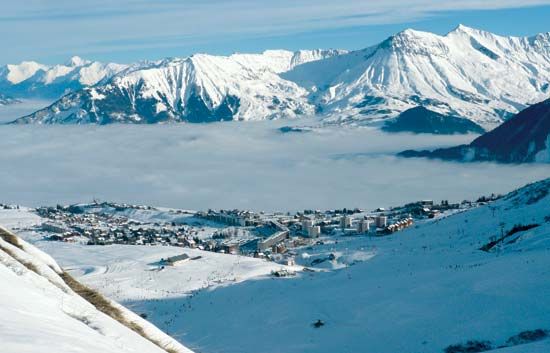
- Tourism: Winter sports have become increasingly important, supported by resorts such as La Toussuire, Valloire, Valmeinier, and Aussois.1
- Agriculture: In the Haute-Maurienne region, the economy relies on stock breeding, dairying, and cheese production, alongside timber and fuel logging.1
Where is the Maurienne valley located in France, and what are its main geographical features?
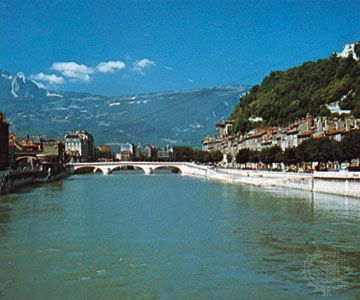
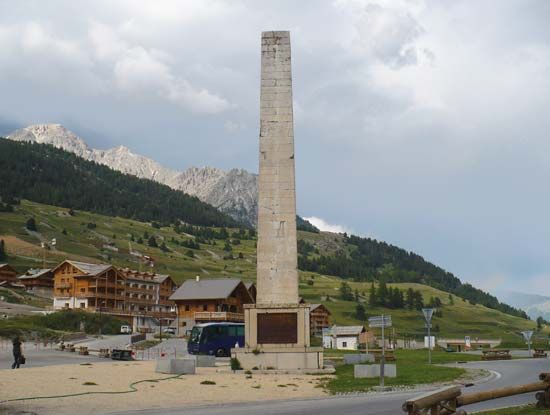
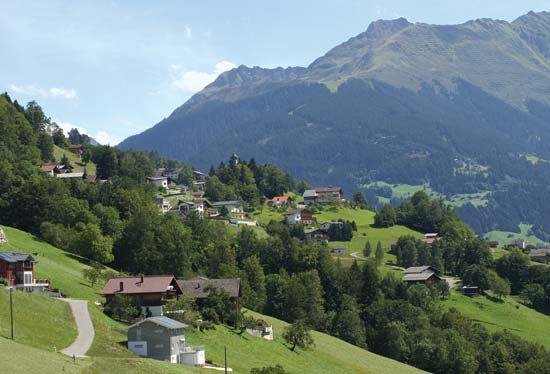
The Maurienne is a high Alpine valley located in southeastern France. Stretching approximately 80 miles (130 km) in length, it is a prominent geographical feature of the region.1
The valley is defined by the following geographical characteristics:
- Hydrology: It is drained by the Arc River, which originates in the Mont Levanna glaciers near the Italian frontier. The Arc flows through the valley, passing towns such as Modane and Saint-Jean-de-Maurienne, before eventually joining the Isère River from the west.13
- Topography: The landscape consists of a succession of large basins interspersed with narrow, wild gorges. These features are carved through outcrops of heavily folded and overthrust rock formations.1
Situated in the Savoy Alps, the valley serves as a critical transit corridor, connecting the French highway and rail networks to Italy via the Mont Cenis Tunnel and the Fréjus road tunnel.13
What are some traditional dishes or specialties from the Maurienne valley?
The culinary traditions of the Maurienne valley are deeply rooted in the broader gastronomic heritage of the Savoy region. Because the valley’s economy relies heavily on stock breeding and dairying, its cuisine is defined by the use of local dairy products and hearty, mountain-grown ingredients.45
Key elements of the local diet include:
- Cheeses: Dairy production is a cornerstone of the local economy. The region is well-known for various tommes, which are typically packaged in tight balls with a tough rind. Gruyère is also produced in the Savoie region and is frequently used in melted dishes like fondues and soups.14
- Staple Ingredients: Traditional recipes rely on potatoes, freshwater fish, crayfish, mushrooms, and local fruits.4
- Prepared Dishes: Gratins are a common specialty, typically prepared using a combination of potatoes, eggs, and bouillon.4
- Beverages: The region produces distinctive red wines, such as those from Saint-Jean-de-Port and Montmélian, as well as Marc de Savoie, a fine gentian bitters.4
Sources
- Maurienne — Encyclopædia Britannica
- Mount Cenis Tunnel — Encyclopædia Britannica
- Isère River — Encyclopædia Britannica
- Gruyère — Encyclopædia Britannica
- Savoy — Encyclopædia Britannica
Published on · 3 min read