Isère River
The Isère River is a vital source of hydroelectric power in southeastern France. Because the river originates in the high-altitude Savoy Alps and descends…
How has the Isère River been utilized for hydroelectric power generation?
The Isère River is a vital source of hydroelectric power in southeastern France. Because the river originates in the high-altitude Savoy Alps and descends rapidly, it provides the necessary elevation and flow for energy production.1
Key infrastructure along the river includes:
- Tignes Dam: The river flows from its glacial source into an artificial lake created by this dam, which serves as a significant site for power generation.1
- Tarentaise Valley: Downstream from Val d’Isère, the river is dammed again near Bourg-Saint-Maurice to further harness its energy.1
While the river is not navigable, its steep descent through mountain ranges and valleys makes it an ideal resource for generating electricity throughout its 180-mile course.1
How has the Isère River influenced the development of agriculture in the surrounding valleys?
The provided search results do not contain specific information regarding how the Isère River itself has influenced the development of agriculture in its surrounding valleys.
While the broader Savoy region—which encompasses areas along the river—is known for cattle raising, dairying, and the cultivation of cereals, vines, and fruit, the available data does not explicitly link these agricultural practices to the influence of the Isère River. Similarly, while Alpine agriculture is discussed in the context of high valleys and mountain slopes, the specific role of the Isère in shaping these local economies is not detailed in the provided text.12
What are some of the main cities and attractions along the Isère River?
The Isère River flows through several notable locations in southeastern France, each offering unique historical and cultural significance.
Main Cities and Towns
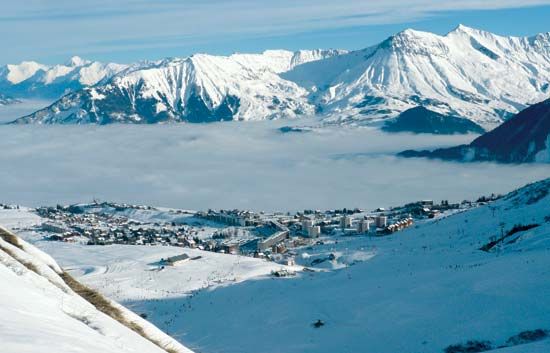
- Val d’Isère: Located near the river’s glacial source, this town is a well-known gateway to the high-altitude regions of the Savoy Alps.1
- Bourg-Saint-Maurice: Situated in the Tarentaise Valley, this town serves as a key point along the river’s upper course.1
- Albertville: A significant stop where the Isère receives the Arly River. Albertville gained international recognition as the host of the 1992 Winter Olympic Games.14
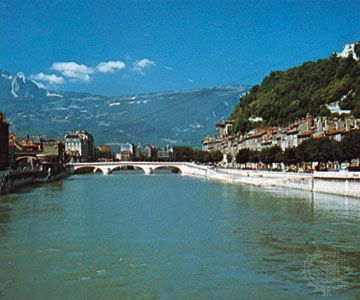
- Grenoble: The largest city along the river, Grenoble is the capital of the Isère département. It is a major hub for scientific research, education, and industry, and it famously hosted the 1968 Winter Olympic Games.15
Attractions and Landmarks
- Tignes Dam: This structure creates an artificial lake that captures the river’s flow, serving as a vital site for hydroelectric power generation.1
- Cultural Heritage in Grenoble: The city features the 15th- and 16th-century Palais de Justice, a library housing manuscripts by the novelist Stendhal, and a museum renowned for its collection of modern paintings.5
Where is the Isère River located in France, and what are its major tributaries?
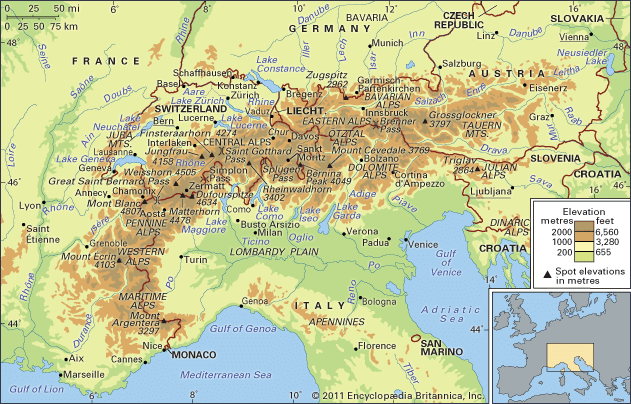
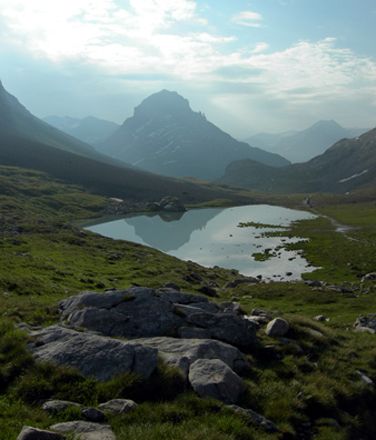
The Isère River is located in southeastern France. It originates in the Savoy Alps near the Italian frontier, specifically rising in a glacial amphitheater near the Col de l’Iseran. The river flows for approximately 180 miles (290 km) before reaching its confluence with the Rhône River above the town of Valence.1
Along its course, the Isère receives several tributaries, most notably:
- The Arly River: This river joins the Isère at the town of Albertville.1
- The Arc River: Rising in the Mont Levanna glaciers, the Arc flows through the Maurienne Valley and joins the Isère midway along the Combe de Savoie depression.1
The Isère is a significant Alpine river that plays a major role in the hydrology of the region, particularly through its impact on riverbed deposits and water volume as it feeds into the Rhône.6
Sources
- Isère River — Encyclopædia Britannica
- Alps - Agriculture — Encyclopædia Britannica
- Savoy — Encyclopædia Britannica
- Grenoble — Encyclopædia Britannica
- Rhône-Alpes — Encyclopædia Britannica
- Isère — Merriam-Webster
- Rhône River - Physiography — Encyclopædia Britannica
Published on · 3 min read