Mayon Volcano
The provided search results do not contain information regarding the origin of the name "Mayon" or its specific significance in Filipino culture and…
How did Mayon Volcano get its name, and what is its significance in Filipino culture and mythology?
The provided search results do not contain information regarding the origin of the name “Mayon” or its specific significance in Filipino culture and mythology.
While the Mayon Volcano is recognized as the most perfect volcanic cone in the world due to its symmetry and is a prominent landmark in the Philippines, the available documentation focuses on its physical geography, history of eruptions, and status as a national park rather than its etymology or cultural folklore.
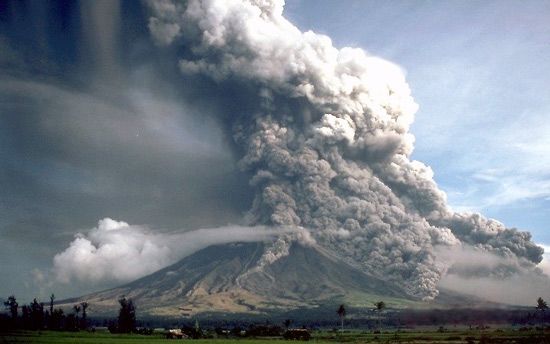
How tall is Mayon Volcano, and how does its height compare to other volcanoes in the Philippines?
Mayon Volcano, located on the island of Luzon, rises to an elevation of 8,077 feet (2,462 meters).31
When compared to other prominent peaks in the Philippines, Mayon is significantly shorter than the country’s highest peak, Mount Apo on Mindanao, which stands at 9,692 feet (2,954 meters). Mayon is also slightly lower than Mount Canlaon on the island of Negros, which reaches an elevation of 8,086 feet (2,465 meters).3
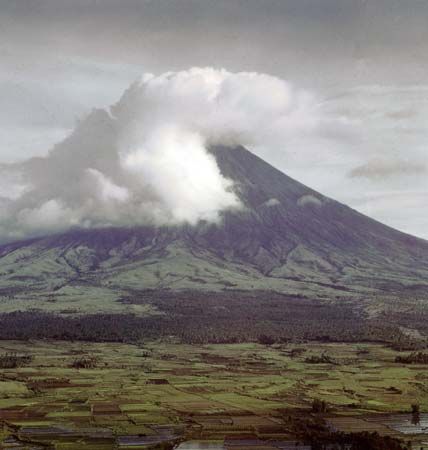
Despite not being the tallest, Mayon is widely recognized for its near-perfect conical symmetry, a feature often compared to Mount Fuji in Japan. It remains the most active volcano in the Philippines, with over 30 recorded eruptions since 1616.314
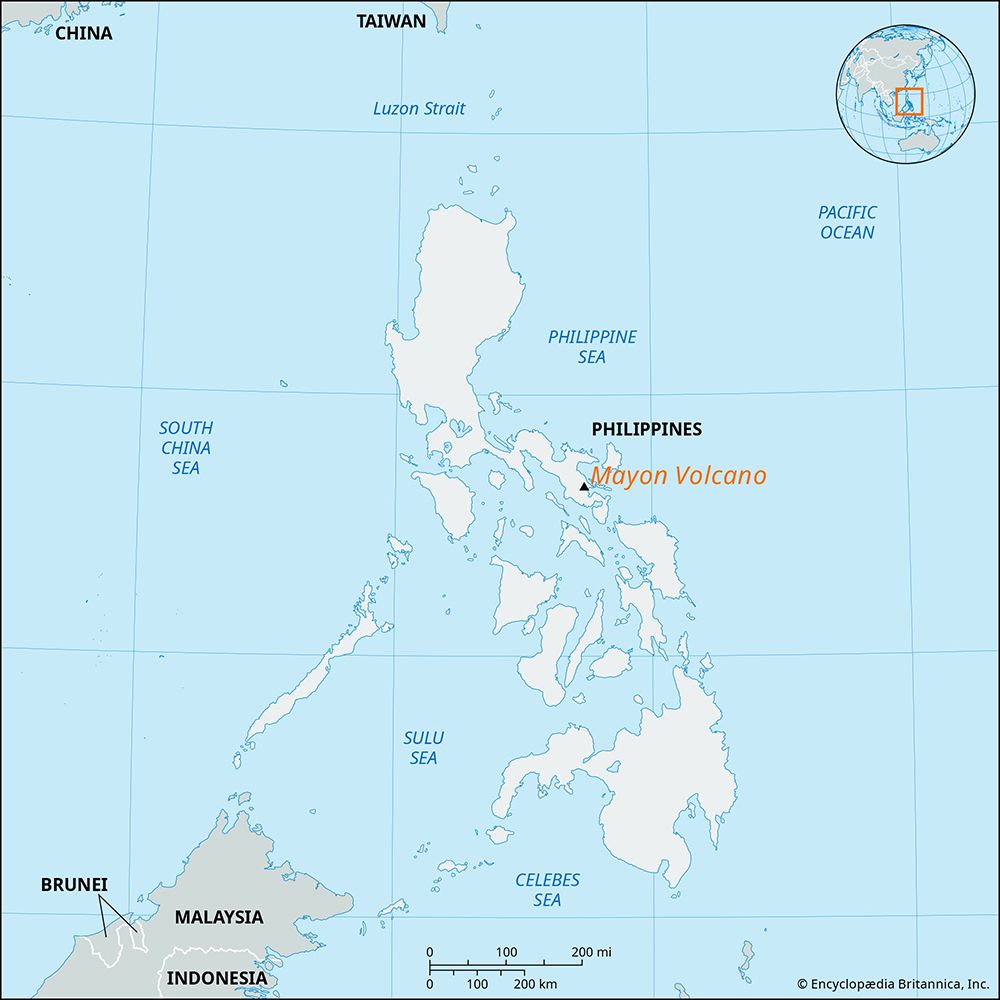
Where is Mayon Volcano located in the Philippines, and what are its unique geographical features?
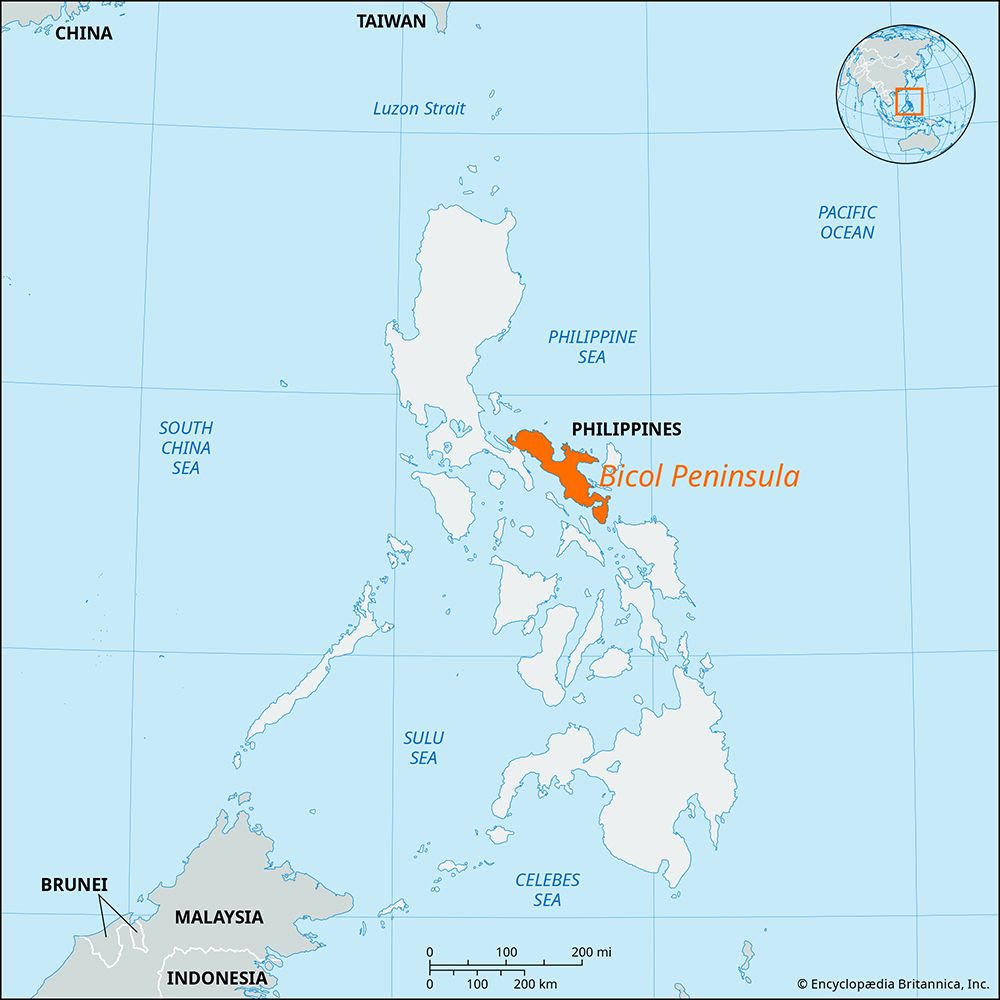
Mayon Volcano is located on the Bicol Peninsula in the southeastern part of Luzon, Philippines, where it dominates the landscape near the city of Legaspi.13
Unique Geographical Features
Mayon is globally renowned for its near-perfect conical symmetry, a feature that has led to frequent comparisons with Mount Fuji in Japan. Its key characteristics include:13
- Dimensions: The volcano rises to an elevation of 8,077 feet (2,462 meters) and possesses a base with a circumference of 80 miles (130 km).1
- Classification: It is a stratovolcano, also known as a composite volcano, characterized by steep slopes that reach up to 35° near the summit.5
- Composition: It is built from alternating layers of lava and ash, primarily composed of andesite.5
- Surroundings: The volcano serves as the center of the 21-square-mile (55-square-km) Mayon Volcano National Park, with large abaca plantations situated on its lower slopes.aca](https://www.britannica.com/plant/abaca) plantations situated on its lower slopes.1
What makes Mayon Volcano one of the most active volcanoes in the Philippines?
Mayon Volcano is considered the most active volcano in the Philippines primarily due to its frequent and well-documented eruptive history. Since 1616, there have been more than 30 recorded eruptions, demonstrating a consistent pattern of volcanic activity.16
Several factors contribute to its status as a highly active stratovolcano:
- Eruptive Behavior: Mayon frequently ejects plumes of ash and streams of lava. As a composite volcano, it is built from alternating layers of volcanic material, and its typical eruptive cycle begins with explosive ash emissions followed by the extrusion of thick, viscous lava.65
- Geological Composition: Composed largely of andesite, the volcano’s structure is designed to support repeated eruptions over long periods. Its steep, symmetrical cone—which can reach slopes of up to 35°—is a direct result of these overlapping lobes of ash and lava.5
- Historical Impact: The volcano’s activity has been significant enough to cause major humanitarian crises, including the destructive 1814 eruption that buried the town of Cagsawa and more recent events in 1993, 2000, 2006, 2009, 2014, and 2018 that necessitated large-scale evacuations.1
Sources
- Mayon Volcano — Encyclopædia Britannica
- Mayon — Merriam-Webster
- Philippines - Relief — Encyclopædia Britannica
- volcano - List of the world’s major volcanoes — Encyclopædia Britannica
- volcano - Stratovolcanoes — Encyclopædia Britannica
- world’s major volcanoes — Encyclopædia Britannica
Published on · 3 min read