Mecsek Mountains
The Mecsek Mountains are a mountain range located in southern Hungary. Geologically, the range is a fractured local fold system that emerged during the…
What is the geographical location and extent of the Mecsek Mountains in Hungary?
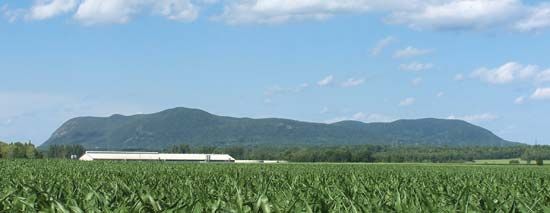
The Mecsek Mountains are a mountain range located in southern Hungary. Geologically, the range is a fractured local fold system that emerged during the Mesozoic Era and features a broad, dissected limestone plateau.1
The system is divided into two distinct parts by a large transverse fault line:1
- Eastern Mecsek: This section reaches its highest elevation of 2,237 feet (682 metres) at Zengő.1
- Western Mecsek: This section is composed of extensive sandstones and shales and reaches a peak of 2,008 feet (612 metres) at Tubes.1
Regarding its broader extent, the range merges into the Tolna-Baranya hills to the north, while its southern margin overlooks the Pécs plain. The area is noted for its Mediterranean climate, which supports viticulture and fruit production.1
How have the Mecsek Mountains influenced the history and culture of the surrounding region?
The Mecsek Mountains have significantly shaped the history and culture of southern Hungary by providing both natural resources and a favorable environment for human settlement.
Economic and Industrial Impact
The mountains have been a vital source of raw materials, influencing the development of local industry. The range is quarried for building stone, limestone, and marls. Historically, the region’s coal seams—particularly the Pécs-Komló coalfield—drove rapid urban development in the 19th and 20th centuries, transforming nearby settlements like Komló into planned mining towns. Additionally, the area’s Mediterranean climate and high sunshine hours have long supported specialized agriculture, including fruit growing and renowned viticulture.123
Cultural and Historical Significance
The mountains serve as a backdrop to Pécs, the cultural and economic heart of the region. This area has been a hub of human activity since ancient times, from the Roman town of Sopianae to its status as a center for humanist studies in the 14th and 15th centuries. The region’s diverse heritage is reflected in its architecture, such as the historic mosque-turned-church in Pécs and the Zsolnay Cultural Quarter, which celebrates the area’s international fame in ceramics.2
How does the climate of the Mecsek Mountains influence its flora and fauna?
The Mecsek Mountains benefit from a distinct Mediterranean climate characterized by a high number of annual sunshine hours. This unique microclimate significantly influences the region’s biological diversity, creating an environment that supports vegetation not typically found in other parts of Hungary.1
The favorable climatic conditions allow for the cultivation of Mediterranean-style flora, including fruit varieties such as figs, which thrive in the region’s warmth. Furthermore, the combination of this climate and the area’s geological composition—which features a broad, dissected limestone plateau—provides a diverse range of habitats that support varied plant and animal life.1
While the provided information highlights the impact of the climate on agriculture and viticulture, it does not detail specific species of fauna or the full extent of the native flora.
What is the highest peak in the Mecsek Mountains, and how tall is it?
The highest peak in the Mecsek Mountains is Zengő, which reaches an elevation of 2,237 feet (682 metres).1
Sources
- Mecsek Mountains — Encyclopædia Britannica
- Pécs — Encyclopædia Britannica
- Baranya — Encyclopædia Britannica
- Hungary - Traditional regions — Encyclopædia Britannica
Published on · 2 min read