Monadhliath Mountains
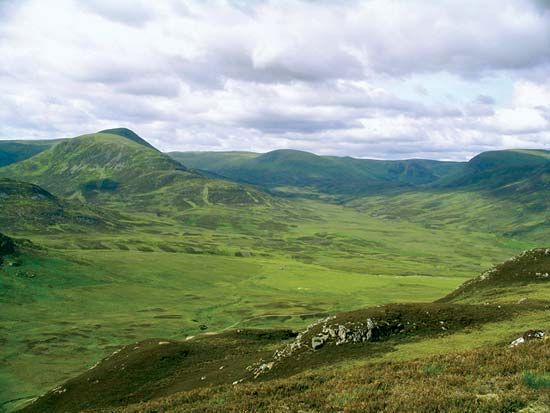
The Monadhliath Mountains are a mountain range located in the Highland council area of Scotland. The range is situated between Loch Ness to the northwest and…
What is Monadhliath Mountains?
The Monadhliath Mountains are a mountain range located in the Highland council area of Scotland. The range is situated between Loch Ness to the northwest and the River Spey to the southeast.1
Characterized by several summits exceeding 3,000 feet (900 metres), the range’s highest peak is Carn Mairg, which reaches 3,087 feet (941 metres) and serves as a habitat for eagles and wild cats. Additionally, the River Findhorn originates on the northwestern slopes of Carn Mairg before flowing north toward the North Sea.1
What wildlife species inhabit the Scottish Highlands?
The Scottish Highlands support a diverse array of wildlife, ranging from large mammals to various birds of prey.
Mammals
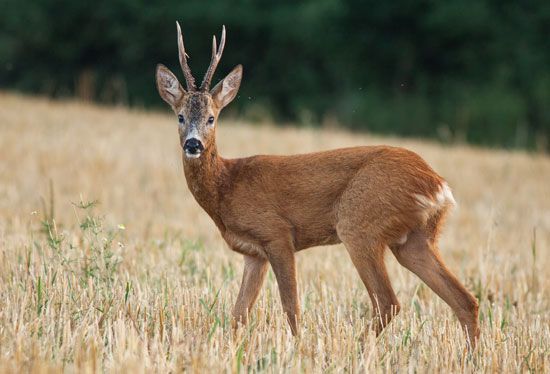
- Deer: Red deer are commonly found grazing in remote glens and on higher ground. Roe deer inhabit wooded areas, alongside introduced populations of sika and fallow deerika and fallow deer.2
- Predators and Small Mammals: Foxes and badgers are widespread. Other notable mammals include pine martens, otters, and both mountain and brown hares.2
- Wildcat: The Scottish wildcat is a critically endangered species. Its population is currently threatened by disease and interbreeding with domestic cats.23
Birds
- Birds of Prey: The Highlands are home to several notable raptors, including buzzards, kestrels, peregrine falcons, and the golden eagle, with almost all of the United Kingdom’s population of the latter residing in Scotland. Ospreys also nest in the region.24
- Game Birds: The red grouse is a significant species often hunted for sport. Other grouse species include the ptarmigan, found at higher elevations, and the capercaillie, which has been reintroduced to pine woodlands.2
Economic activities such as deer and grouse hunting remain important in parts of the Highlands where other industries are limited.5
How are mountain ranges formed in Scotland?
Mountain ranges in Scotland were primarily formed through the Caledonian orogenic belt, a major geological event resulting from the opening, closure, and eventual destruction of the Iapetus Ocean between the Cambrian and Silurian periods (approximately 542 to 416 million years ago).67
The process involved the following stages:
- Continental Collision: The final closure of the Iapetus Ocean caused the collision of two continental blocks, leading to intense deformation, metamorphism, and the uplift of the Caledonian mountain range.67
- Magmatic Activity: During the Ordovician Period, the subduction of the ocean floor created magmatic belts, which resulted in the formation of many granites found in the Highlands.7
- Erosion and Glaciation: Following their formation, the mountains underwent significant erosion and extensional collapse. In more recent geological history, particularly during the Quaternary Period, severe glaciation carved the landscape, creating the glens, rock basins, and lochs that characterize the modern Scottish terrain.689
Additionally, an eastward tilting of the Highlands during the Eocene Epoch approximately 50 million years ago helped establish the current watershed patterns.8
What is the significance of the River Spey to the region?
The River Spey is a vital geographical and economic feature of the Scottish Highlands. Flowing 107 miles northeast from the Corrieyairack Forest to the North Sea, it serves as a central artery for the region.13
Its significance is defined by two primary industries:
- Salmon Fishing: The river is highly esteemed for its salmon, making it a prominent destination for angling.13
- Whisky Production: The valley of the river, known as Strathspey, is world-renowned for its high-quality whisky distilleries, which rely on the region’s unique environment and water resources.13
The river’s course, which winds through the Monadhliath Mountains, the Grampian Mountains, and the Cairngorms, creates a distinct landscape of terraces before reaching the sea between Buckie and Lossiemouth.13
Sources
- Monadhliath Mountains — Encyclopædia Britannica
- Scotland - Plant and animal life — Encyclopædia Britannica
- wildcat — Encyclopædia Britannica
- Golden eagle — Encyclopædia Britannica
- Scotland - Agriculture, forestry, and fishing — Encyclopædia Britannica
- Caledonian orogenic belt — Encyclopædia Britannica
- Europe - Caledonian orogenic belt — Encyclopædia Britannica
- Scotland - Drainage — Encyclopædia Britannica
- Scotland - Ancient times — Encyclopædia Britannica
- Scotland - Relief of Scotland — Encyclopædia Britannica
- mountain - Geomorphic characteristics — Encyclopædia Britannica
- Alps - Geology — Encyclopædia Britannica
- River Spey — Encyclopædia Britannica
- Spey — Merriam-Webster
Published on · 3 min read