Medicine Lodge River
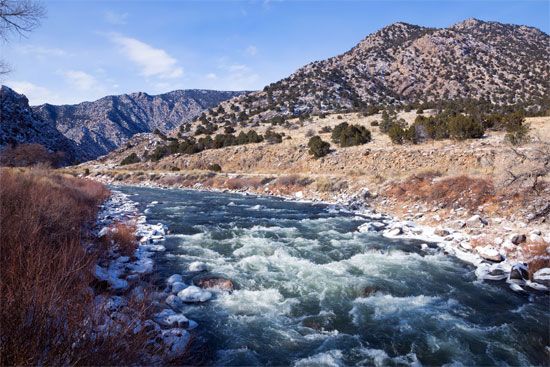
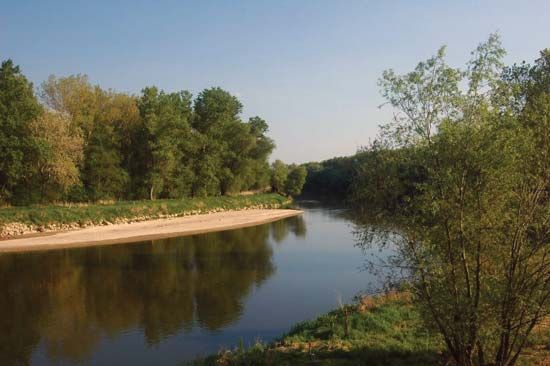
The Medicine Lodge River is a waterway that originates in southwestern Kansas, U.S., and flows approximately 100 miles (160 km) southeast into Oklahoma…
What is Medicine Lodge River?
The Medicine Lodge River is a waterway that originates in southwestern Kansas, U.S., and flows approximately 100 miles (160 km) southeast into Oklahoma, where it joins the Salt Fork Arkansas River near Great Salt Plains Lake.1
The river is rich in magnesium sulfate, or Epsom salts, and was considered a sacred site by the Kiowa people. Native Americans in the region built huts along its banks, which white settlers referred to as “medicine lodges,” believing the water possessed health-restoring qualities. The river also flows past the city of Medicine Lodge, Kansas, a location historically significant for the 1867 treaty negotiations between U.S. commissioners and the Cheyenne, Comanche, Arapaho, Apache, and Kiowa nations.21
What was the significance of the 1867 Medicine Lodge Treaty?
The 1867 Medicine Lodge Treaty was a significant diplomatic effort intended to end hostilities between the United States government and several Plains Indian nations, including the Kiowa, Cheyenne, Comanche, Arapaho, and Kiowa Apache.32
The agreement established several key conditions:
- Territorial Confinement: The tribes agreed to relocate to reservations in western Indian Territory.3
- Settlement and Infrastructure: The treaty opened the region to white settlement and the construction of railroads, while formally fixing the southern boundary of Kansas.2
- Government Obligations: In exchange for their cooperation and a pledge to refrain from attacking white settlers, the tribes were promised government annuities and the right to continue hunting buffalo south of the Arkansas River.3
Ultimately, the treaty failed to secure lasting peace. Neither side consistently honored the spirit or the letter of the agreement, leading to renewed conflict and further military campaigns in the following years.3
Why did the Kiowa people consider the river site sacred?
The Kiowa people regarded the site along the Medicine Lodge River as sacred primarily because they believed the river’s waters possessed health-restoring qualities.12
The river is rich in magnesium sulfate, commonly known as Epsom salts, which contributed to its reputation for healing. The Kiowa constructed huts along the riverbanks to utilize the site, which white settlers later referred to as “medicine lodges” due to these perceived medicinal properties.21
Who was Carry Nation and what was her connection to the town of Medicine Lodge?
Carry Nation (1846–1911) was a prominent American temperance advocate who gained national notoriety for her militant tactics against the sale of alcohol. Often dressed in black and white, she famously marched into saloons to sing, pray, and destroy bar fixtures and stock with a hatchet, a practice she called “hatchetation.”4
Her connection to the town of Medicine Lodge, Kansas, is significant as it served as the site of her first anti-saloon attack in 1899, where she initially used an umbrella to strike a saloon before adopting the hatchet. Nation lived in the town during this period, and her former residence has since been preserved as a museum and shrine dedicated to her life and crusade. While her aggressive methods were controversial and often distanced her from more conventional reformers, her efforts highlighted the intense national debate over prohibition that eventually led to national policy changes.24
Sources
- Medicine Lodge River — Encyclopædia Britannica
- Medicine Lodge — Encyclopædia Britannica
- Plains Wars - Defeat of the Plains Indians — Encyclopædia Britannica
- Carry Nation — Encyclopædia Britannica
Published on · 2 min read