Megalosaurus
When Megalosaurus was first described by William Buckland in 1824, it was the first dinosaur ever to receive a formal scientific description. Because the…
How has our understanding of Megalosaurus changed since its initial discovery?
When Megalosaurus was first described by William Buckland in 1824, it was the first dinosaur ever to receive a formal scientific description. Because the initial discovery consisted only of fragmentary remains—primarily a lower jawbone with teeth, vertebrae, and limb bones—early researchers lacked a clear understanding of the animal’s true form.12
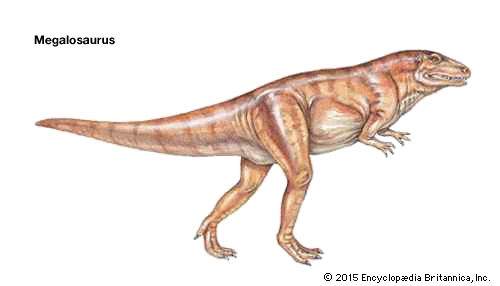
Initially, Megalosaurus was reconstructed as a striding, quadrupedal lizard. Over time, scientific consensus shifted as more evidence emerged regarding theropod anatomy. It was eventually determined that Megalosaurus was actually a bipedal, predatory dinosaur characterized by short arms and clawed, grasping hands.1
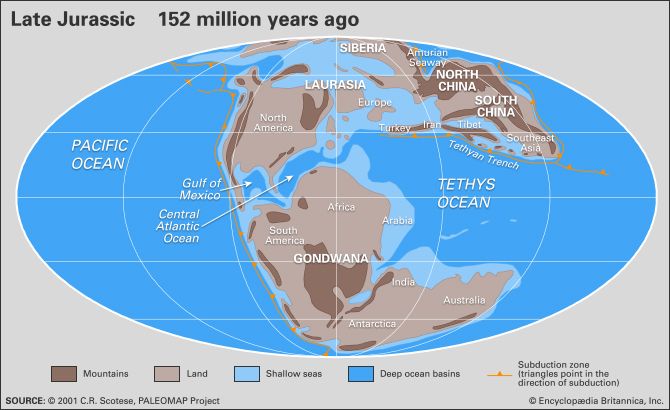
Despite its historical significance, Megalosaurus remains a relatively poorly understood genus due to the limited nature of its fossil record. While it is recognized as a large carnivorous dinosaur from the Middle Jurassic Period, it continues to be a subject of ongoing paleontological study.13
How was Megalosaurus first discovered and who named it?
Megalosaurus was discovered in southern England during the early 1820s. The fossils, which consisted primarily of a lower jawbone with daggerlike teeth, as well as scattered vertebrae, hip, and hindlimb bones, were identified and formally described by the geologist and clergyman William Buckland.132
In 1824, Buckland presented a paper to the Geological Society describing the remains as a new, large fossilized “lizard”. This publication marked the first time a dinosaur had ever received a formal scientific description. At the time of the discovery, the remains were too fragmentary to provide a clear image of the animal, leading to early, inaccurate reconstructions of it as a quadrupedal creature.231
What is the significance of Megalosaurus in the history of paleontology?
The significance of Megalosaurus in the history of paleontology is primarily due to its status as the first dinosaur to receive a formal scientific description. In 1824, the geologist and minister William Buckland presented a paper to the Geological Society describing the genus based on fragmentary remains, including a lower jawbone with teeth, vertebrae, and limb bones found in England.12
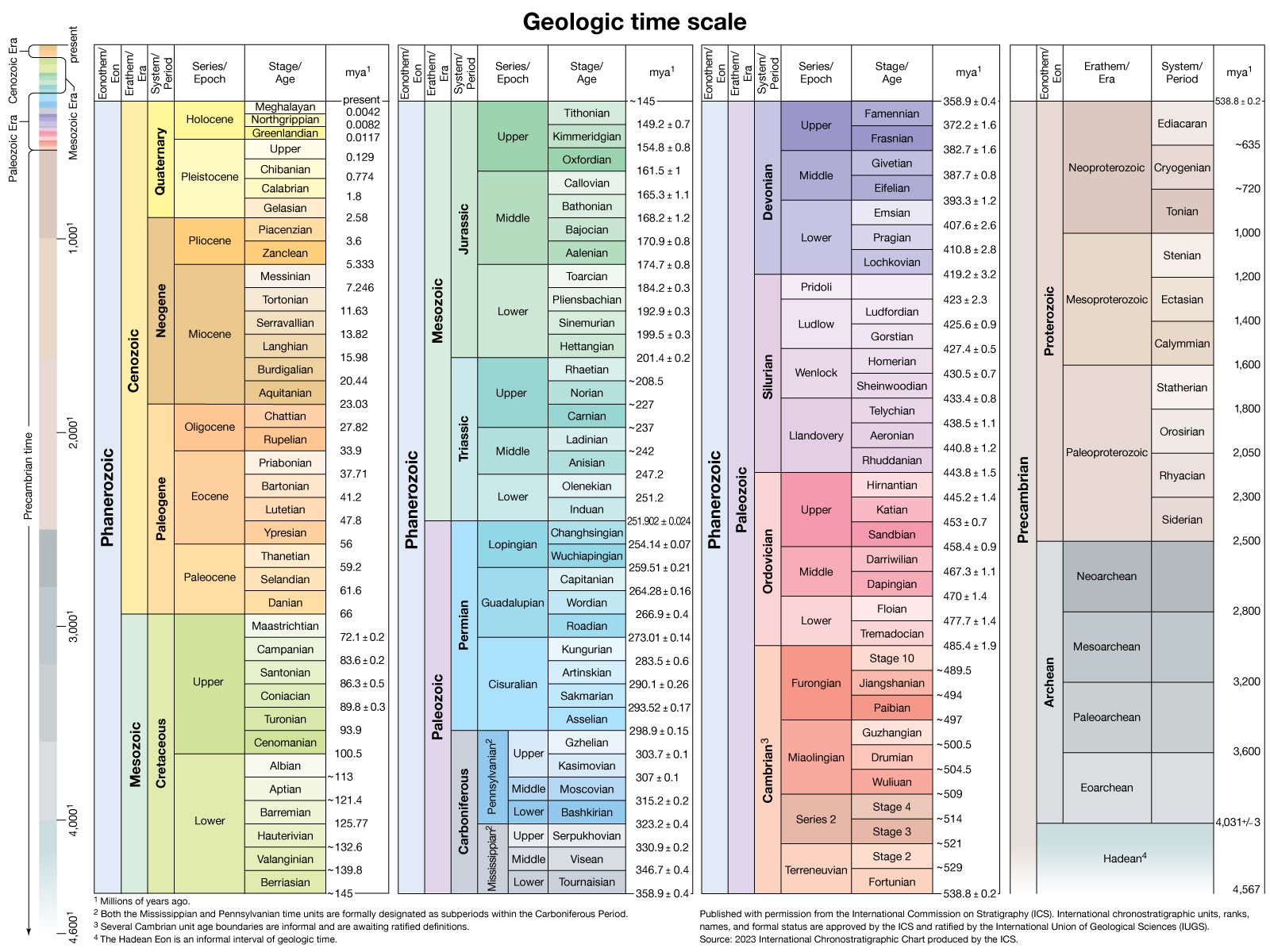
This discovery was a foundational moment for the field, as it introduced the scientific community to the existence of large, extinct reptiles from the Mesozoic Era the Mesozoic Era. Although early reconstructions incorrectly depicted Megalosaurus as a quadrupedal lizard, it was later correctly identified as a bipedal, predatory theropod.51
Megalosaurus also played a key role in the development of dinosaur classification. It was one of the three genera—alongside Iguanodon and Hylaeosaurus—that formed the basis for the original definition of the group Dinosauria. Later, in 1887, H.G. Seeley used Megalosaurus to help define the order Saurischia, which encompasses all carnivorous dinosaurs.5
How has Megalosaurus been depicted in popular culture and media?
Sources
- Megalosaurus — Encyclopædia Britannica
- William Buckland — Encyclopædia Britannica
- dinosaur - The first finds — Encyclopædia Britannica
- Megalosaurus — Merriam-Webster
- dinosaur - Reconstruction and classification — Encyclopædia Britannica
Published on · 2 min read