Mesozoic Era
During the Mesozoic Era (251.9 million to 66 million years ago), plant life underwent a significant evolutionary transition, moving from a landscape…
How did plants evolve during the Mesozoic Era, and what new types of vegetation appeared?
During the Mesozoic Era (251.9 million to 66 million years ago), plant life underwent a significant evolutionary transition, moving from a landscape dominated by gymnosperms to one increasingly shaped by the rise of flowering plants.12
Gymnosperm Dominance
For much of the era, gymnosperms—plants that reproduce via exposed seeds—were the primary vegetation. The Triassic and Jurassic periods are often referred to as the “age of cycads” due to the abundance of Cycadophyta. Alongside these, conifers formed the upper canopy of forests, while ginkgoes and the extinct cycadeoids were common.1234
The Rise of Angiosperms
A pivotal development occurred in the Early Cretaceous Period with the emergence of angiosperms, or flowering plants. These plants introduced revolutionary reproductive structures, including flowers and fruits, which facilitated more efficient pollination and seed dispersal. By the mid-to-late Cretaceous, angiosperms—including early ancestors of magnolias, figs, and sycamores—rapidly diversified and became the dominant component of global flora. This shift was supported by coevolution with insects, which further increased plant diversity.15
What were the dominant life forms during the Mesozoic Era, and how did they evolve?
The Mesozoic Era (252.2 million to 66 million years ago) was a period of profound biological transition, often characterized as the “Age of Reptiles” due to the dominance of dinosaurs on land.67
Terrestrial Evolution
At the start of the era, terrestrial ecosystems were dominated by therapsids—mammal-like reptiles—and thecodonts. By the Jurassic, these groups had largely declined, and archosaurs (dinosaurs, crocodiles, and pterosaurs) became the primary terrestrial vertebrates. Dinosaurs evolved more efficient stances, gaits, and metabolic rates, which contributed to their long-term success. During the Late Jurassic, birds evolved from small, feathered theropod dinosaurs. Small, shrewlike mammals also appeared in the Late Triassic but remained minor components of the ecosystem until the end of the era.68910
Marine and Aerial Life
The Mesozoic seas were dominated by mollusks, particularly ammonites, as well as sharks, bony fishes, and various marine reptiles like plesiosaurs and ichthyosaurs. The “Mesozoic Marine Revolution” saw a rapid increase in diversity as organisms evolved complex defenses against rising predation. In the air, pterosaurs were the dominant flying vertebrates throughout the era.6118
The era concluded with a massive extinction event, likely triggered by an asteroid impact, which ended the reign of the dinosaurs and many other groups, clearing the way for modern biota.61213
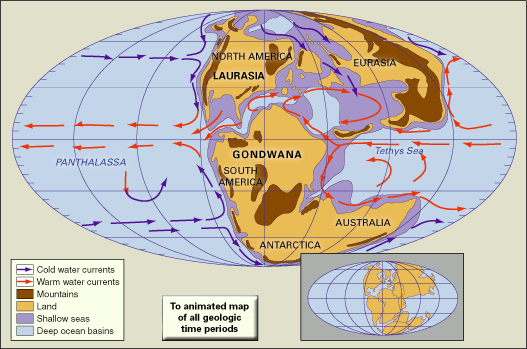
How did the oceans and marine life change throughout the Mesozoic Era?
Throughout the Mesozoic Era, the world’s oceans and their inhabitants underwent transformative changes driven by tectonic activity, shifting sea levels, and an evolutionary “arms race” known as the Mesozoic Marine Revolution.1710
Tectonic and Environmental Shifts
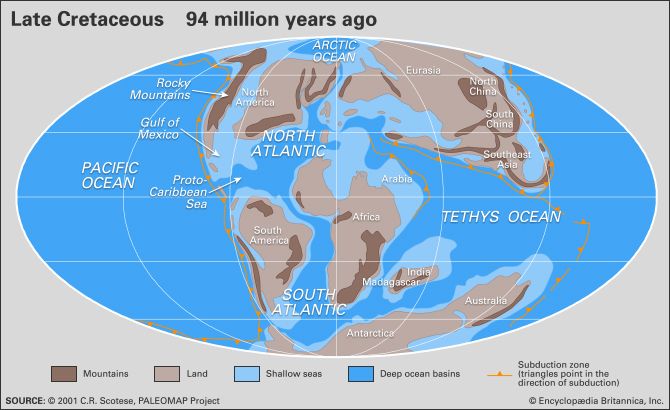
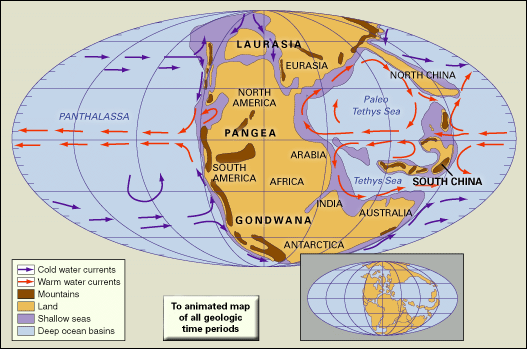
The era began with the breakup of the supercontinent Pangea, which led to the formation of new ocean basins like the Tethys seaway and the Atlantic. During the Cretaceous Period, high sea levels caused shallow seas to encroach upon continents, creating expansive environments that supported a massive increase in microplankton diversity.18
Evolution of Marine Life
- Planktonic Revolution: The origin and radiation of coccolithophores, foraminifera, and diatoms fundamentally altered ocean geochemistry. Their shells shifted carbonate sedimentation from shallow coastal waters to the deep-sea floor.1718
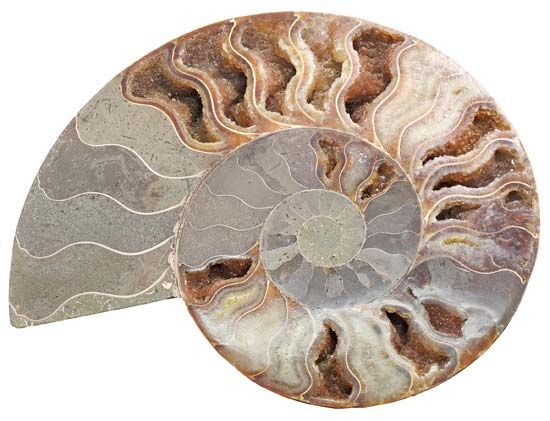
- Invertebrate Dominance: Mollusks, particularly ammonites and bivalves, became dominant. Ammonites, in particular, evolved rapidly, making them essential index fossils for dating rock strata.1710
- Marine Revolution: Increased predation by new groups—including crabs, lobsters, and marine vertebrates—forced prey to evolve better defenses, such as deeper burrowing into the seafloor, which permanently changed marine ecosystems.1710
- Marine Reptiles: The seas were home to diverse predators, including plesiosaurs and ichthyosaurs, which thrived until the end of the era.10
The era concluded with a mass extinction event that devastated these ecosystems, wiping out ammonites, marine reptiles, and the majority of planktonic species, clearing the way for modern marine life.61018
What methods do geologists use to date rocks and fossils from the Mesozoic Era?
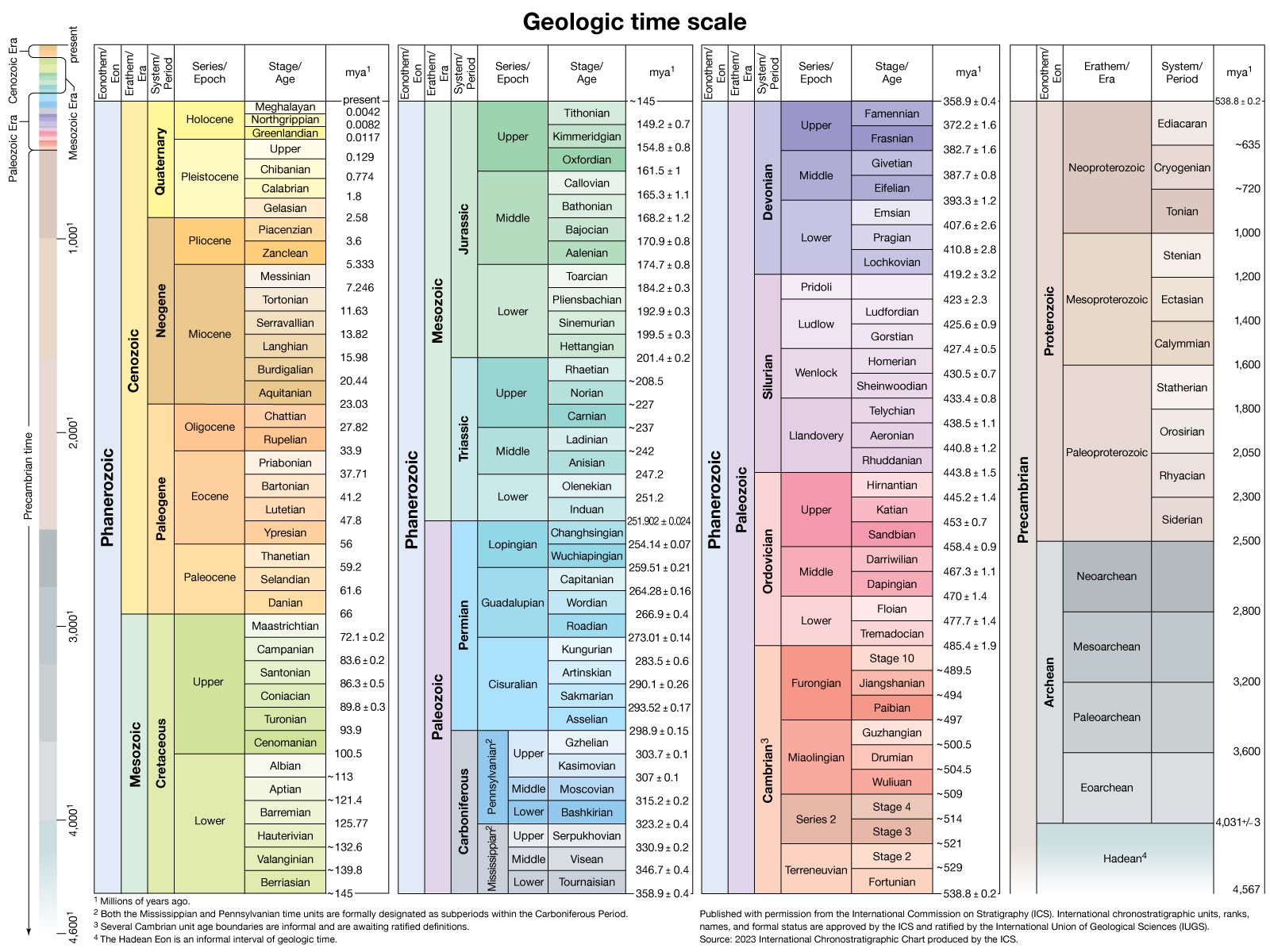
Geologists determine the age of rocks and fossils from the Mesozoic Era by integrating several complementary methodologies, primarily categorized into relative and absolute dating techniques.2021
Relative Dating
Relative dating establishes the chronological sequence of events without providing a specific numerical age.
- Biostratigraphy: This method uses index fossils—distinctive, widespread, and rapidly evolving organisms like ammonoids—to correlate rock strata across different geographic locations.2223
- Stratigraphy: Based on the law of superposition, geologists assume that in undisturbed sedimentary sequences, the oldest layers are at the bottom and the youngest are at the top.21
Absolute Dating
Absolute dating provides a numerical age by measuring the decay of radioactive isotopes within minerals.2124
- Radiometric Dating: By measuring the ratio of parent isotopes to daughter isotopes in minerals (such as in uranium-lead dating), scientists can calculate the time elapsed since a rock or mineral formed.2024
- Calibration: Because fossils are found in sedimentary rocks that are often difficult to date directly, geologists use absolute ages from associated igneous rocks (like volcanic ash layers) to calibrate the fossil-based time scale.2023
Integrated Approaches
Modern geochronology combines these methods with magnetostratigraphy, which tracks reversals in Earth’s magnetic field recorded in rocks, to create a high-resolution, internally consistent geologic time scale.2123
Sources
- plant - Evolution of seed plants and plant communities — Encyclopædia Britannica
- gymnosperm - Appearance of gymnosperm divisions — Encyclopædia Britannica
- gymnosperm — Encyclopædia Britannica
- Triassic Period - Plants — Encyclopædia Britannica
- Cretaceous Period - Terrestrial life — Encyclopædia Britannica
- Mesozoic Era - Mesozoic life — Encyclopædia Britannica
- mammal - Diversity — Encyclopædia Britannica
- A Journey Through Time Since the Precambrian - Triassic Period: 252.2 million to 201.3 million years ago — Encyclopædia Britannica
- reptile - Fossil distribution — Encyclopædia Britannica
- Cretaceous Period - Mass extinction — Encyclopædia Britannica
- Jurassic Period - Vertebrates — Encyclopædia Britannica
- dinosaur: Top Questions — Encyclopædia Britannica
- Mesozoic Era — Encyclopædia Britannica
- dinosaur - Dinosaur ancestors — Encyclopædia Britannica
- Permian Period - Emergence of important reptiles — Encyclopædia Britannica
- Climate change - Phanerozoic climates — Encyclopædia Britannica
- Cambrian explosion — Encyclopædia Britannica
- Jurassic Period - Protists and invertebrates — Encyclopædia Britannica
- paleoceanography — Encyclopædia Britannica
- index fossil — Encyclopædia Britannica
- dating - Distinctions between relative-age and absolute-age measurements — Encyclopædia Britannica
- stratigraphy — Encyclopædia Britannica
- dating - Principles of isotopic dating — Encyclopædia Britannica
- Tertiary Period - Correlation of Tertiary strata — Encyclopædia Britannica
Published on · 4 min read