Megapode
Unlike most birds that incubate eggs using their own body heat, megapodes utilize external environmental heat sources to hatch their young. Depending on the…
What is the incubation process like for megapode eggs?
Unlike most birds that incubate eggs using their own body heat, megapodes utilize external environmental heat sources to hatch their young. Depending on the species, this process relies on one of three methods:
- Fermentation: Many species, such as the mallee fowl, construct large mounds of decaying vegetation. As the plant matter decomposes, it generates heat. The male meticulously maintains the internal temperature of the mound at approximately 33° C (91° F) by adjusting the soil covering to compensate for weather fluctuations.1
- Solar Heat: Some species bury their eggs in sun-warmed sand or soil to facilitate incubation.1
- Volcanic Action: Certain megapodes take advantage of geothermal heat produced by volcanic activity to incubate their eggs.1
Once the eggs hatch after about seven weeks, the chicks must dig their way to the surface independently. Upon emerging, they are highly precocial, capable of running immediately and flying within one or two days.1
How do megapodes use external heat sources to incubate their eggs?
Megapodes are unique among birds because they do not use their own body heat to incubate their eggs. Instead, they rely on external environmental heat sources, specifically:
- Fermentation: Many species construct large mounds of decaying vegetation. As the plant matter decomposes, it generates heat, which the birds carefully manage to maintain a stable temperature.12
- Solar Radiation: Some species bury their eggs in sand or soil in locations chosen specifically for their exposure to the sun, allowing solar heat to facilitate incubation.2
- Geothermal Heat: Certain megapodes utilize heat produced by volcanic steam or activity to warm their eggs.2
In mound-building species, the male plays a critical role in temperature regulation. He frequently opens and adjusts the mound to control heat absorption and radiation, likely using sensitive thermoreceptors in his tongue or face to monitor the egg chamber. This allows the birds to keep the internal temperature remarkably constant—typically around 33° C (91° F)—throughout the incubation period.23
What are the different species of megapode birds?
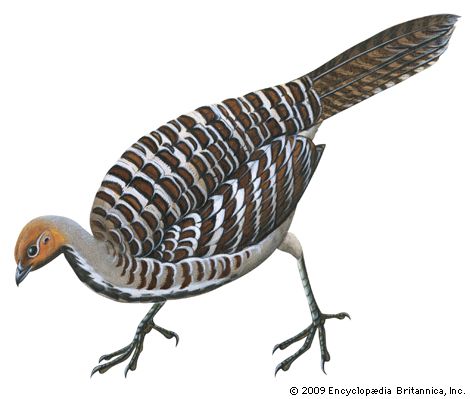
The family Megapodiidae, commonly known as megapodes or mound birds, consists of 12 species of Australasian, chicken-like birds. While they are categorized into three general types, they are collectively defined by their unique method of burying eggs to incubate them using external heat sources rather than body heat.14
The three primary groups of megapodes include:
- Scrub fowl: Birds that typically inhabit scrub or forest environments.1
- Brush turkeys: Despite the name, these are not true turkeys; they are members of the Megapodiidae family known for their mound-building behaviors.15
- Mallee fowl (Leipoa ocellata): Also known as the lowan, this is the best-known species of the group. It inhabits the scrub vegetation of southern interior Australia and is famous for constructing elaborate mounds of decaying vegetation to regulate egg temperature.1
Other notable examples mentioned within the family include the maleo.5
Where are megapode birds typically found in the world?
Megapode birds, also known as mound builders, are primarily found throughout the Australasian region. Their geographic range extends from Australia across neighboring islands to the north and east, reaching as far as the Philippines and the Ladrones (Mariana Islands).17
Regarding their specific habitats, these birds are highly diverse:
- Dense Jungles: The majority of megapode species reside in dense tropical forests, where they often remain under the canopy.4
- Arid Scrub: The mallee fowl is a notable exception, as it inhabits the eucalyptus thickets found in the arid interior of southern Australia.14
- Coastal Areas: Some species emerge from dense forests into more open areas, such as sandy beaches, specifically to utilize solar heat for incubating their eggs.4
Sources
- Megapode — Encyclopædia Britannica
- Galliform - Nesting — Encyclopædia Britannica
- Thermoreception - Birds — Encyclopædia Britannica
- Megapodiidae — Merriam-Webster
- neuropteran - Distinguishing taxonomic features — Encyclopædia Britannica
- megapode — Merriam-Webster
- Galliform - Habitat selection and food habits — Encyclopædia Britannica
Published on · 3 min read