Galliform
Galliform birds, or gallinaceous birds, are characterized by a specific body plan adapted for a primarily terrestrial existence. Anatomically, they differ…
How do galliform birds differ from other bird orders in terms of their anatomy?
Galliform birds, or gallinaceous birds, are characterized by a specific body plan adapted for a primarily terrestrial existence. Anatomically, they differ from many other bird orders in several key ways:1
- Body and Wings: Most galliforms are heavy-bodied with short, rounded wings. These wings are powered by strong breast muscles—the source of “white meat”—which facilitate rapid, short bursts of flight used primarily to escape predators rather than for sustained travel.213
- Feet and Toes: They possess strong, four-toed feet adapted for scratching and digging. Unlike some other terrestrial bird orders that have lost the hind toe, galliforms retain it, though its size varies; it is more functional in tree-dwelling groups like cracids and smaller in strictly terrestrial species.21
- Bill: Their bills are typically short and slightly downcurved.2
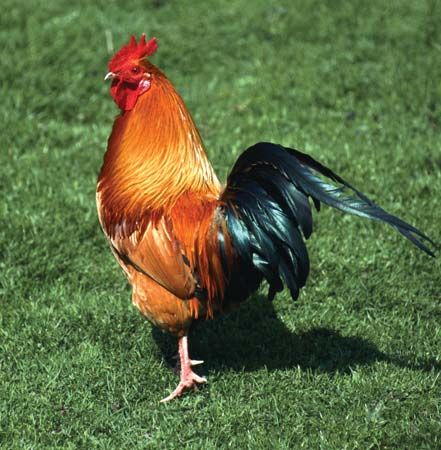
- Ornamentation: Many males exhibit unique anatomical ornaments, such as fleshy wattles, bony casques (helmets), or patches of bare, brightly colored skin on the face or throat.1
- Reproduction: Unlike many other birds, some galliforms, such as megapodes, do not use body heat to incubate their eggs, instead utilizing external heat sources.4
What is the geographical distribution of galliform birds around the world?
Galliform birds are found in nearly every habitat across subarctic, temperate, and tropical regions on the world’s major landmasses, with some species, such as the ptarmigan, living within the Arctic Circle.10
The geographical distribution varies significantly by family:
- Phasianidae: This is the largest family and mirrors the distribution of the order itself, appearing nearly worldwide, though they are absent from the southern third of South America, parts of northern Eurasia, and some oceanic islands.1011
- Cracidae: These are restricted to the New World tropics and subtropics, ranging from southern Texas to Paraguay.11
- Tetraonidae (Grouse): These birds are found in the northern temperate and Arctic regions of both the Northern and Southern Hemispheres.1011
- Megapodiidae: These inhabit forests ranging from the East Indies east to the Fiji Islands and south to central Australia.1011
- Numididae (Guinea fowl): These are native to Africa south of the Sahara and Madagascar, though they have been widely introduced elsewhere.1011
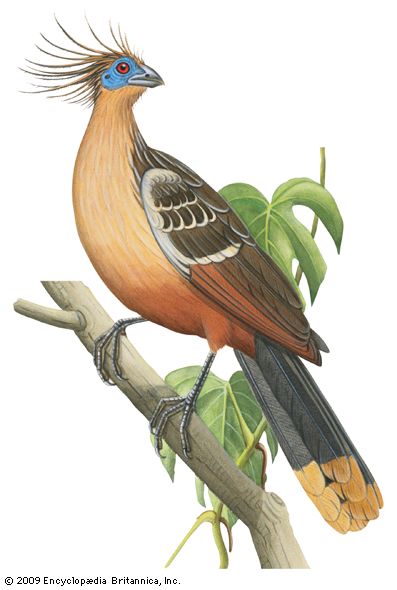
Additionally, turkeys are native to North and Central America, while the hoatzin is found in northern and eastern South America.10
What conservation efforts are in place to protect endangered galliform species?
Conservation efforts for galliform birds are primarily focused on managing populations of game species to ensure sustainable hunting yields. In regions such as North America and western Europe, these efforts include:
- Habitat Manipulation: Altering environments to better support bird populations.11
- Supplemental Feeding: Providing additional food sources to maintain health and population numbers.11
- Artificial Rearing: Breeding birds in controlled environments for later release into the wild.11
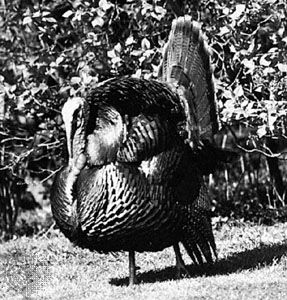
- Careful Management: Implementing strategies that have successfully helped species like the North American wild turkey recover from near-extermination caused by overhunting.11
While these management practices are common for game birds, broader conservation for endangered species remains a critical challenge. The decline of bird populations globally is largely driven by the destruction of natural habitats, the introduction of exotic species, and the spread of diseases. Addressing these threats requires concerted research and dedicated conservation initiatives to prevent further extinctions.13
Which common bird species belong to the galliform order?
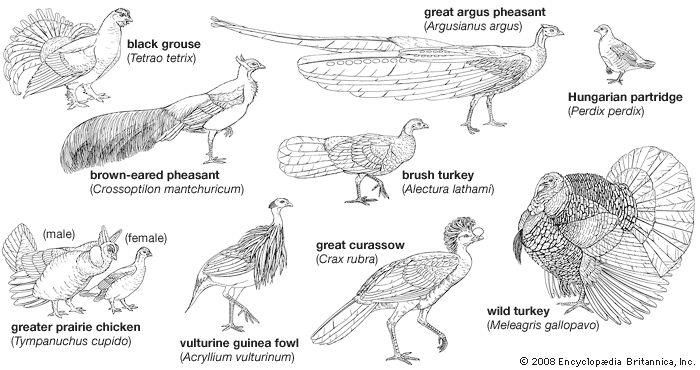
The order Galliformes, commonly known as gallinaceous or fowl-like birds, includes approximately 290 species. These birds are typically heavy-bodied with short, rounded wings and strong feet adapted for life on the ground.141
Common species and groups within this order include:
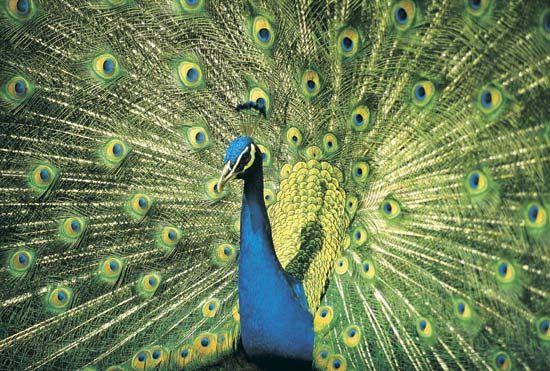
- Phasianidae: This family contains many well-known birds, including chickens, turkeys, quail, partridges, pheasants, and peacocks14.
- Tetraonidae: This family consists of various grouse species, such as the ptarmigan, prairie chickens, and the sage grouse.1412
- Numididae: This group includes the guinea fowl.14
- Other members: The order also includes megapodes and New World species such as chachalacas, guans, and curassows.14
While the hoatzin is sometimes associated with this order, most taxonomists classify it separately within the order Cuculiformes. These birds are of significant importance to humans, particularly as poultry and as popular game birds.1411
Sources
- Galliform - Size range and diversity of structure — Encyclopædia Britannica
- Galliform - Form and function — Encyclopædia Britannica
- Bird - Muscles and organs — Encyclopædia Britannica
- Galliform - Distinguishing taxonomic features — Encyclopædia Britannica
- Reproductive behaviour - Birds — Encyclopædia Britannica
- Galliform - Annotated classification — Encyclopædia Britannica
- skeleton - Pectoral girdle — Encyclopædia Britannica
- Anseriform - Physiology — Encyclopædia Britannica
- Galliform - Evolution and paleontology — Encyclopædia Britannica
- Galliform - Distribution — Encyclopædia Britannica
- Galliform - Importance to humans — Encyclopædia Britannica
- Galliform - Habitat selection and food habits — Encyclopædia Britannica
- Bird - Importance to man — Encyclopædia Britannica
- Galliform — Encyclopædia Britannica
Published on · 3 min read