Neuropteran
Neuropterans, a group that includes lacewings, snakeflies, and dobsonflies, utilize several strategies to protect themselves from predators, primarily during…
What defense mechanisms do neuropterans employ against predators?
Neuropterans, a group that includes lacewings, snakeflies, and dobsonflies, utilize several strategies to protect themselves from predators, primarily during their larval stages.1
A primary defense mechanism for many neuropteran larvae is camouflage. While some lacewing larvae are nocturnal and do not require concealment, others actively disguise themselves to avoid detection. Certain species carry debris on their bodies, which is either caught by specialized hairs or placed on their backs by the larvae using their jaws. Other species remain lightly covered in soil to hide from potential threats.23
Antlions, a family of neuropterans, employ a specialized behavioral defense and hunting strategy by digging conical pits in dry, sandy soil. By burying themselves within these pits with only their jaws exposed, they remain concealed while waiting for prey. If a creature attempts to escape the pit, the antlion will toss soil at it to ensure it falls back into the trap.24
What is the life cycle of a typical neuropteran insect?
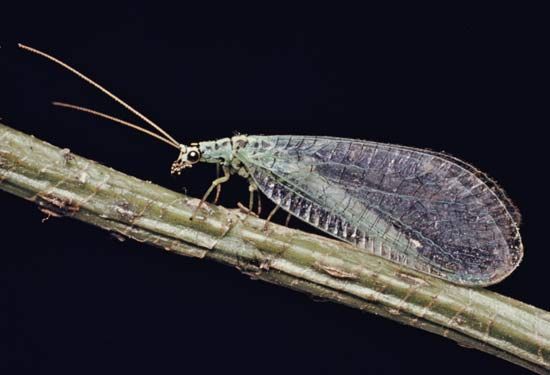
The life cycle of a typical neuropteran insect follows a process of complete metamorphosis, consisting of four distinct stages: egg, larva, pupa, and adult.7
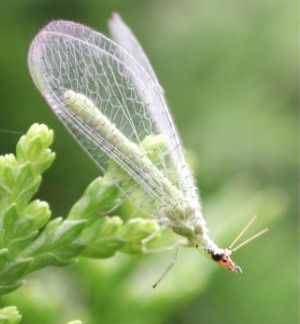
- Egg: Females may lay eggs loosely in soil, cement them directly to a surface, or attach them to the tips of slender, hardened stalks produced by reproductive glands. This stalking behavior is particularly notable in species like the green lacewing, as it prevents the predatory larvae from consuming unhatched eggs.710
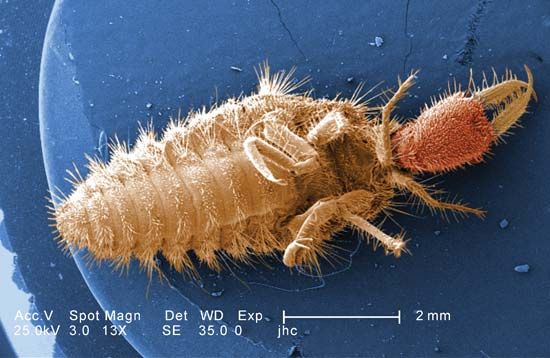
- Larva: There are generally three larval stages. Most larvae are carnivorous, using specialized sucking mouthparts to drain the body fluids of their prey. Depending on the species, they may use camouflage, such as carrying debris on their backs, or dig pits to ambush prey.7810
- Pupa: The larva spins a characteristic double cocoon using silk produced by the anus. The insect may remain in a prepupal stage for varying lengths of time before molting into an exarate pupa, where the limbs are free an exarate pupa, where the limbs are free.7
- Adult: To emerge, the insect typically uses its functional mandibles to chew an exit hole through the cocoon.78
How do neuropterans differ from other insect orders?
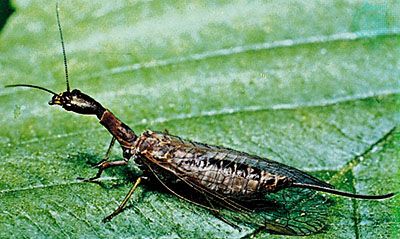
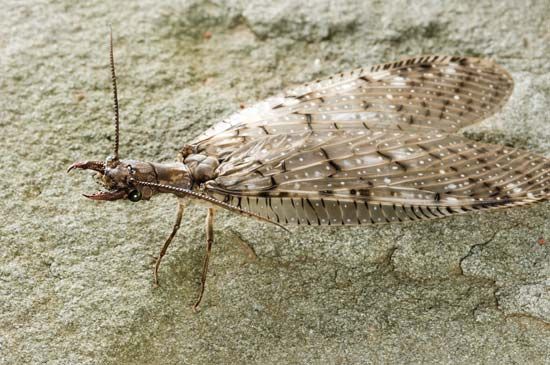
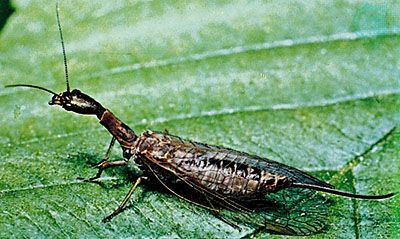
Neuropterans (order Neuroptera), often called lacewings, are distinct from other insect orders—specifically the closely related Megaloptera (alderflies and dobsonflies) and Raphidiodea (snakeflies)—primarily due to their unique mouthparts and larval anatomy.111
Key Distinctions
- Mouthparts: Adult Neuroptera possess hypognathous (downward-directed) mouthparts, whereas adult Megaloptera and Raphidiodea have prognathous (forward-directed) mouthparts.11
- Larval Jaws: The most defining feature of Neuroptera is their specialized larval jaws. Unlike the biting mandibles found in Megaloptera and Raphidiodea, neuropteran larvae possess a unique piercing-sucking mechanism. This consists of elongated mandibles and maxillae that fit together to form a hollow tube, allowing the larva to drain the body fluids of its prey.11128
- Anatomy: While all three groups share similar wing and genitalia structures, they are distinguished by variations in head shape, thoracic structure, and the presence or absence of simple eyes (ocelli).8
- Larval Habits: Most neuropteran larvae are terrestrial and free-living, though the family Sisyridae is aquatic and parasitic on freshwater sponges. In contrast, Megaloptera larvae are strictly aquatic and possess lateral gill filaments.13128
What are the distinctive characteristics of neuropteran insects?
Neuropteran insects, commonly known as lacewings, are characterized by several distinct anatomical and functional features that set them apart from related insect orders.
Key Characteristics
- Wing Structure: They are named for the complex, lacy patterns of veins in their two pairs of similar wings, which are typically held rooflike over the abdomen when at rest.18
- Specialized Larval Jaws: The most defining feature of the order is the larval mouthparts. Unlike the biting mandibles found in related groups like Megaloptera and Raphidiodea, neuropteran larvae possess elongated mandibles and maxillae that fit together to form a hollow, piercing-sucking tube. This allows them to consume liquid food by pumping it directly into the pharynx.12813
- Adult Mouthparts: Unlike the prognathous (forward-directed) mouthparts of their relatives, adult neuropterans possess hypognathous (downward-directed) mouthparts.813
- Developmental Features: The 10th abdominal segment of the larva is typically modified into an anal proleg, which often functions as a spinneret for producing silk to construct a cocoon.128
- Diversity: The order includes a wide range of families, such as green lacewings, antlions, and mantispids, which exhibit varied behaviors ranging from subterranean burrowing to aquatic parasitism.8
Sources
- neuropteran — Encyclopædia Britannica
- Lepidoptera - Protection against danger — Encyclopædia Britannica
- mimicry - Automimicry — Encyclopædia Britannica
- mimicry - The effects of geographic distribution and population density — Encyclopædia Britannica
- insect - Protection from enemies — Encyclopædia Britannica
- Chemoreception - Defensive odors — Encyclopædia Britannica
- neuropteran - Life cycle of Neuroptera — Encyclopædia Britannica
- neuropteran - Immature stages — Encyclopædia Britannica
- antlion — Encyclopædia Britannica
- green lacewing — Encyclopædia Britannica
- neuropteran - General features — Encyclopædia Britannica
- neuropteran - Annotated classification — Encyclopædia Britannica
- neuropteran - Distinguishing taxonomic features — Encyclopædia Britannica
- Lepidoptera - Thorax — Encyclopædia Britannica
Published on · 3 min read