Menyanthaceae
The Menyanthaceae family, which consists of aquatic or marsh-dwelling herbs, includes species with specific human uses:
What economic or medicinal uses do Menyanthaceae plants have, if any?
The Menyanthaceae family, which consists of aquatic or marsh-dwelling herbs, includes species with specific human uses:
- Medicinal Uses: The buckbean (Menyanthes trifoliata), a native North American plant, is recognized for its bitter-tasting leaves, which have historically been utilized in folk medicine.1
- Economic/Ornamental Uses: Several species within the genus Nymphoides—commonly referred to as floating heart, water snowflake, or fringed water lily—are popular choices for aquarium cultivation due to their aesthetic appeal.1
How many genera and species are included in the Menyanthaceae family?
The Menyanthaceae family consists of five genera and approximately 40 species of aquatic or marsh-dwelling herbs native to temperate regions worldwide.1
The family includes the following genera:
- Menyanthes: Contains a single species, the buckbean.1
- Nymphoides: Comprises several species, including the floating heart, water snowflake, and fringed water lily.1
- Liparophyllum: Contains a single species.1
- Nephrophyllidium: Contains a single species.1
- Villarsia: A larger genus that is not widely known.1
What are some examples of well-known plants in the Menyanthaceae family?
The Menyanthaceae family includes several well-known aquatic and marsh-dwelling plants. Notable examples include:
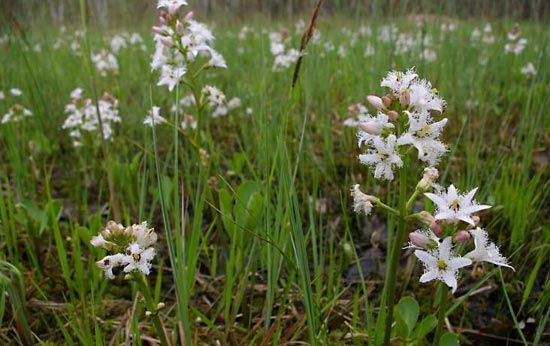
- Buckbean (Menyanthes trifoliata): Also known as bogbean, this is the sole member of the genus Menyanthes. It is a perennial herb native to North America that thrives in wet soils and bogs, characterized by its racemes of white or pink flowers and bitter-tasting leaves.12
- Floating Heart (Nymphoides): This genus includes several species, such as the fringed water lily and water snowflake. These plants are typically submerged with buried rootstalks and floating, heart-shaped leaves. Due to their aesthetic appeal, many species in this genus are popular choices for aquarium cultivation.134
While other genera like Liparophyllum, Nephrophyllidium, and Villarsia exist within the family, they are less widely recognized than the buckbean and the various species of Nymphoides.1
How do Menyanthaceae plants reproduce and disperse their seeds?
Plants in the Menyanthaceae family utilize both vegetative and sexual methods for reproduction and spread.
Vegetative Reproduction
Many species within this family propagate vegetatively by using creeping underwater rhizomes, which are specialized stems that allow the plants to spread across their aquatic or marshy environments.1
Sexual Reproduction and Seed Dispersal
Menyanthaceae plants produce bisexual flowers, which typically feature five petals. These flowers develop into berry or capsule fruits that contain the seeds. While the specific dispersal mechanisms for all 40 species are not detailed in the provided search results, the family’s aquatic nature suggests that water likely plays a significant role in the movement of their seeds, as is common among many pond and swamp-dwelling plants.167
The provided search results do not contain specific information regarding the pollination vectors (such as insects or wind) for the Menyanthaceae family.
Sources
- Menyanthaceae — Encyclopædia Britannica
- floating heart — Merriam-Webster
- buckbean — Merriam-Webster
- Menyanthaceae — Merriam-Webster
- Nymphoides — Merriam-Webster
- Myrtales - Natural history — Encyclopædia Britannica
- seed - Dispersal by water — Encyclopædia Britannica
- seed dispersal - Hydrochory: dispersal by water — Encyclopædia Britannica
Published on · 2 min read