Myrtales
Myrtales, commonly known as the myrtle order, is a diverse group of flowering plants comprising 9 families, 380 genera, and approximately 13,000 species.…
What is the Myrtales plant order?
Myrtales, commonly known as the myrtle order, is a diverse group of flowering plants comprising 9 families, 380 genera, and approximately 13,000 species. These plants are primarily distributed throughout the tropics and warmer regions of the world. Under the Angiosperm Phylogeny Group IV (APG IV) system, the order is classified within the basal Rosid group of the core eudicots.1
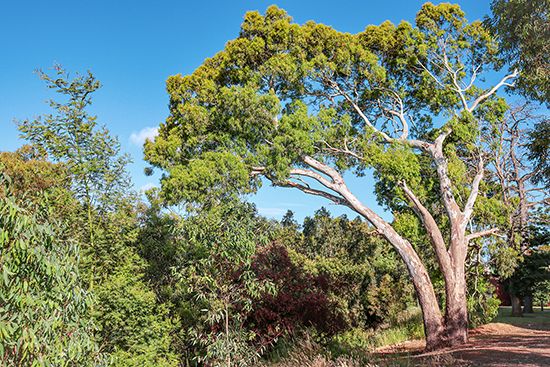
The order is dominated by two major families, Myrtaceae and Melastomataceae1. It includes a wide variety of growth forms, ranging from trees—most notably the fast-growing Eucalyptus—to shrubs and various ornamental plants. Economically, the order is significant for providing timber, essential oils, spices like cloves, and edible fruits such as guava and pomegranate.12
Fossil evidence suggests that the families of Myrtales were likely established by the Tertiary period, with common ancestors dating back to the Gondwana supercontinent.3
Which kinds of plants are included in the Myrtales order?
The Myrtales order is a diverse group of flowering plants encompassing 9 families, 380 genera, and approximately 13,000 species. These plants are primarily found in tropical and warmer regions of the world and are classified within the basal Rosid group of the core eudicots.1
The order includes a wide range of growth forms, including trees, shrubs, lianas, and herbaceous plants. The majority of species belong to the families Myrtaceae and Melastomataceae.14
Key types of plants included in the order are:
- Timber and Industrial Plants: The most prominent is the fast-growing Eucalyptus, widely cultivated for wood, pulp, and paper. Other timber sources include Metrosideros, Angophora, Syzygium, and various Terminalia species.14
- Food and Spices: Notable examples include pomegranate, guava, feijoa, and the clove spice.54
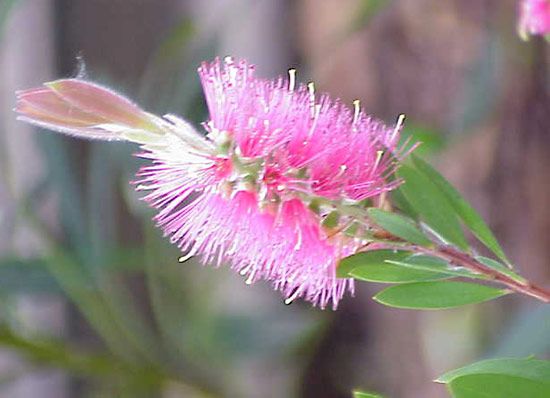
- Ornamentals: Popular garden and greenhouse plants include crepe myrtle, bottlebrush, fuchsia, and various species of Melastomataceae like Tibouchina and Medinilla.4
- Dyes and Other Uses: Henna (Lawsonia inermis) is used for pigments, while various species provide essential oils and tannins.4
Where are Myrtales plants commonly found in the world?
Plants in the Myrtales order are primarily distributed throughout the tropics and warmer regions of the world. While they are most abundant in tropical and subtropical environments, their distribution varies significantly by family and genus:16
- Tropical and Subtropical Regions: The vast majority of Myrtales species are trees and shrubs found in these zones. They are particularly diverse in the humid tropical belts of the New World, Africa, and Southeast Asia.6
- Australia and the Americas: The Myrtaceae family is highly abundant in Australia and tropical America. Australia is a center for dry-fruited species, such as Eucalyptus, while tropical America hosts a high diversity of berry-fruited members.6
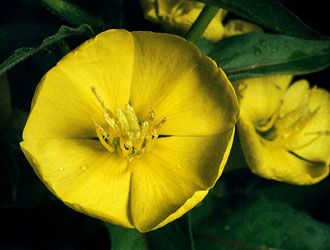
- Temperate Zones: Myrtales have few representatives in temperate regions and are almost absent from cold zones. However, some species, such as those in the evening primrose family (Onagraceae), are widely distributed in temperate areas, particularly in the Americas.6
- Specialized Habitats: Certain families are restricted to specific geographies, such as the Penaeaceae in Africa or the Crypteroniaceae in Southeast Asia. Others, like the Combretaceae, are especially important in tropical seacoasts, estuaries, and savannas.6
What are some unique features of plants in the Myrtales order?
Plants in the Myrtales order possess several unique anatomical and reproductive features that distinguish them from other flowering plants.
Wood and Leaf Anatomy
- Intraxylary Phloem: A defining characteristic of Myrtales is the presence of phloem tissue on both sides of the xylem vessels, a rare trait among angiosperms.1
- Vestured Pits: The vessels contain pits with minute, arching outgrowths, known as vestured pits, which are highly characteristic of this order.1
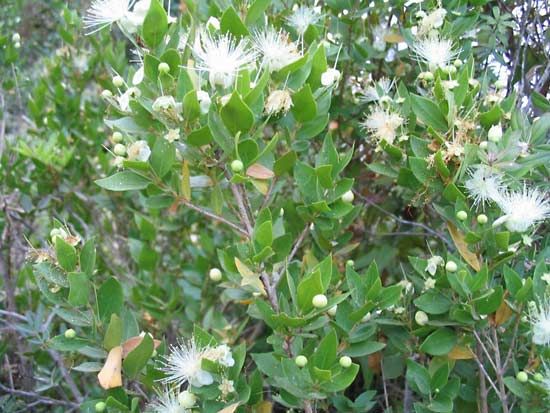
- Oil Glands: In the Myrtaceae family, leaves often feature large, scattered oil-containing cells that appear as translucent spots when held against light.1
- Venation: Members of the Melastomataceae family typically exhibit a distinct venation pattern where several main secondary veins branch from the base of the leaf blade, crossed by transverse tertiary veins.1
Specialized Adaptations
- Lignotubers: Many Eucalyptus species develop large, woody, underground or surface outgrowths called lignotubers. These store food reserves and allow the plant to regenerate shoots if the main trunk is destroyed by fire or drought.1
- Respiratory Roots: Species inhabiting wet or tidal environments, such as mangroves, often develop pneumatophores (breathing roots) that project above the water to facilitate gas exchange.1
Reproductive Features
- Floral Structure: The hypanthium—a floral tube surrounding the ovary—is a standard feature of the order.1
- Pollen Tetrads: Members of the Onagraceae family are unique for producing pollen in tetrads (groups of four) often connected by viscid threads to aid insect pollination.1
- Vivipary: Some mangrove species exhibit vivipary, where seeds germinate while still attached to the parent tree, allowing the seedling to establish itself immediately upon dropping into the mud.1
Sources
- Myrtales — Encyclopædia Britannica
- Myrtales - Evolution — Encyclopædia Britannica
- Myrtales - Economic and ecological importance — Encyclopædia Britannica
- Myrtaceae — Encyclopædia Britannica
- Melastomaceae — Merriam-Webster
- Myrtales - Family distributions and abundance — Encyclopædia Britannica
- Myrtales - Characteristic morphological features — Encyclopædia Britannica
Published on · 4 min read