Musaceae
The Musaceae family, which includes the banana and plantain, consists of approximately 50 species. These plants are native to tropical and subtropical…
What is the geographical distribution of Musaceae plants?
The Musaceae family, which includes the banana and plantain, consists of approximately 50 species. These plants are native to tropical and subtropical regions across Africa, Asia, and Australia.1
The family is divided into two primary genera: Musa and Ensete. While Musa species are widely recognized for their edible fruit, the Ensete genus is primarily found in Africa and is distinguished by its larger seeds and lack of edible bananas, though the flower stalk of E. ventricosa can be consumed after cooking. Additionally, certain species like M. textilis, native to the Philippines, are economically significant for producing abaca fibre1.1
What are some lesser-known genera or species within the Musaceae family?
While the Musa and Ensete genera are the only two members of the Musaceae family, they contain several species that are less familiar than the common banana.
Notable Species and Their Uses
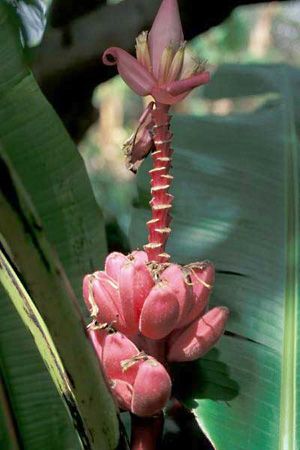
- Musa coccinea: Unlike the common banana, this wild species is primarily valued for its striking, ornamental scarlet flowers rather than its fruit, which is inedible.1
- Musa textilis: Native to the Philippines, this species is economically significant not for food, but for the production of abaca fibre, also known as Manila hemp.1
- Ensete ventricosa: While the genus Ensete does not produce edible bananas, the flower stalk of this specific African species is edible after it has been cooked.1
Species within the Ensete genus are generally distinguished from Musa by their significantly larger seeds.1
How are bananas and plantains related within the Musaceae family?
Bananas and plantains are closely related members of the Musaceae family, both belonging to the genus Musa. Taxonomically, the common dessert banana (M. sapientum) is considered a subspecies of the plantain (M. paradisiaca).12
While they share a common origin in Southeast Asia, they are distinguished primarily by their culinary use and starch content. Plantains are starchy, typically larger than dessert bananas, and are generally cooked—either boiled or fried—rather than eaten raw. In contrast, dessert bananas are valued for their sweetness and are commonly consumed fresh.23
Despite these differences, both are essential staple crops in tropical regions, with plantains accounting for approximately 85 percent of all banana cultivation worldwide. Because most cultivated varieties are sterile hybrids, they are propagated clonally, which results in low genetic diversity and makes both types highly susceptible to pests and diseases.23
Which important food crops belong to the Musaceae family?
The Musaceae family, commonly known as the banana family, includes several important food crops primarily cultivated in tropical and subtropical regions.13
- Bananas: These are among the most significant fruit crops globally. They are categorized into dessert varieties, which are typically eaten fresh, and cooking varieties, known as plantains. Plantains are a vital staple food, accounting for approximately 85 percent of all banana cultivation worldwide. They are starchy and are commonly boiled, fried, or ground into flour for use in porridges and dishes like fufu.4
- Banana Flowers: In addition to the fruit, the flowers of the banana plant are edible and are a popular food source in countries such as China and Vietnamcom/place/China) and Vietnam.3
- Ensete ventricosa: While most species in the genus Ensete do not produce edible bananas, the flower stalk of this specific African species is edible after it has been cooked.1
Sources
- Musaceae — Encyclopædia Britannica
- Plantain — Encyclopædia Britannica
- Banana — Encyclopædia Britannica
- Zingiberales - Families — Encyclopædia Britannica
Published on · 2 min read