Mer De Glace
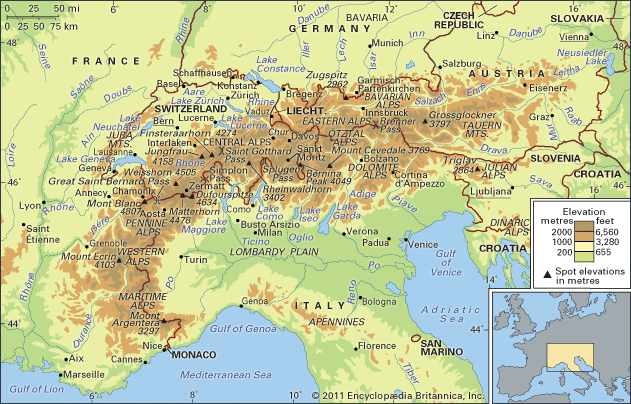
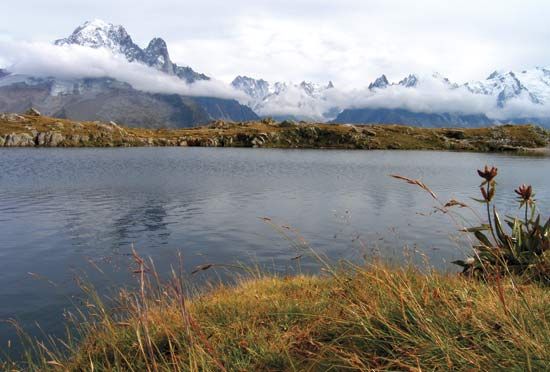
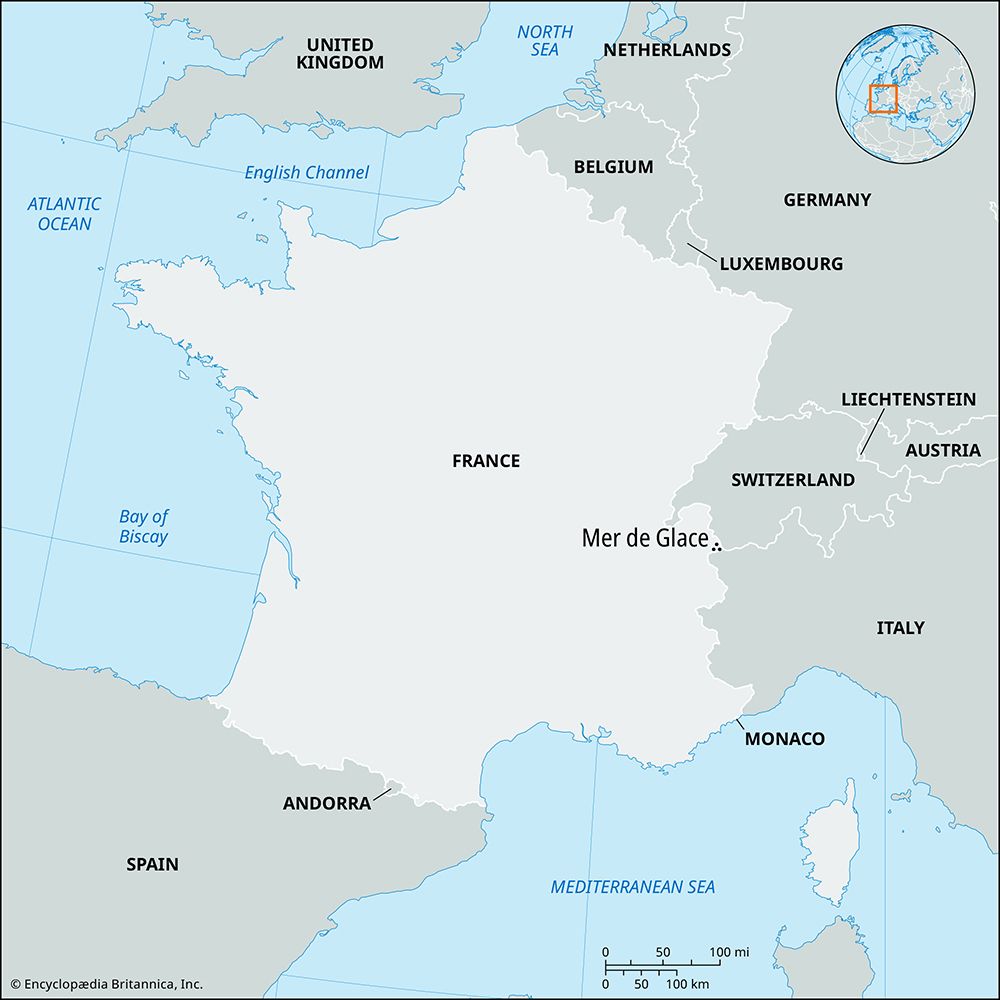
The Mer de Glace is one of the longest glaciers in the Alps, situated on the northern side of Mont Blanc near Chamonix, France. Formed by the confluence of…
What is Mer de Glace?
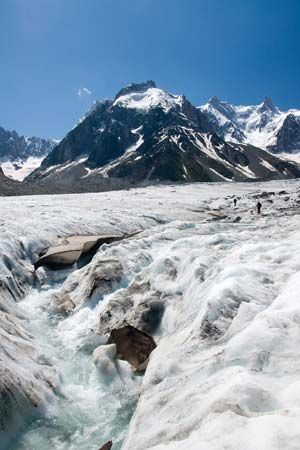
The Mer de Glace is one of the longest glaciers in the Alps, situated on the northern side of Mont Blanc near Chamonix, France. Formed by the confluence of the Géant and Leschaux glaciers, it is a prominent feature of the landscape, characterized by distinct lateral and medial moraines and crescent-shaped flow marks that indicate the faster movement of the glacier’s center.1
Historically, the glacier has undergone periods of advancement and retreat; in the early 17th century, it advanced significantly into the Chamonix Valley, impacting local land and dwellings. Today, the site is a popular destination for tourists, who can easily access the glacier via a cog-wheel railway running between Chamonix and Montenvers.21
How do glaciers change over time due to climate change?
Glaciers change in response to shifts in the climate through a process governed by their mass balance—the difference between accumulation (gains from snowfall and other processes) and ablation (losses from melting, runoff, and iceberg calving).34
When climate change leads to a negative mass balance, glaciers shrink and their termini typically retreat. Conversely, increased winter snowfall can lead to a positive mass balance, causing the glacier to thicken and its terminus to advance. These dynamic responses are not instantaneous; they propagate down-glacier over time, with mountain glaciers typically responding on a scale of 10 to 100 years.34
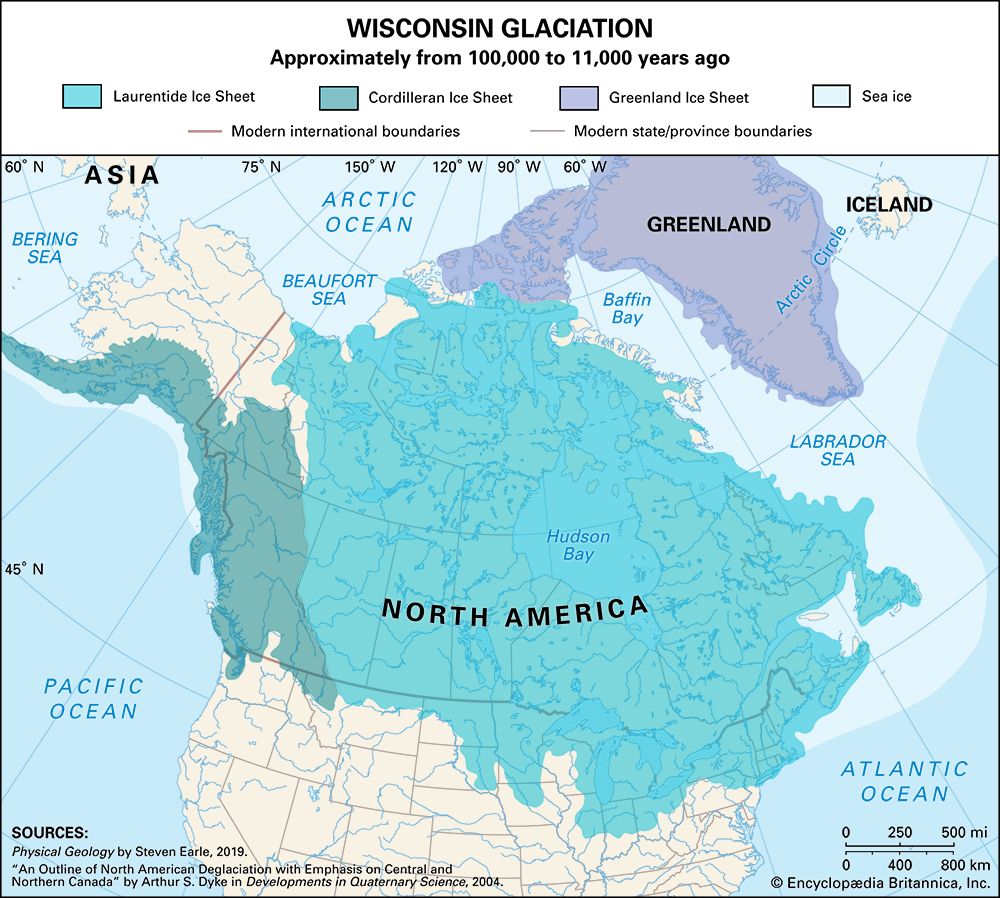
In the 20th century, most glaciers experienced negative mass balances, resulting in widespread thinning and retreat. This loss of ice from mountain glaciers and the Greenland Ice Sheet is a significant contributor to global sea-level rise, accounting for approximately 50 percent of current increases, with the remainder attributed to the thermal expansion of warming ocean water.567
What are moraines and how do they form?
A moraine is an accumulation of rock debris, known as till, that is transported and deposited by a glacier. This material is unstratified, showing no sorting or bedding, and ranges in size from fine clay and sand to large boulders.9
Moraines form as a glacier moves, picking up debris from valley walls and floors. As the ice reaches lower elevations where melting (ablation) dominates, this material concentrates at the glacier’s margins. If the glacier’s position remains stable, these deposits accumulate into ridges. Additionally, glaciers can “bulldoze” loose material into ridges when they advance or readvance.10
Common types of moraines include:
- Terminal (End) Moraine: A ridge of debris pushed forward by the glacier’s snout and deposited at its outermost edge.910
- Lateral Moraine: Debris derived from valley walls that accumulates along the sides of a glacier.910
- Medial Moraine: A ridge formed in the middle of a glacier when two ice streams merge, joining their lateral moraines.9
- Ground Moraine: An irregular blanket of till deposited beneath the glacier.9
- Recessional Moraine: A secondary ridge deposited during a temporary standstill as a glacier retreats.910
What is the history of mountaineering on Mont Blanc?
The history of mountaineering on Mont Blanc—the highest peak in the Alps—is a foundational chapter in the development of the sport. In the 18th century, natural philosophers began visiting the Chamonix region to conduct scientific observations, drawing attention to the mountain’s status as the highest in western Europe.211
The quest to reach the summit was spurred by Horace-Bénédict de Saussure, who offered prize money for the first successful ascent. This was claimed in 1786 by Michel-Gabriel Paccard, a local doctor, and his porter, Jacques Balmat. Although Paccard’s achievement is recognized as a milestone in mountaineering, it was initially overshadowed by de Saussure’s own successful ascent the following year. Furthermore, a biased account published by Marc-Théodore Bourrit fueled a long-standing myth that the credit belonged solely to Balmat.211
These early efforts helped transform the region into a premier destination for climbers and tourists alike, eventually leading to the development of extensive infrastructure, including aerial tramways and facilities for winter sports.2
Sources
- Mer de Glace — Encyclopædia Britannica
- Mont Blanc — Encyclopædia Britannica
- glacier - Mass balance — Encyclopædia Britannica
- glacier - Ablation — Encyclopædia Britannica
- glacier - Response of glaciers to climatic change — Encyclopædia Britannica
- Arctic - Other glacier groups — Encyclopædia Britannica
- iceberg - Impacts on ice sheets and sea level — Encyclopædia Britannica
- glacier - Glaciers and sea level — Encyclopædia Britannica
- moraine — Encyclopædia Britannica
- glacial landform - Moraines — Encyclopædia Britannica
- mountaineering - History — Encyclopædia Britannica
Published on · 3 min read