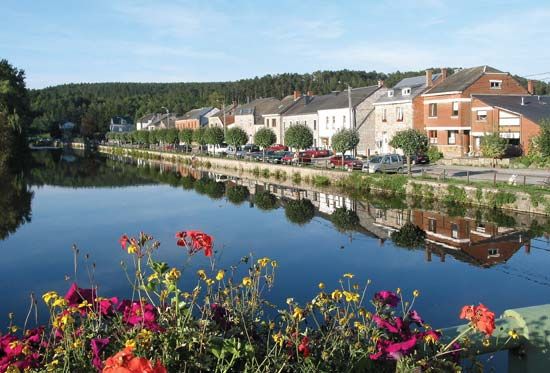
Meuse River
The Meuse River has served as a vital artery for European trade and transportation for centuries. Navigable for most of its length, it functions as a natural…
What is the historical significance of the Meuse River in European trade and transportation?
The Meuse River has served as a vital artery for European trade and transportation for centuries. Navigable for most of its length, it functions as a natural routeway that connects industrial centers and facilitates the movement of goods across France, Belgium, and the Netherlands.1
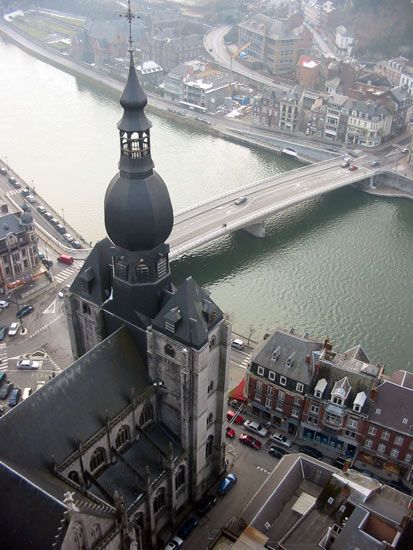
Historically, the Meuse corridor was a major commercial hub. By the 11th century, merchants from cities such as Liège, Huy, Namur, and Dinant were active in international trade, with their goods appearing in toll tariffs as far away as London and Koblenz. The river supported a robust regional economy, supplying textiles from cities like Maastricht and metal products from Liège and Dinant. In later centuries, the region further developed through organized coal mining and metal industries utilizing blast furnaces.23
Today, the river remains a heavily traveled waterway for barges and small cargo ships, integrated into a broader network of canals, such as the Albert Canal, which links the Meuse to the port of Antwerp.1
How does the Meuse River contribute to the region’s biodiversity and ecosystem?
Sorry, the Britannica knowledge base does not contain information regarding the specific biodiversity and ecosystem of the Meuse River.
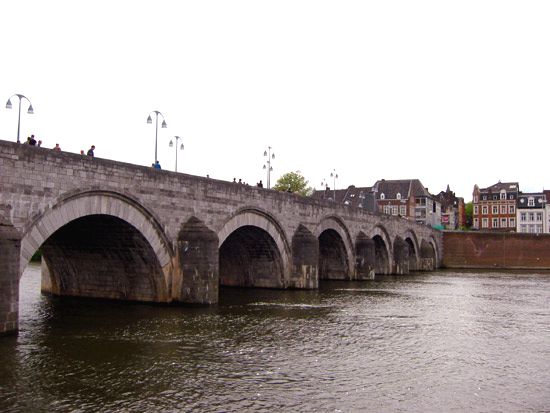
What are some of the major tributaries of the Meuse River, and how do they contribute to its flow?
The Meuse River is fed by several key tributaries that influence its course and volume as it flows northward toward the North Sea.
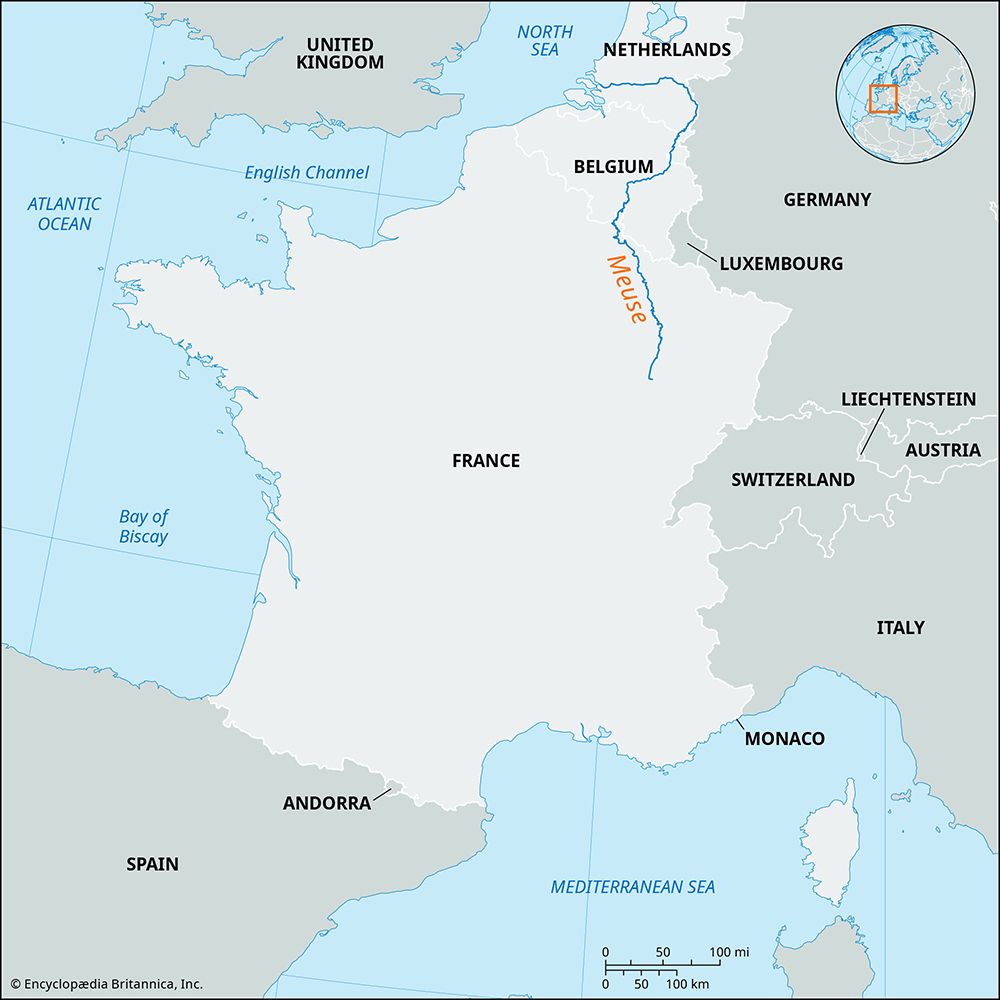
A major tributary is the Sambre River, which joins the Meuse on its left bank at Namur. This confluence is a significant point in the river’s journey, marking the transition where the Meuse turns eastward toward Liège.1
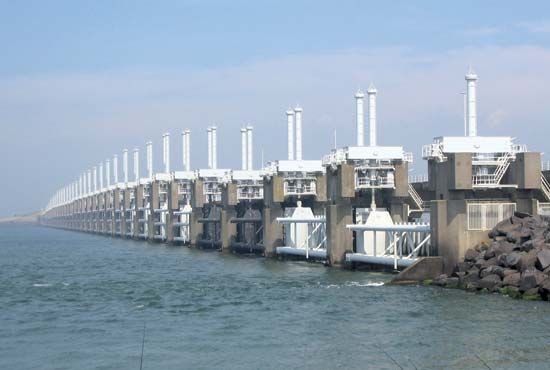
As the river reaches the lower reaches of the Netherlands, its flow dynamics become more complex. Near Gorinchem, a branch of the Meuse joins the Waal River—a primary channel of the Rhine—to form the Merwede. Further downstream, the river system divides into various channels, including the Noord and the Oude Maas, which eventually converge at the Nieuwe Waterweg to reach the sea.1
Where does the Meuse River originate, and which countries does it flow through?
The Meuse River originates at Pouilly on the Langres Plateau in France. From its source, the river flows generally northward for approximately 590 miles (950 km) through Belgium and the Netherlands before emptying into the North Sea.1
Throughout its course, the river serves as a vital natural routeway for transport and has historically functioned as a significant strategic barrier, notably during World War I and World War II.1
Sources
- Meuse River — Encyclopædia Britannica
- history of the Low Countries - Growth of Flanders — Encyclopædia Britannica
- Meuse — Merriam-Webster
- history of the Low Countries - Economic structure — Encyclopædia Britannica
Published on · 2 min read