Mexican West Coast Rattlesnake
The Mexican west coast rattlesnake (Crotalus basiliscus) is a large, stout, and highly venomous pit viper native to the dry coastal regions and cactus…
What is the Mexican west coast rattlesnake?
The Mexican west coast rattlesnake (Crotalus basiliscus) is a large, stout, and highly venomous pit viper native to the dry coastal regions and cactus forests of western Mexico, ranging from Sonora to Oaxaca.1
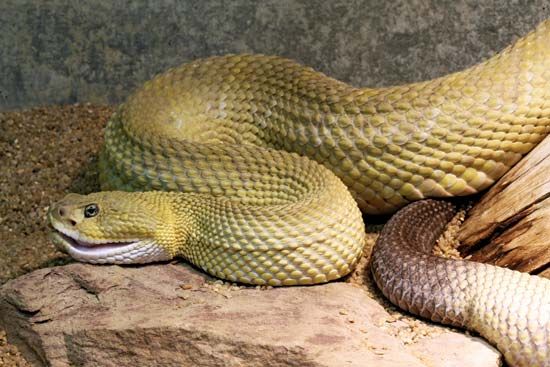
Typically reaching 1.5 meters in length, this species is characterized by its pale green to gray-olive coloration and a potential diamond pattern along its back. While not naturally aggressive, its tendency to rest near paths makes it dangerous to humans. Its venom is particularly potent, containing both hemotoxins and neurotoxins, though it is treatable with prompt antivenin administration.1
The snake utilizes specialized heat-sensing pits to detect infrared radiation from prey, such as mammals and ground birds. Currently, the species is listed as “least concern” by the IUCN Red List of Threatened Species.1
Where does the Mexican west coast rattlesnake live?
The Mexican west coast rattlesnake (Crotalus basiliscus) is found in western Mexico, inhabiting dry coastal regions and cactus forests. Its range extends from southern Sonora in the north to Oaxaca in the south.1
What does the Mexican west coast rattlesnake look like?
The Mexican west coast rattlesnake (Crotalus basiliscus) is a large, stout pit viper that typically measures 1.5 meters (5 feet) in length, though some individuals can exceed 2 meters (6.5 feet).1
Its physical appearance includes:
- Coloration: The body is pale green to gray-olive, often featuring a dark, white-bordered diamond pattern along the back.1
- Head: The head is broad and distinctly triangular due to large venom glands at the base of the jaws. While the head is generally unpatterned, some individuals exhibit a dark green bar extending diagonally from the eye to the back of the jaw.1
- Scales: The snake is covered in large, beady scales.1
- Fangs and Rattle: It possesses hollow, curved fangs that fold against the roof of the mouth when closed. The tail features a rattle composed of horny, hollow segments, which serves as a warning device.1
What does the Mexican west coast rattlesnake eat?
The Mexican west coast rattlesnake (Crotalus basiliscus) is a predator that hunts by waiting for its prey to cross its path. Its diet consists primarily of small mammals and ground birds.1
To locate its prey, the snake utilizes a pair of heat-sensing pits located on either side of its snout. These organs detect infrared radiation, allowing the snake to identify any living organism that is warmer than its surroundings, even in complete darkness. Once the snake strikes and injects its potent venom, it waits briefly before following the scent trail to its meal.1
Young snakes are born with functioning fangs and venom glands, which are more potent but smaller in quantity than those of adults, ensuring they can successfully secure their own food from birth.1
Sources
- Mexican west coast rattlesnake — Encyclopædia Britannica
- reptile - Central and South America — Encyclopædia Britannica
- western diamondback rattlesnake — Encyclopædia Britannica
- rattlesnake — Encyclopædia Britannica
Published on · 2 min read