Middle Rhine Highlands
The Middle Rhine Highlands are a mountainous region primarily located in northwestern Germany, characterized by a varied plateau dissected by the gorges of…
What are some notable towns or cities within the Middle Rhine Highlands region?
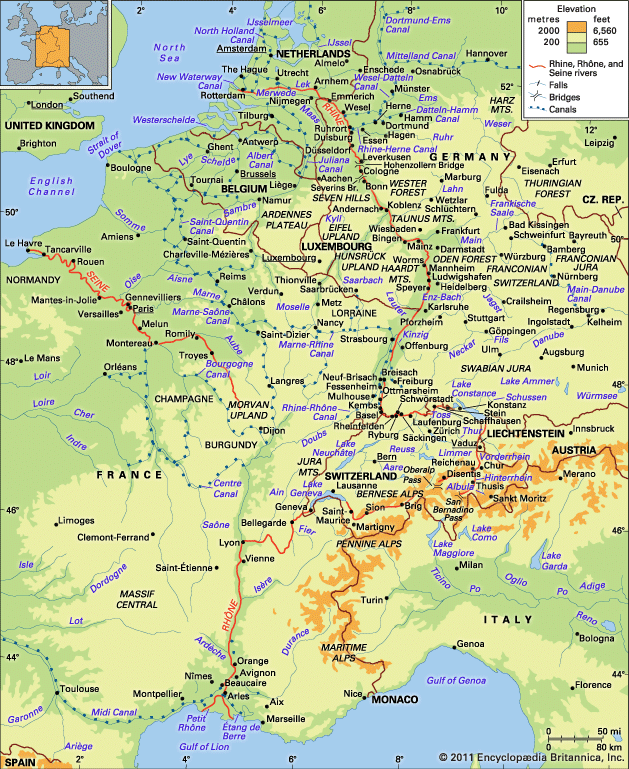
The Middle Rhine Highlands are a mountainous region primarily located in northwestern Germany, characterized by a varied plateau dissected by the gorges of the Rhine River and its tributaries, such as the Moselle River.1
Several notable cities and towns are situated within or near this region, many of which are located in the state of Rhineland-Palatinate:
- Koblenz: Located at the junction of the Rhine and Moselle rivers, this city is surrounded by the Eifel, Hunsrück, Westerwald, and Taunus mountains.2
- Bingen: Situated along the Rhine, it marks one end of the Upper Middle Rhine Valley, a World Heritage site known for its historic towns and castles.3
- Boppard: A historic town located within the scenic Middle Rhine area.43
- Trier: An ancient city known for its significant Roman monuments and cultural heritage.43
- Mainz: A major administrative and cultural center situated on the Rhine.43
Where are the Middle Rhine Highlands located, and what countries do they span?
The Middle Rhine Highlands are a mountainous region primarily situated in northwestern Germany. The region extends westward as the Ardennes through southeastern Belgium and northern Luxembourg, with an additional overlap into eastern France beyond the Meuse River. beyond the Meuse River.1
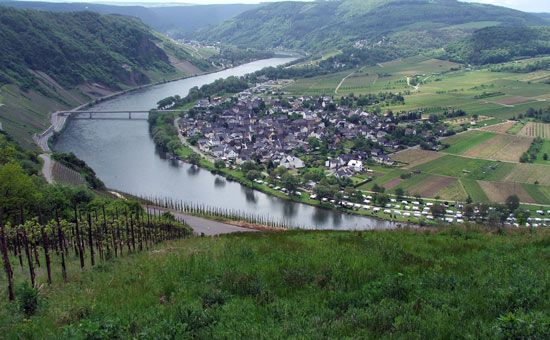
The highlands form a varied plateau characterized by rugged relief in areas such as the Eifel and the Rothaargebirge. The landscape is notably dissected by the gorge of the Rhine River and the deep meanders of its tributaries, including the Mosel River.1
What are some popular outdoor activities or tourist attractions in the Middle Rhine Highlands?
The Middle Rhine Highlands offer a wealth of outdoor activities and tourist attractions, largely centered around the region’s dramatic river valleys, historic sites, and natural landscapes.
Outdoor Recreation
- Hiking and Sightseeing: The region is famous for its scenic beauty, particularly the Upper Middle Rhine Valley, which features terraced vineyards, picturesque wine villages, and steep hillsides topped with castle ruins.1
- Winter Sports: In the Rothaar Hills, areas like Winterberg serve as major centers for winter sports, while the broader region hosts various health spas and holiday resorts.5
- Water-Based Tourism: The Rhine River itself is a major attraction, offering breathtaking vistas, especially near the Lorelei crag.6
- Nature Exploration: The Eifel region is known for its unique volcanic landscape, featuring funnel-shaped craters filled with scenic lakes.1
Cultural and Historical Attractions
- World Heritage Sites: The region is home to numerous UNESCO World Heritage sites, including historic cathedrals in Speyer, Worms, and Mainz, as well as Roman monuments in Trier.1
- Wine Tourism: The Deutsche Weinstrasse (German Wine Highway) is a popular route for touring the small towns and vineyards of the Rhine valley.1
- Museums: Visitors can explore diverse collections, such as the Roman-Germanic Central Museum and the Historical Museum of the Palatinate.1
What historical and cultural significance do the Middle Rhine Highlands hold in European history?
The Middle Rhine Highlands and the surrounding Rhine valley hold profound historical and cultural significance, serving as a central axis for European political, economic, and social development.
Historical Significance
- Roman Frontier: During the 1st century BCE, the Rhine became a critical political boundary for the Roman Empire, separating Roman Gaul from Germanic territories. The region was fortified by the limes (a defensive frontier), and cities like Trier and Mainz grew into major administrative and cultural centers.685
- Political Axis: Following the collapse of the Roman Empire, the Rhine became the backbone of the Frankish kingdom and the Carolingian empire. It later served as the central axis of the Holy Roman Empire.6
- Territorial Conflict: For centuries, the river was a source of intense political dissension, particularly between France and Germany. France historically viewed the Rhine as its “natural boundary,” leading to numerous conflicts, including the Thirty Years’ War and the Franco-German War.6
Cultural and Economic Impact
- Transport and Industry: The Rhine has long been one of Europe’s most vital transport routes. Since the 19th century, it has evolved into a major axis of industrial production, particularly for the chemical industry, which relies on the river for efficient, low-cost transport.98
- Legend and Literature: The region is deeply embedded in European mythology and literature, most notably in the epic Nibelungenlied. The “Middle Rhine” section, featuring the Lorelei crag and numerous medieval castles, is celebrated as the “Rhine of legend and myth”.9
- Heritage and Tourism: Today, the area is recognized for its rich cultural legacy, including UNESCO World Heritage sites such as the cathedrals of Speyer, Worms, and Mainz, as well as the Upper Middle Rhine Valley, which preserves historic towns and fortresses.98
Sources
- Middle Rhine Highlands — Encyclopædia Britannica
- Koblenz — Encyclopædia Britannica
- list of cities and towns in Germany - Rhineland-Palatinate — Encyclopædia Britannica
- Rheine — Encyclopædia Britannica
- Rhineland-Palatinate - Geography — Encyclopædia Britannica
- Rhine River — Encyclopædia Britannica
- Rothaar Hills — Encyclopædia Britannica
- Rhine River - History of the Rhine River — Encyclopædia Britannica
- history of the Low Countries - The Roman period — Encyclopædia Britannica
Published on · 4 min read