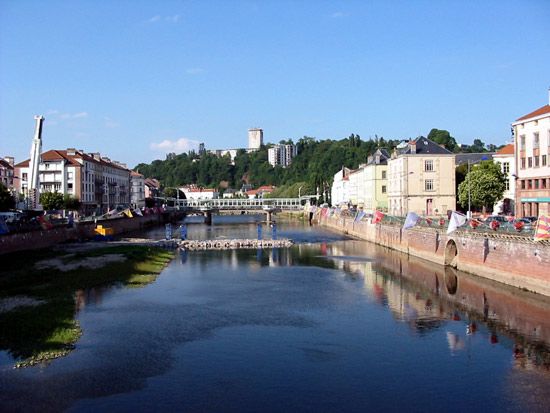
Moselle River
The Moselle River valley is a renowned destination for travelers, particularly celebrated for its scenic beauty and viticulture. A primary attraction for…
What are some popular recreational activities and tourist attractions along the Moselle River?
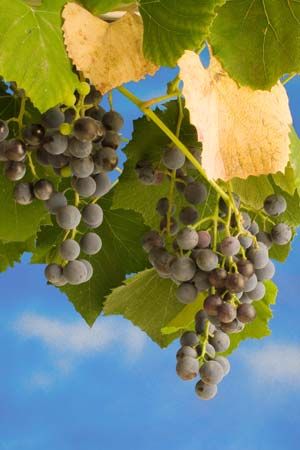
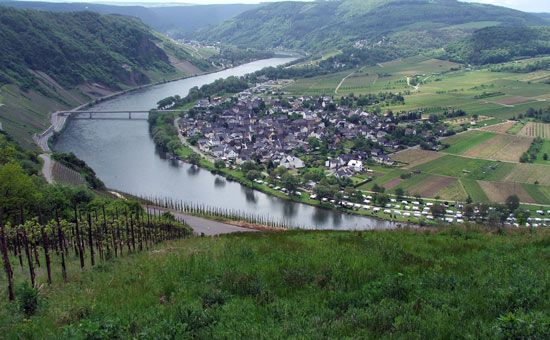
The Moselle River valley is a renowned destination for travelers, particularly celebrated for its scenic beauty and viticulture. A primary attraction for visitors is the region’s famous wine production; the valley is home to extensive vineyards that yield the celebrated Moselle wines.1
For those interested in history and architecture, the river serves as a gateway to significant cultural sites:
- Koblenz: Situated at the confluence of the Moselle and Rhine rivers, this city is a major hub for tourism. Notable landmarks include the Deutsches Eck (German Corner), the historic Baldwin Bridge (dating to 1343), and the Ehrenbreitstein Fortress, which now houses a museum dedicated to history and folklore.2
- Historic Architecture: The region features numerous medieval structures, such as St. Castor’s Church and the Liebfrauenkirche, as well as the Electoral Palace.2
- Outdoor Exploration: The surrounding countryside, characterized by its rich woods and lakes, makes the area an ideal base for those looking to explore the natural landscape.2
What role did the Moselle River play during World War II?
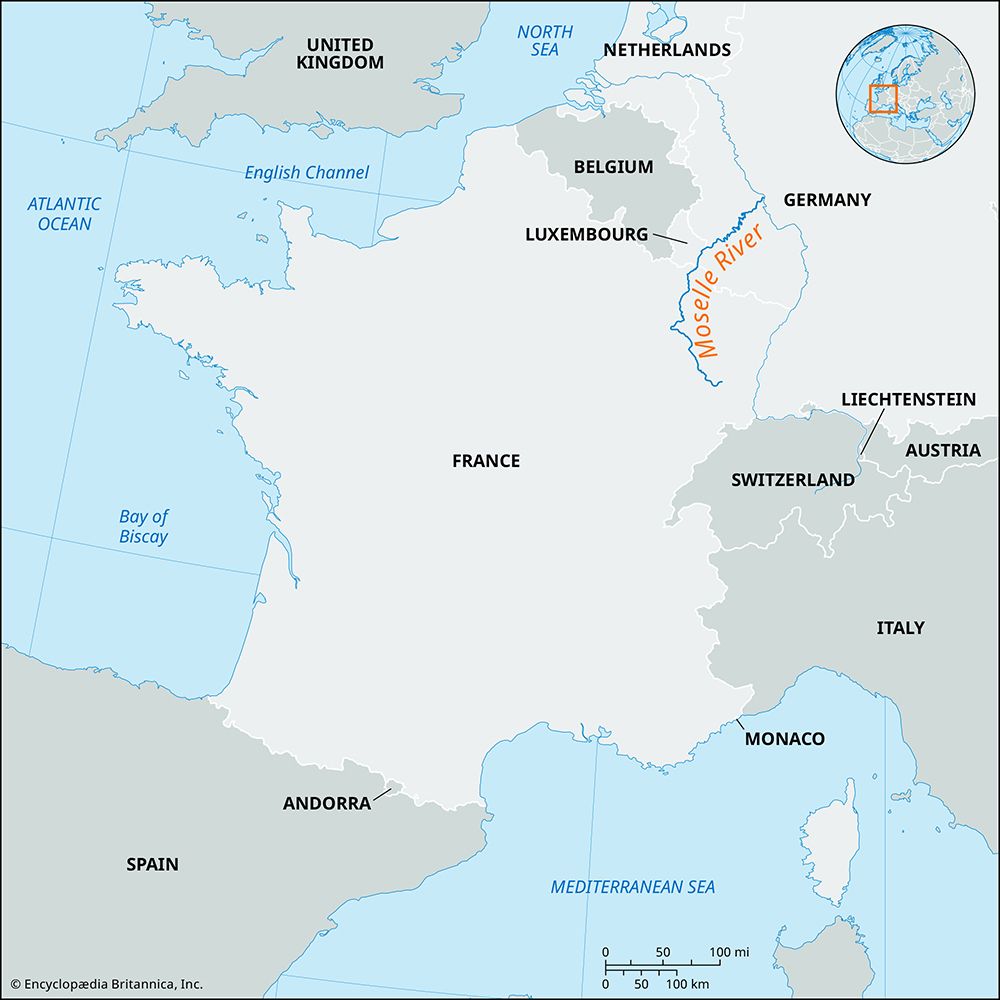
During World War II, the Moselle River served as a significant geographic and military obstacle as Allied forces advanced toward the German border in late 1944.
In early September 1944, following the rapid Allied breakout from Normandy and the liberation of Paris, the U.S. 3rd Army under General George S. Patton reached the Moselle River near Metz. The river crossing was viewed as a potential gateway for a breakthrough into the economically vital Saarland region of GermanySaarland](https://www.britannica.com/place/Saarland) region of Germany. However, the Allied advance, which had covered 350 miles in a few weeks, began to stall due to logistical constraints and stiffening German resistance as they neared their own frontiers.31
The city of Metz itself, situated on the Moselle River, was occupied by German forces throughout much of the war and was only liberated after a prolonged battle in 1944. Similarly, the city of Koblenz, located at the confluence of the Moselle and Rhine rivers, suffered extensive destruction during the conflict, with much of its historic infrastructure requiring reconstruction in the postwar period.34
Are there any legends or folklore associated with the Moselle River?
It is a common misconception to associate the legend of the Lorelei with the Moselle River; in fact, this famous German folklore is centered on a large rock located along the Rhine River near Sankt Goarshausen.6
According to the legend, the Lorelei was a beautiful maiden who, overcome by despair due to a faithless lover, threw herself into the Rhine. She was subsequently transformed into a siren whose enchanting song lured passing fishermen to their destruction at the river’s narrows.6
While the Moselle is rich in history and viticulture, the specific myth of the siren is a distinct feature of the Rhine’s cultural heritage.
How does the Moselle River contribute to the region’s ecosystem and biodiversity?
The provided search results do not contain specific information regarding the ecosystem and biodiversity of the Moselle River. While the sources detail the river’s geography, its role as a transport artery for steel and power production, and its importance to the regional wine industry, they do not provide data on its biological communities or ecological functions.
Sorry, the Britannica knowledge base does not contain this information.
Sources
- Moselle River — Encyclopædia Britannica
- Koblenz — Encyclopædia Britannica
- World War II - The Allied invasions of western Europe, June–November 1944 — Encyclopædia Britannica
- Metz — Encyclopædia Britannica
- World War II - German strategy, from 1943 — Encyclopædia Britannica
- Lorelei — Encyclopædia Britannica
- Saar River — Encyclopædia Britannica
Published on · 3 min read