Monterey Canyon
The Monterey Canyon is distinguished primarily by its massive scale, as it is the largest and deepest submarine canyon off the Pacific coast of North America.
What makes the Monterey Canyon unique compared to other underwater canyons?
The Monterey Canyon is distinguished primarily by its massive scale, as it is the largest and deepest submarine canyon off the Pacific coast of North America.1
Its uniqueness is defined by several key characteristics:
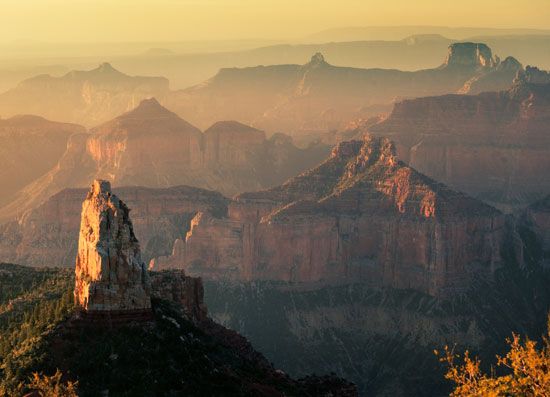
- Enormous Scale: The canyon is comparable in size to the Grand Canyon on land. It reaches an axial depth of 9,600 feet (2,900 metres), with canyon walls that rise to a maximum height of approximately 6,310 feet (1,920 metres).12
- Complex Tributaries: Unlike many other submarine canyons, it features three distinct tributaries at its upper reaches: the Soquel Canyon, the main Monterey Canyon head, and the Carmel Canyon, which serves as the principal tributary.1
- Ecological Significance: The canyon is protected within the Monterey Bay National Marine Sanctuary, which supports a vast array of marine life, including over 30 species of mammals, 300 species of fish, and nearly 100 species of birds.3
What is the depth and length of the Monterey Canyon?
The Monterey Canyon is the largest and deepest submarine canyon off the Pacific coast of North America.1
Regarding its dimensions:
- Depth: The canyon reaches a maximum axial depth of 9,600 feet (2,900 metres) before transitioning into a fan valley of low relief. Its walls reach a maximum height of approximately 6,310 feet (1,920 metres) at an axial depth of about 6,670 feet (2,050 metres).1
- Length: The provided search results do not specify a total length for the Monterey Canyon.
The canyon is comparable in size to the Grand Canyon on land and features a complex structure with three distinct tributaries at its upper reaches.12
How was the Monterey Canyon formed, and what are its key geological features?
The Monterey Canyon is a massive submarine canyon that shares structural similarities with terrestrial canyons, though its formation is primarily driven by marine processes rather than subaerial erosion.15
Formation
While some theories once suggested subaerial erosion during the Pleistocene Epoch as a starting point, current scientific consensus identifies turbidity currents as the principal agents of formation. These currents are dense, sediment-laden underwater flows triggered by the slumping of unconsolidated rock and sediment near the canyon heads. As these dense slurries move down the slope, they erode the seafloor and transport materials into the deep ocean, eventually depositing them to form submarine fans.567
Key Geological Features
- Tributary System: The canyon features three distinct upper tributaries: the minor Soquel Canyon, the main Monterey Canyon head, and the principal Carmel Canyon.1
- Scale and Depth: It reaches an axial depth of 9,600 feet (2,900 metres) and possesses walls reaching heights of up to 6,310 feet (1,920 metres), making it comparable in size to the Grand Canyon.1
- Morphology: The canyon follows a sinuous path, trending southwestward and westward before transitioning into a fan valley of low relief.1
What is the Monterey Canyon and where is it located in the Pacific Ocean?
The Monterey Canyon is the largest and deepest submarine canyon located off the Pacific coast of North America.1
Situated in Monterey Bay, California, the canyon begins with three distinct tributaries at its upper reaches: the Soquel Canyon to the north, the main Monterey Canyon head off Moss Landing, and the principal Carmel Canyon to the south. These tributaries eventually merge, and the canyon continues in a sinuous path southwestward and westward into the deep ocean. Comparable in scale to the Grand Canyon, it reaches a maximum axial depth of 9,600 feet (2,900 metres) before transitioning into a fan valley of low relief.12
Sources
- Monterey Canyon — Encyclopædia Britannica
- canyon — Encyclopædia Britannica
- list of canyons and gorges — Encyclopædia Britannica
- Monterey — Encyclopædia Britannica
- submarine canyon — Encyclopædia Britannica
- turbidity current — Encyclopædia Britannica
- density current - Turbidity currents — Encyclopædia Britannica
Published on · 3 min read