Mozambique Channel
The Mozambique Channel is a significant body of water in the western Indian Ocean, situated between the African nation of Mozambique to the west and the…
What is Mozambique Channel?
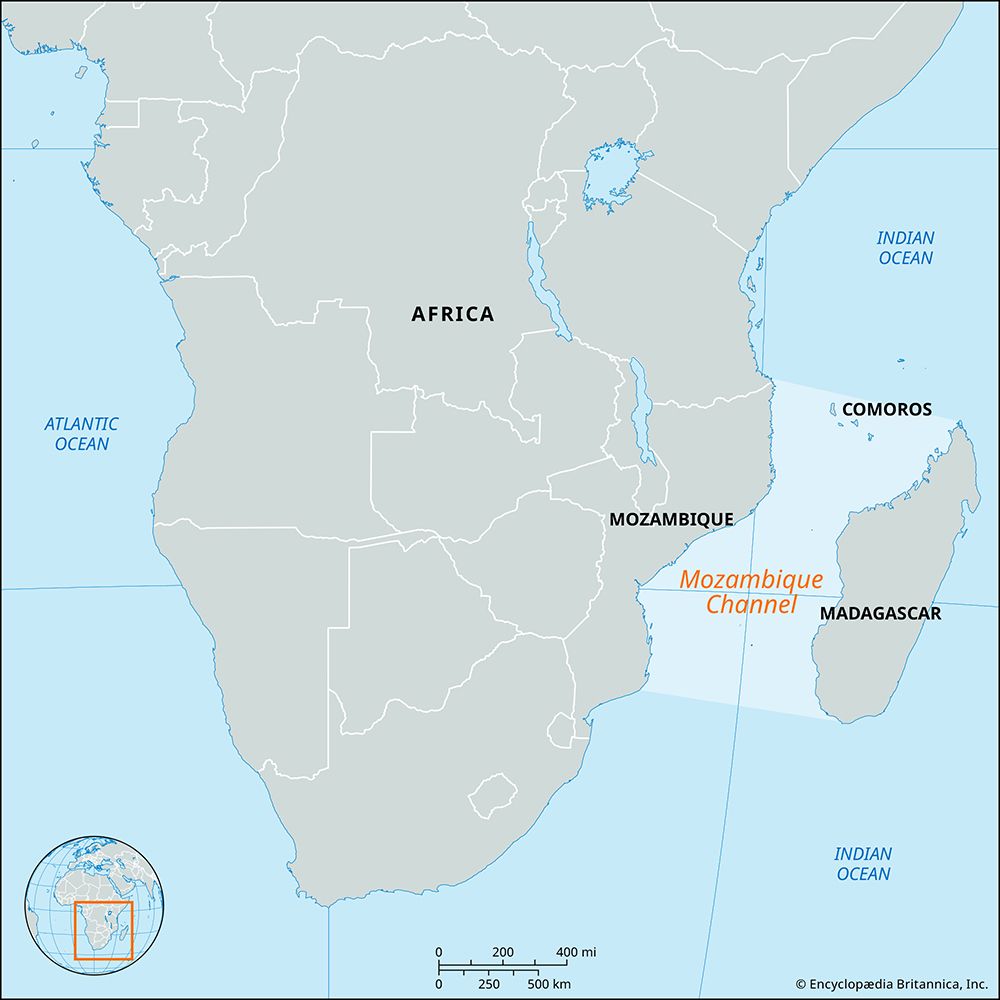
The Mozambique Channel is a significant body of water in the western Indian Ocean, situated between the African nation of Mozambique to the west and the island country of Madagascar to the east.12
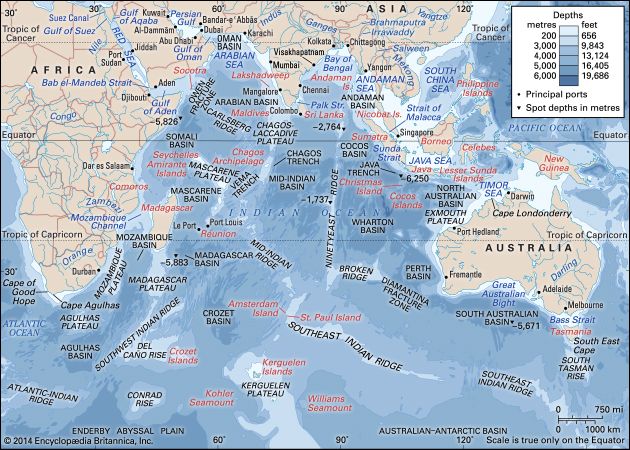
Spanning approximately 1,000 miles (1,600 km) in length, the channel varies in width from 250 to 600 miles (400 to 950 km) and reaches depths of up to 10,000 feet (3,000 meters). It serves as a vital shipping route for eastern Africa, featuring key ports such as Maputo, Beira, and Moçambique on the African coast, and Mahajanga and Toliary on the Madagascar coast.1
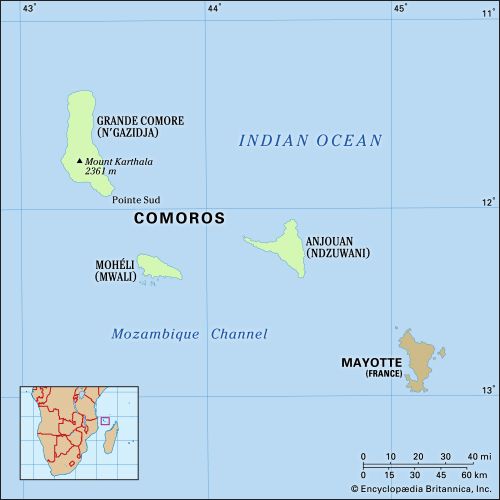
The channel is also defined by the Mozambique Current, a warm surface current that flows through the strait, significantly influencing the regional climate. Geographically, the northern entrance is marked by the Comoro Archipelago, while the islands of Bassas da India and Europa are located in the south.13
How does the Mozambique Current affect the local climate?
The Mozambique Current acts as a significant driver of regional climate by transporting warm surface waters from the Indian Ocean through the Mozambique Channel.3
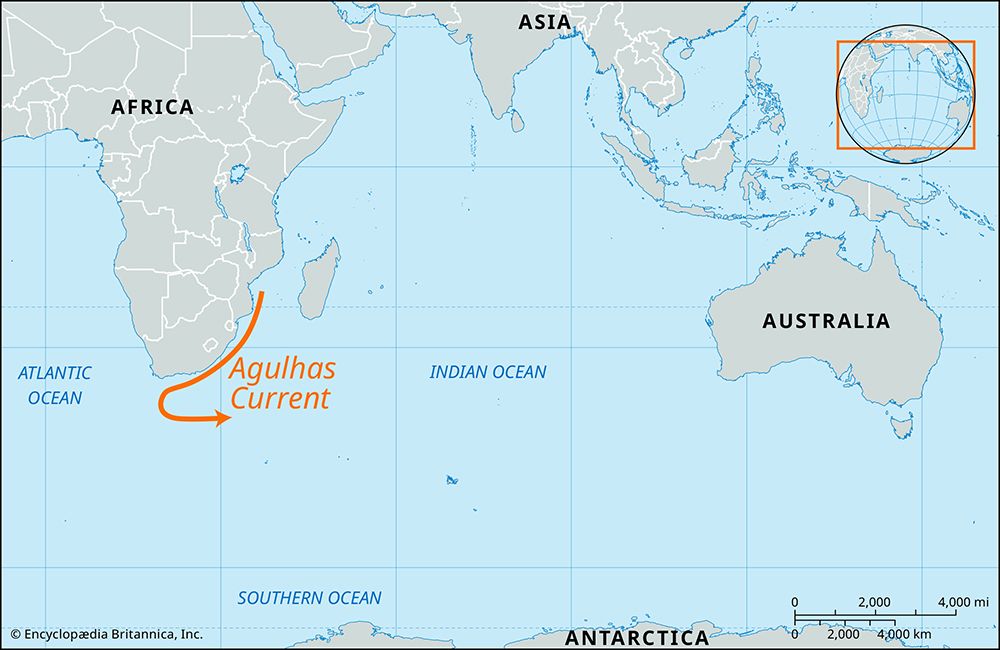
As the South Equatorial Current is pushed by southeast trade winds toward the African coast, the Earth’s rotation directs a portion of this flow southward along the mainland and through the channel. Because this current originates in lower latitudes, it carries substantial warmth, which exerts a strong influence on the temperatures and weather patterns of both the African mainland and the island of Madagascar.34
Ultimately, this warm water flow continues southward, where it contributes to the formation of the Agulhas Current, further extending the thermal influence of these tropical waters along the southeastern coast of Africa.34
What makes the Mozambique Channel a vital shipping route?
The Mozambique Channel serves as a vital maritime artery in the western Indian Ocean due to its strategic geography and infrastructure. By separating the African mainland from the island of Madagascar, it provides a critical transit corridor for vessels navigating the region.13
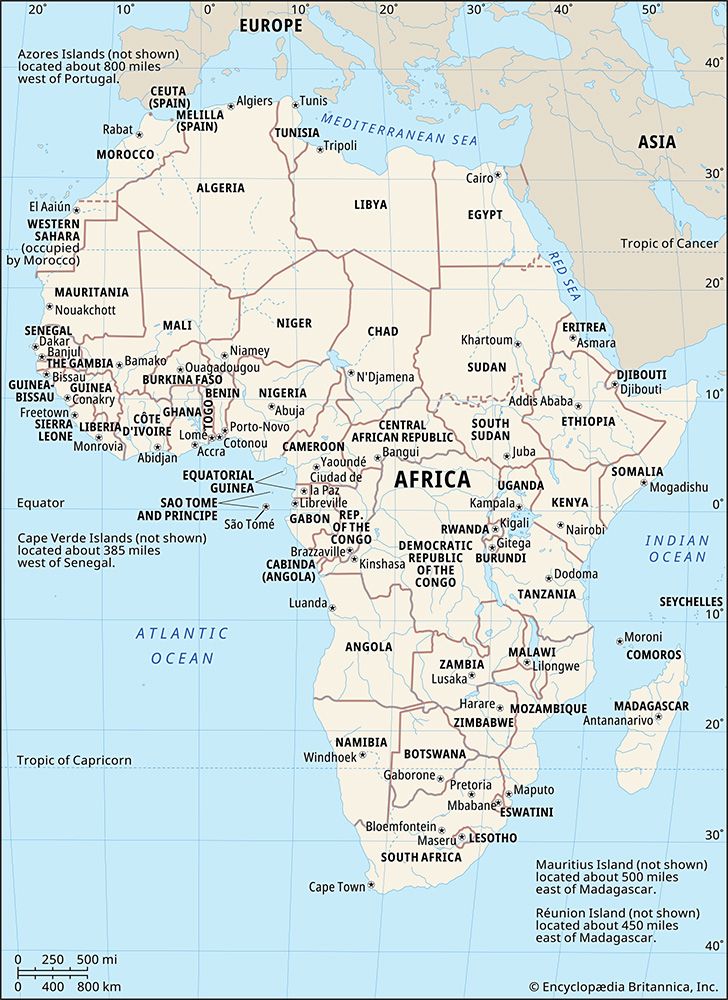
The channel’s importance to the maritime economy is bolstered by the presence of several key ports that facilitate trade and logistics. Along the African coast, major hubs include Maputo, Beira, and Moçambique, while the Madagascar coast hosts ports such as Mahajanga and Toliary. These locations offer some of the best natural harbors in Africa, allowing the region to play a central role in Indian Ocean commerce.13
Furthermore, the channel’s proximity to the mouth of the Zambezi River and its integration into regional trade networks underscore its function as a gateway for both coastal and international shipping.13
What unique marine life inhabits the Mozambique Channel?
Sorry, the Britannica knowledge base does not contain information regarding the specific marine life inhabiting the Mozambique Channel.
Sources
- Mozambique Channel — Encyclopædia Britannica
- Mozambique - Land — Encyclopædia Britannica
- Mozambique Current — Encyclopædia Britannica
- Agulhas Current — Encyclopædia Britannica
- history of Mozambique — Encyclopædia Britannica
Published on · 2 min read