Morava River
The Morava River flows through two distinct regions in Europe, each with its own geography and associated settlements.
What are the major cities or towns located along the Morava River?
The Morava River flows through two distinct regions in Europe, each with its own geography and associated settlements.
The Morava River (Central Europe)
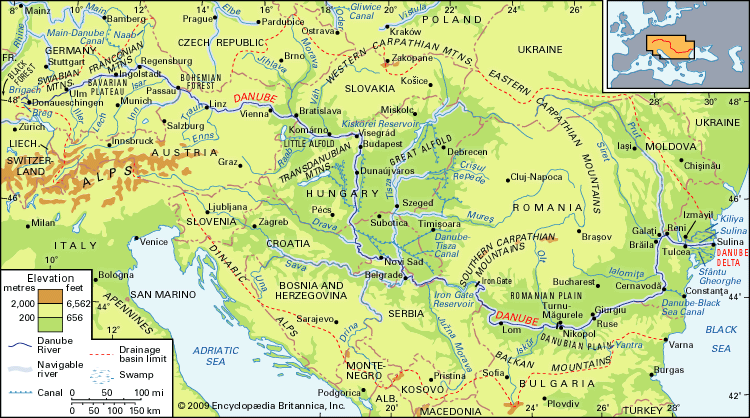
This river rises in the Czech Republic and flows south, forming borders between the Czech Republic, Slovakia, and Austria before joining the Danube near Bratislava, Slovakia. While the river valley has historically served as a vital natural corridor, the provided search results do not explicitly list major cities or towns situated directly along its banks, other than noting its proximity to the confluence at Bratislava.1
The Morava River (Serbia)
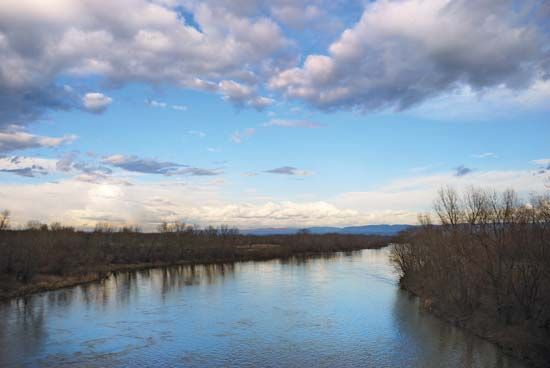
Located in Serbia, this river is formed by the confluence of the South Morava and West Morava rivers. It flows north through the fertile Pomoravlje valley and enters the Danube near Smederevo. The town of Lapovo is mentioned in relation to the river’s course as it opens into the valley.2
Where is the Morava River located, and what are its main tributaries?
There are two distinct rivers named the Morava in Europe:
The Morava River (Central Europe)
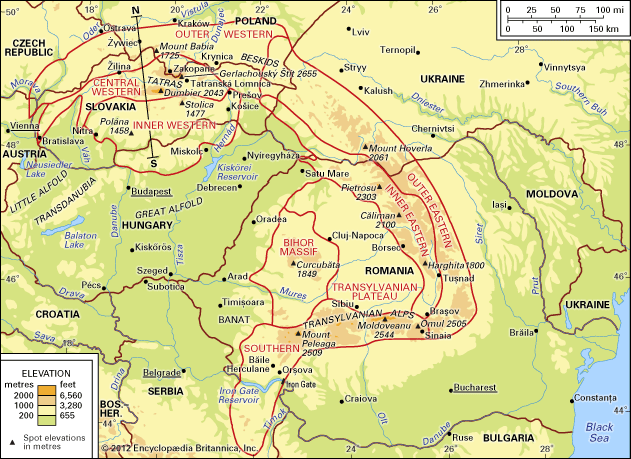
This river rises on the southern slope of the Králický Sněžník mountains in the eastern Czech Republic. It flows 227 miles (365 km) south, forming borders between the Czech Republic, Slovakia, and Austria before joining the Danube River near Bratislava.12
- Tributaries: Its western tributaries drain from the Bohemian-Moravian Highlands, while its eastern tributaries, most notably the Bečva, drain from the western ranges of the Carpathians.1
The Morava River (Serbia)
Also known as the Velika Morava, this river is the largest stream located entirely within Serbia2. It flows 137 to 290 miles (depending on measurement methods) northward to enter the Danube near Smederevo.562
- Tributaries: It is formed by the confluence of the South (Južna) Morava and West (Zapadna) Morava rivers. The South Morava is formed by the union of the Binačka Morava and Moravica rivers. Other significant tributaries include the Vlasina and the Nišava.6
How does the Morava River contribute to Serbia’s economy and agriculture?
The Morava River is a cornerstone of Serbia’s economy, serving as a vital artery for both agriculture and industrial development.
Agricultural Significance
The river is central to Serbian farming, particularly in the Pomoravlje valley, which opens up north of Lapovo. This fertile region is one of the country’s primary areas for commercial agriculture, supporting the cultivation of grains, including corn and wheat, as well as sugar beets, sunflowers, and various fruits and vegetables. The river’s basin, which covers nearly the entire political territory of Serbia, provides the necessary irrigation and land quality to sustain these crops.27
Industrial and Infrastructure Role
Beyond agriculture, the Morava River corridor is a major industrial and transportation hub:
- Manufacturing: A significant industrial belt stretches along the Zapadna (Western) Morava River, connecting cities such as Užice, Čačak, Kraljevo, Kruševac, and Niš. This region produces automobiles, trucks, tires, batteries, and electronics.8
- Energy: The river system is essential for power generation, with hydroelectric stations operating along the West Morava and on the Vlasina tributary.2
- Transportation: The Morava and South Morava valleys form the Morava-Vardar corridor, a historic and modern route for road and rail transport linking central Europe to the eastern Mediterranean.25
What is the total length of the Morava River and how does it compare to other major rivers in Serbia?
The Morava River (also known as the Velika Morava) is the largest river located entirely within Serbia. While the river itself—formed by the confluence of the South and West Morava—follows a 137-mile (221-kilometer) course, its total length is often cited as 290 miles (470 km) when measured from the source of its longest headwater, making it a dominant feature of the Serbian landscape.25
In comparison to other major rivers in the region, the Morava is distinct because it is the only major river system contained fully within Serbian borders, whereas other significant rivers like the Danube, Sava, and Tisa are international waterways that flow through multiple countries. The Morava basin is vast, draining approximately two-fifths of Serbian territory, which underscores its role as the primary internal drainage system of the nation.52
Sources
- Morava River — Encyclopædia Britannica
- Morava River — Encyclopædia Britannica
- Czech Republic - Settlement patterns — Encyclopædia Britannica
- Niederösterreich — Encyclopædia Britannica
- Serbia - Drainage of Serbia — Encyclopædia Britannica
- Morava — Merriam-Webster
- Serbia - Manufacturing of Serbia — Encyclopædia Britannica
- Serbia - Agriculture and forestry — Encyclopædia Britannica
Published on · 3 min read